
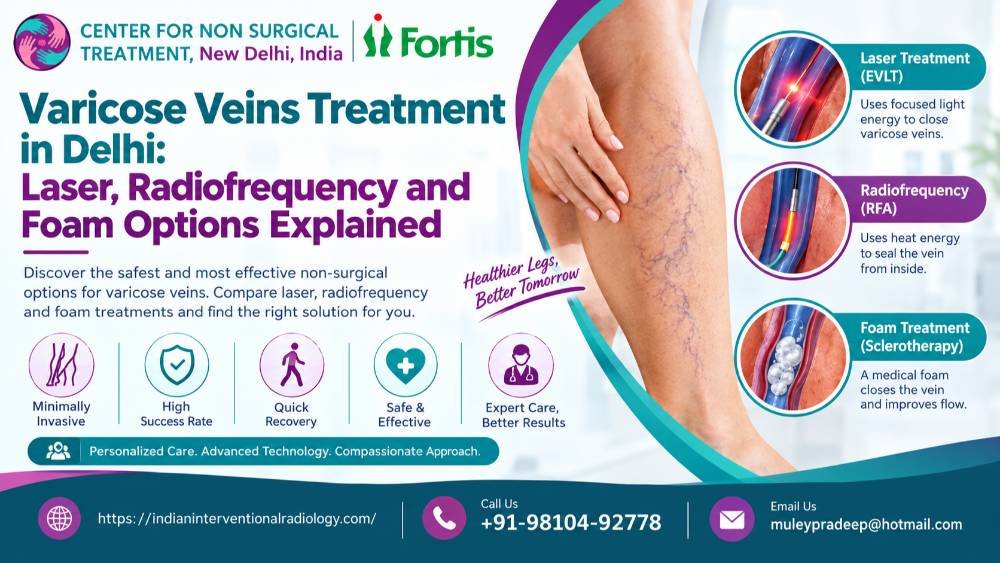
Modern varicose veins treatment no longer needs the old "vein stripping" operation. Endovenous laser (EVLA) and radiofrequency ablation (RFA) close the faulty vein from the inside through a tiny skin puncture, usually under local anaesthetic. Most people walk out the same day and are back to normal routines within a few days.
Who is it for?
People with aching, swollen or heavy legs, visible bulging veins, skin darkening or ulcers caused by leaking vein valves. A duplex ultrasound confirms which veins are the problem, and mild cases without symptoms may only need compression stockings and monitoring.
Is it safe and effective?
Laser and radiofrequency ablation is widely used and generally well tolerated. Bruising, tightness and temporary numbness are common, while clots and recurrence are less common but possible, so follow-up matters.
Why Trust This Guide?
| Trust Signal | Details |
|---|---|
| Updated for 2026 | Reviewed in October 2026 against current patient-information guidance |
| Local Expertise | Based on interventional radiology practice at Fortis Hospital, Vasant Kunj, New Delhi |
| Industry References | NHS, Mayo Clinic, NICE, MedlinePlus, Society of Interventional Radiology (SIR) |
| Patient-Focused Approach | Organised around the questions patients commonly raise before treatment |
| Content Standards | Risks and limits stated openly, with no guaranteed outcomes |
This guide is written in plain language for patients and families. It explains what a treatment can and cannot do, and it should be read alongside advice from your own doctor. It is general information and does not replace personal medical advice.
Last Reviewed: October 2026
Introduction
Varicose veins are more than a cosmetic issue for many people. Heavy legs, night cramps and ankle swelling can wear you down, and untreated reflux can lead to skin damage and ulcers.
This guide explains modern treatment for varicose veins, including laser, radiofrequency and foam options, who needs it, what recovery feels like and what to ask your doctor.
What actually causes varicose veins?
Leg veins carry blood up towards the heart, and small one-way valves stop it sliding back down. When those valves weaken, blood pools, the vein stretches and the familiar twisted, bulging cords appear. This is called venous insufficiency or reflux.
Varicose veins affect a notable share of adults, and women are affected more often than men. Family history, pregnancy, long hours standing, obesity and age all raise the odds. If you work on your feet, as shopkeepers, teachers and nurses often do, the pressure builds up through the day.
Symptoms worth taking seriously
- aching, heavy or tired legs by evening
- swelling around the ankles
- itching or burning over the vein
- night cramps
- darkening of the skin near the ankle
- a sore that is slow to heal, known as a venous ulcer
Looks alone are not the only reason to act. Untreated reflux can lead to skin changes and ulcers, and occasionally to clots in the superficial veins. Our page on varicose veins treatment in Delhi explains how each stage is managed.
How diagnosis works
A duplex ultrasound is the key test. It shows which veins leak, how far the reflux travels and whether the deep veins are healthy. A good scan decides the treatment plan, so it should be done standing, with the leg examined from groin to ankle.
Varicose veins treatment options compared
| Option | How it works | Anaesthesia | Typical return to routine | Good for |
|---|---|---|---|---|
| Endovenous laser (EVLA) | Laser heat closes the faulty vein | Local | 1 to 3 days | Straight, larger trunk veins |
| Radiofrequency ablation (RFA) | Controlled radiofrequency heat seals the vein | Local | 1 to 3 days | Trunk veins, less post-procedure bruising |
| Foam sclerotherapy | Medicated foam irritates and closes the vein | None or local | 1 to 2 days | Smaller branches, recurrent veins |
| Medical adhesive | Glue seals the vein | Local | 1 to 2 days | Selected trunk veins |
| Open surgery | Vein tied and removed | General or spinal | 1 to 2 weeks | Few cases today |
Not every option suits every leg. The best plan often combines two methods, for example RFA for the main vein and foam for side branches.
What happens on the day
You arrive, the leg is marked under ultrasound, and the skin is numbed. A fine catheter is passed into the diseased vein through a pinhole. Local anaesthetic fluid is placed around the vein to protect nearby tissues, then the laser or radiofrequency energy seals it from inside. No stitches are required. A compression stocking goes on straight away, and you are encouraged to walk within the hour.
Patients who have shared their stories on the site describe walking soon after the procedure and returning to usual activities the next day. Individual experience differs, of course.
Recovery and aftercare
- Wear compression stockings as advised, often for one to two weeks.
- Walk daily, but skip heavy lifting and long-haul flights for a short period.
- Mild bruising and a tight, pulling feeling along the treated vein are normal.
- Call your doctor for sudden calf pain, marked swelling or breathlessness.
Risks, said plainly
Possible effects include bruising, skin staining, temporary numbness, inflammation of the treated vein and, rarely, a clot in a deep vein. Veins can also recur elsewhere, because the underlying tendency remains. Good scanning, correct technique and follow-up reduce these issues but cannot remove them entirely.
Why see a vascular interventional specialist?
An interventional radiologist works with ultrasound and catheters every day, which suits vein work well. At the Centre For Non-Surgical Treatment, Dr. Pradeep Muley offers laser and radiofrequency options and tailors them to your scan. The same team also manages related conditions such as leg pain from poor circulation and varicocele, which is essentially a varicose vein in the scrotum.
For more on vein care, you can watch explainers on the clinic's video page.
Trusted Sources for Further Reading
- NHS: Varicose veins
- Mayo Clinic: Varicose veins
- NICE: Varicose veins guideline
- Society of Interventional Radiology
- MedlinePlus: Varicose veins
Expert Tip
Insist on a standing duplex ultrasound of the whole leg before any procedure. Treating only the visible veins without fixing the leaking trunk vein is the commonest reason for early recurrence.
Reviewed By
Interventional radiology specialists at the Centre For Non-Surgical Treatment, New Delhi, with practical experience in image-guided, minimally invasive treatment. This content is reviewed periodically to reflect current best practice and service information.
Frequently Asked Questions (FAQs)
1. What is the best varicose veins treatment?
There is no single best option. Radiofrequency and laser ablation are widely preferred for main trunk veins, while foam suits smaller branches. The right plan comes from your duplex scan.
2. Is varicose veins treatment painful?
Most people feel only the local anaesthetic injections. Afterwards you may notice tightness or mild soreness along the vein for a few days.
3. Do varicose veins go away without treatment?
No. Veins that have lost their valves do not heal themselves. Stockings and exercise ease symptoms but do not repair the vein.
4. How long does the procedure take?
A single leg usually takes 30 to 60 minutes. Both legs take longer, though many people are treated in one sitting.
5. When can I go back to work?
Desk work is often possible in one to two days. Jobs that involve heavy lifting may need a few extra days.
6. Can varicose veins come back after treatment?
The treated vein stays closed, but new veins may develop over the years. Follow-up and healthy habits help keep this in check.
7. Is it only a cosmetic issue?
Not always. Aching, swelling, skin darkening and ulcers are medical signs. Many people treat them for comfort and to prevent complications.
8. Does insurance cover varicose veins treatment?
Coverage varies between insurers and policies, and often depends on symptoms and documentation. Ask the hospital's insurance desk to check your policy before you proceed.
9. What is the difference between spider veins and varicose veins?
Spider veins are tiny surface vessels, mostly cosmetic. Varicose veins are larger, raised and often linked with valve failure.
10. Can international patients get treatment in Delhi?
Yes. Patients from the Middle East and Africa travel to Delhi for non-surgical vein care, and the clinic can help with planning and follow-up.
Conclusion
Modern varicose veins treatment closes the faulty vein from inside through a pinhole, usually under local anaesthetic, with a return to routine in a few days. The right method depends on your scan, so a proper assessment should come first.
If you are looking for varicose veins treatment in Delhi, the Centre For Non-Surgical Treatment offers specialist, image-guided care at Fortis Hospital, Vasant Kunj, New Delhi. Clinic hours are Monday to Saturday, 8:00 AM to 5:00 PM, and international patients can share reports for remote review before travelling.
Ready to discuss your options? Call or WhatsApp +91-98104-92778 or contact the clinic to book your consultation.
This article is for general information and does not replace personal medical advice.