
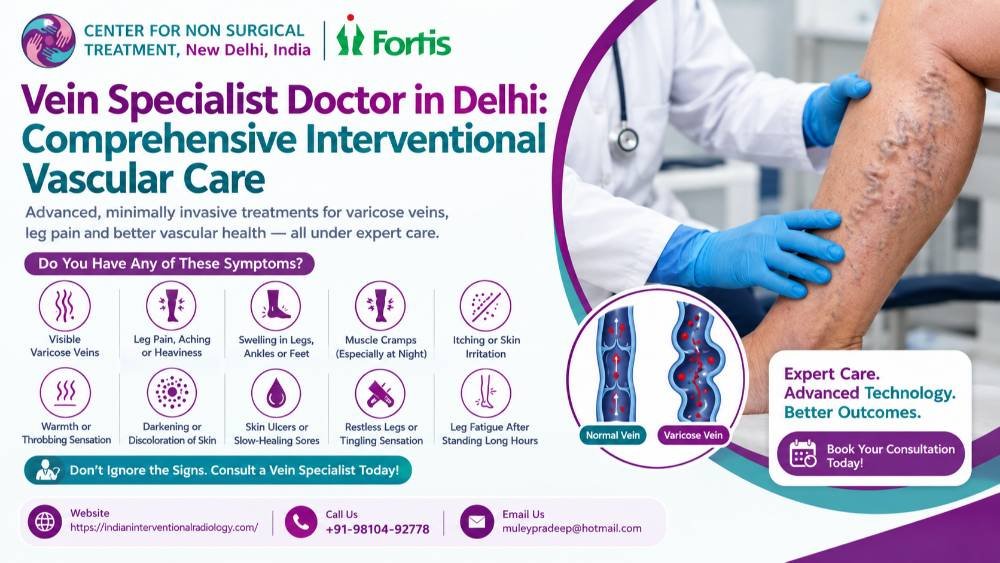
Understanding the distinction between a vein specialist doctor in Delhi and a general physician proves essential when addressing vascular concerns. A dedicated vein specialist brings focused expertise, advanced diagnostic capabilities, and access to cutting-edge interventional techniques unavailable in standard medical practice.
What Defines a True Vein Specialist Doctor in Delhi?
A vein specialist doctor in Delhi is typically an interventional radiologist or vascular surgeon with additional specialisation in venous disease. This distinction matters significantly for patient outcomes.
Training and Expertise Pathways
Interventional Radiologist Pathway: - Medical degree followed by radiology residency (5 years) - Interventional radiology fellowship (1-2 years) - Ongoing training in vascular intervention techniques - Board certification in interventional radiology - Specialisation focus: Image-guided, minimally invasive procedures
Vascular Surgeon Pathway: - Medical degree followed by general surgery residency (5-7 years) - Vascular surgery fellowship (2-3 years) - Specialisation in surgical and endovascular vascular procedures - Optional additional interventional training
Both pathways produce qualified vein specialists, though their procedural approaches may differ.
Why See a Vein Specialist Doctor Rather Than Your General Physician?
Your family doctor serves an invaluable role in overall healthcare. However, they lack the specialised training, imaging expertise, and procedural skills that a vein specialist doctor in Delhi brings.
Key Differences:
| Aspect | General Physician | Vein Specialist Doctor |
|---|---|---|
| Vein expertise | General knowledge | Deep specialisation |
| Diagnostic equipment | Limited | Advanced ultrasound |
| Procedural training | Minimal | Extensive hands-on |
| Treatment options | Compression, referral | Full range of interventions |
| Imaging interpretation | Basic | Expert analysis |
| Volume of cases | Occasional veins | 100+ annual cases |
A vein specialist doctor in Delhi has treated hundreds of patients, developed nuanced understanding of various presentations, and refined technical skills through high-volume practice.
Conditions a Vein Specialist Doctor Addresses
Beyond simple varicose veins, a vein specialist doctor in Delhi manages complex venous pathology:
Venous Insufficiency: Underlying valve dysfunction causing symptoms and visible veins
Deep Vein Thrombosis (DVT): Blood clot formation requiring urgent intervention
Superior Vena Cava Syndrome: Obstruction in major venous pathway
Pelvic Venous Disorders: May cause leg symptoms despite normal leg veins
Venous Malformations: Congenital abnormalities requiring specialist assessment
Compression Syndromes: Veins compressed by adjacent structures
Post-Thrombotic Syndrome: Chronic changes following DVT
The Diagnostic Advantage: Why Imaging Matters
A vein specialist doctor in Delhi employs diagnostic techniques unavailable in typical primary care.
Duplex Ultrasound: The Gold Standard
Duplex ultrasound combines two imaging modes:
B-Mode Imaging: Shows vein structure, diameter, wall characteristics, and adjacent anatomy. The specialist visualises exactly where problems exist.
Doppler Analysis: Reveals blood flow direction and speed. This identifies reverse flow (reflux) indicating valve failure.
Together, these modes create a complete vein assessment, enabling precise diagnosis. A vein specialist doctor uses this information to plan interventions with millimetre-level accuracy.
Advanced Imaging Techniques
Some specialists employ additional imaging: - Computed Tomography Venography (CTV): For complex pathology - Magnetic Resonance Venography (MRV): Particularly useful for pelvic disease - Intravascular Ultrasound (IVUS): Real-time imaging during procedures
Treatment Modalities: What a Vein Specialist Doctor Offers
The range of treatment options available through a vein specialist doctor in Delhi extends far beyond compression stockings.
Minimally Invasive Endovascular Procedures
Radiofrequency Ablation (RFA) - Thermal energy closes faulty veins from within - Same-day recovery - 95%+ success rate
Endovenous Laser Treatment (EVLT) - Laser energy ablates vein lumen - Particularly effective for larger veins - Excellent cosmetic outcomes
Ultrasound-Guided Sclerotherapy - Injection technique for smaller veins - No downtime - Progressive results
Mechanical Thrombectomy - For acute clot removal - Prevents complications from DVT - Specialist procedure requiring expertise
Thrombolysis - Medication delivered directly to clot - Restores vein patency - Time-sensitive intervention
Conservative Management
A skilled vein specialist doctor recognises when intervention isn’t necessary. Mild varicose veins with no symptoms may warrant conservative management: compression stockings, leg elevation, exercise, and periodic monitoring.
The Consultation Process: What to Expect
When visiting a vein specialist doctor in Delhi, anticipate a thorough, systematic evaluation.
Initial Assessment (15-20 minutes): - Detailed symptom history - Family history of vascular disease - Lifestyle and occupational factors - Previous treatments attempted - Current medications and allergies
Physical Examination (10-15 minutes): - Examination standing and sitting - Assessment of both legs - Skin changes and discolouration - Ankle-to-arm blood pressure measurements if indicated
Ultrasound Imaging (15-30 minutes): - Complete bilateral leg assessment - Vein mapping - Reflux identification - Measurement of valve incompetence - Documentation of findings
Discussion and Planning (10-15 minutes): - Explanation of findings in simple terms - Discussion of treatment options - Review of risks and benefits - Timeline and recovery expectations - Questions and concerns addressed
Most specialist consultations require 60-90 minutes—thorough evaluation cannot be rushed.
Specialised Situations: Complex Cases Requiring Expert Care
Recurrent Varicose Veins After Previous Treatment
When veins recur despite earlier treatment, a vein specialist doctor applies advanced diagnostic techniques to identify why previous treatment failed. This might reveal: - Incomplete treatment of primary vein - Development of new problematic veins - Unusual anatomical factors - Technical issues with previous procedure
Re-treatment by an experienced specialist achieves success even when initial approaches failed.
Extensive Disease Requiring Multiple Procedures
Patients with extensive varicose veins affecting multiple leg segments benefit from specialist staging and planning. The vein specialist doctor sequences procedures for optimal outcomes and safety.
Post-Thrombotic Syndrome
Following DVT, some patients develop chronic venous insufficiency. A vein specialist doctor implements interventions to improve symptoms and prevent ulceration.
Symptomatic but Cosmetically Minimal Veins
Sometimes significant venous disease produces minimal visible veins but substantial symptoms. A vein specialist doctor recognises this pattern and treats the underlying pathology rather than chasing visible veins.
Safety and Complication Management
A critical advantage of seeing a vein specialist doctor is their expertise in preventing and managing complications.
Prevention Strategies: - Proper ultrasound-guided catheter placement - Appropriate anaesthetic techniques - Recognising patient factors increasing complication risk - Systematic follow-up assessment
Complication Management: - Deep vein thrombosis management (rare but serious) - Nerve injury recognition and treatment - Infection management - Arterial injury recognition and immediate intervention - Access site complications
A vein specialist doctor’s high case volume means they’ve encountered and managed virtually every complication scenario, developing sophisticated problem-solving approaches.
Insurance and Referral Considerations
Insurance Coverage
Most insurance policies cover vein specialist doctor consultations and treatments when deemed medically necessary. Purely cosmetic treatment often isn’t covered. Discuss your coverage with your insurance provider before consultation.
Referral Requirements
Some insurance plans require referrals from primary care physicians. Check your policy before scheduling directly.
Direct Access
Many insurance plans allow direct specialist access without referral, particularly for established patients.
Frequently Asked Questions
1. How do I find a reputable vein specialist doctor in Delhi?
Look for board certification, hospital affiliation with recognised institutions, years in specialised practice, and patient testimonials. The recommendations above provide guidance.
2. What’s the difference between a vein specialist and a general surgeon?
A vein specialist focuses exclusively on vascular disease and minimally invasive techniques. A general surgeon may offer vascular surgery but typically manages diverse surgical specialities.
3. Is consultation with a vein specialist doctor expensive?
Consultation fees vary but are comparable to other specialists. Many insurance plans cover at least a portion of specialist consultations.
4. Can a vein specialist doctor see me urgently?
Many specialists accommodate urgent appointments for acute conditions like DVT. Non-urgent cases may require waiting a few weeks.
5. Will a vein specialist doctor recommend surgery I don’t need?
Ethical specialists only recommend interventions supported by your specific clinical presentation. If you’re uncomfortable with recommendations, seeking a second opinion is reasonable.
6. What should I bring to my appointment with a vein specialist doctor?
Insurance card, current medications, previous imaging reports if available, and written notes about your symptoms help the appointment proceed efficiently.
7. How often will I need follow-up after treatment?
Most patients require ultrasound at 1-2 weeks post-treatment, then periodic follow-up depending on clinical circumstances.
8. Can a vein specialist doctor treat veins on both legs in one visit?
Usually both legs are assessed in the initial consultation. Procedures might be staged, treating one leg initially, then the other weeks later.
9. What makes a vein specialist doctor particularly skilled?
High procedure volume, ongoing education, positive patient outcomes, and strong communication skills differentiate truly excellent specialists.
10. Should I get a second opinion from another vein specialist doctor?
Absolutely, especially for complex cases or if treatment recommendations seem excessive.
The Bottom Line: Why Expertise Matters
Choosing to see a vein specialist doctor in Delhi rather than attempting treatment through general practitioners represents an investment in your vascular health. The expertise, diagnostic capabilities, and procedural options available through specialised care deliver superior outcomes and faster recovery.
Dr Pradeep Muley exemplifies the vein specialist doctor standard—years of focused experience, advanced diagnostic capabilities, and commitment to patient-centred, minimally invasive care.
About the Author: Dr Pradeep Muley brings years of specialised experience in interventional radiology, focusing on vascular disease management and minimally invasive therapeutic techniques.
Disclaimer: This article provides educational information only. Always consult qualified medical professionals for individual diagnosis and treatment planning.