
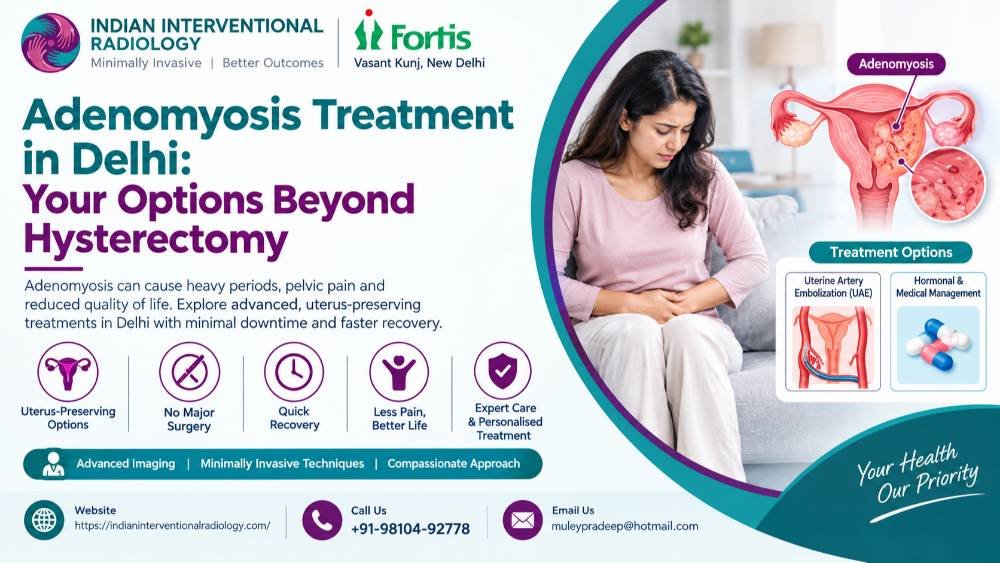
What is adenomyosis treatment?
Adenomyosis treatment depends on how severe your symptoms are and whether you want to keep your womb or future fertility. Options include pain relief and hormonal medicines, uterine artery embolisation (UAE) through a pinhole, and hysterectomy for severe cases. Many women with painful, heavy periods are only told about the last option, which is why it helps to know the others.
Who is it for?
Women with painful, heavy periods and an enlarged, tender womb, especially after tests have separated adenomyosis from fibroids and endometriosis. Mild cases may settle with medicines, while embolisation or surgery suit more severe symptoms.
Is it safe and effective?
Treatment is safe when matched to the person, but results differ. Medicines can pause symptoms, embolisation helps many women, and hysterectomy is the only definitive cure. Evidence for embolisation is smaller than for fibroids, so expectations should be realistic.
Why Trust This Guide?
| Trust Signal | Details |
|---|---|
| Updated for 2026 | Reviewed in October 2026 against current patient-information guidance |
| Local Expertise | Based on interventional radiology practice at Fortis Hospital, Vasant Kunj, New Delhi |
| Industry References | Mayo Clinic, NICE, NHS, Society of Interventional Radiology (SIR), ESHRE |
| Patient-Focused Approach | Organised around the questions patients commonly raise before treatment |
| Content Standards | Risks and limits stated openly, with no guaranteed outcomes |
This guide is written in plain language for patients and families. It explains what a treatment can and cannot do, and it should be read alongside advice from your own doctor. It is general information and does not replace personal medical advice.
Last Reviewed: October 2026
Introduction
Painful periods are often dismissed as normal, and adenomyosis is frequently mistaken for fibroids. A correct diagnosis opens up more options than many women expect.
This guide explains your options, from medicines to uterine artery embolisation and surgery, and how to choose between them.
What is adenomyosis?
In adenomyosis, tissue that normally lines the womb grows into the muscle wall. Each month this tissue still responds to hormones, so it bleeds inside the muscle. The result is a swollen, tender womb, painful periods and heavy bleeding. It is not cancer.
It is most often diagnosed in women in their thirties and forties, though it can appear earlier. Symptoms overlap with fibroids and endometriosis, so a wrong label is common. Our page on adenomyosis treatment in Delhi explains the condition in detail, and the treatment overview adds further background.
Common symptoms
- periods that are heavy, long or clotted
- cramps that start before bleeding and outlast it
- deep pelvic pain, or pain during sex
- a bloated lower abdomen, sometimes feeling pregnant
- tiredness from long-term blood loss, often with low haemoglobin
Some women have no symptoms at all and discover adenomyosis on a scan.
How doctors diagnose it
A transvaginal ultrasound is the usual first test. An MRI is more precise, because it shows the thickened junction between womb lining and muscle and separates adenomyosis from fibroids. Accurate imaging matters, since the right treatment differs. If fibroids are the main problem, see our article on uterine fibroid embolization.
Adenomyosis treatment options at a glance
| Option | What it does | Keeps womb | Fertility | Best for |
|---|---|---|---|---|
| Painkillers and tranexamic acid | Eases pain and bleeding | Yes | Preserved | Mild symptoms |
| Hormonal treatment (pill, progestins, hormone coil) | Reduces bleeding and pain | Yes | Paused while on treatment | Mild to moderate symptoms |
| Uterine artery embolisation | Cuts blood supply to diseased tissue | Yes | Uncertain; discuss first | Moderate to severe symptoms, wish to avoid surgery |
| Adenomyomectomy | Removes the affected area surgically | Yes | May be possible | Focal disease, fertility wish |
| Hysterectomy | Removes the womb | No | Ended | Severe disease, family complete |
How uterine artery embolisation helps
UAE is performed by an interventional radiologist using a catheter from the wrist or groin. Tiny particles block the arteries that feed the diseased tissue, which then shrinks and softens. Periods become lighter and cramps ease in many women. The approach is similar to fibroid embolisation, but the response varies, and some women need further treatment later.
Recovery follows a familiar pattern: cramping and tiredness for a few days, then a gradual return to routine within about a week. Full benefit builds over several months.
Risks of adenomyosis treatment
UAE can cause pain, fever, infection, vaginal discharge and, rarely, an effect on ovarian function. Evidence for adenomyosis is not as extensive as for fibroids, so expectations should be realistic. If you hope to have a baby, discuss this openly before choosing a treatment, because evidence for pregnancy after UAE is limited. A hysterectomy remains a legitimate choice for some women. You can read about it on our hysterectomy treatment in Delhi page, and in the clinic's article on robotic hysterectomy.
When to seek adenomyosis treatment
Book an appointment if you:
- soak a pad or tampon every hour or two
- miss work or school because of period pain
- feel dizzy, breathless or exhausted
- have been told your only option is surgery and want a second opinion
Why Dr. Pradeep Muley
Dr. Pradeep Muley practises at Fortis Hospital, Vasant Kunj, and focuses on non-surgical, image-guided care. The Centre For Non-Surgical Treatment reviews your MRI, explains every adenomyosis treatment route honestly, including surgery when it is the better fit, and coordinates with your gynaecologist.
Trusted Sources for Further Reading
- Mayo Clinic: Adenomyosis
- NICE: Heavy menstrual bleeding guideline
- NHS: Heavy periods
- Society of Interventional Radiology
- ESHRE
Expert Tip
Ask for a pelvic MRI before settling on a plan. It separates adenomyosis from fibroids and shows how widespread the disease is, which strongly affects whether embolisation, medicines or surgery makes sense.
Reviewed By
Interventional radiology specialists at the Centre For Non-Surgical Treatment, New Delhi, with practical experience in image-guided, minimally invasive treatment. This content is reviewed periodically to reflect current best practice and service information.
Frequently Asked Questions (FAQs)
1. What is the best adenomyosis treatment?
There is no single best choice. Mild cases respond to medicines, moderate to severe cases may suit embolisation, and severe disease may need hysterectomy. Your age, symptoms and plans decide it.
2. Can adenomyosis be treated without a hysterectomy?
Yes. Hormonal therapy and uterine artery embolisation both keep the womb. A hysterectomy is not the only way forward.
3. How is adenomyosis different from fibroids?
Fibroids are distinct lumps in the womb muscle, while adenomyosis is tissue spread within the wall. They can occur together, and MRI helps tell them apart.
4. Can adenomyosis go away on its own?
Symptoms often ease after menopause, when hormone levels fall. Before then, it generally persists without treatment.
5. Does adenomyosis affect fertility?
It can make conception harder or raise the risk of miscarriage in some women. Many women still conceive, so discuss your plans before any treatment.
6. Is embolisation painful?
You are sedated and comfortable during it. Cramping afterwards is expected and managed with medicines.
7. How long is recovery after adenomyosis treatment?
Most women resume light work within a week. Full relief of symptoms builds over several months.
8. Can adenomyosis come back after treatment?
Symptoms can return after embolisation or hormonal treatment. Hysterectomy is the only definitive cure.
9. What does adenomyosis treatment cost?
Cost depends on the type of treatment, tests and hospital stay. A personalised estimate is given after consultation.
10. When should I worry about heavy bleeding?
If you soak through protection hourly, pass large clots or feel faint, seek medical care promptly.
Conclusion
Adenomyosis treatment should match your symptoms, age and plans for pregnancy. Medicines, uterine artery embolisation and hysterectomy each have a place, and a second opinion is reasonable if surgery is the only option you have heard.
If you are looking for adenomyosis treatment in Delhi, the Centre For Non-Surgical Treatment offers specialist, image-guided care at Fortis Hospital, Vasant Kunj, New Delhi. Clinic hours are Monday to Saturday, 8:00 AM to 5:00 PM, and international patients can share reports for remote review before travelling.
Ready to discuss your options? Call or WhatsApp +91-98104-92778 or contact the clinic to book your consultation.
This article is for general information and does not replace personal medical advice.