
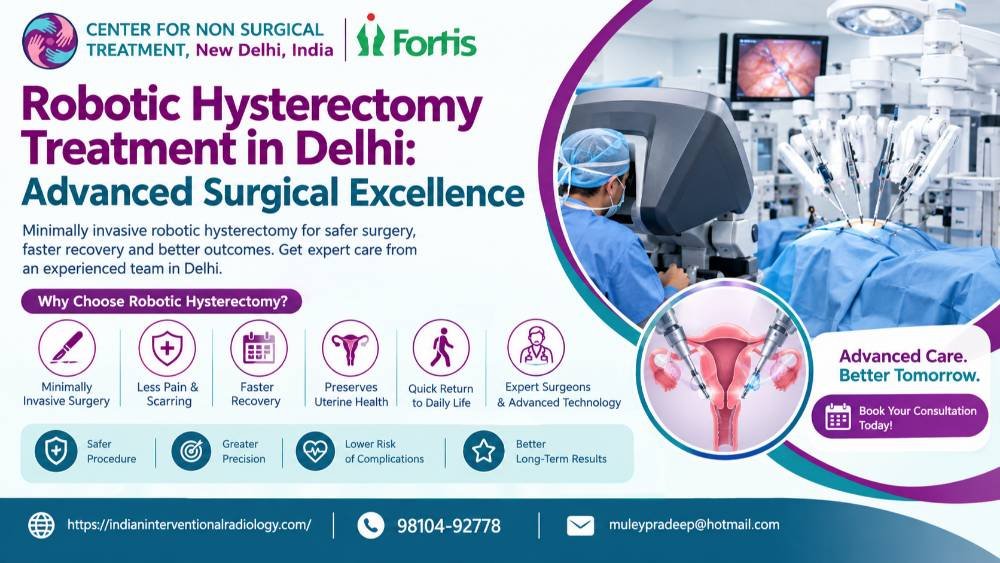
Robotic hysterectomy treatment in Delhi involves minimally invasive surgical removal of the uterus using the da Vinci Surgical System or comparable robotic platform. The term “robotic” sometimes causes misunderstanding—the robot doesn’t operate independently. Rather, it amplifies surgical precision while a skilled gynaecological surgeon directs every movement.
How Robotic Surgery Functions
The surgical console provides the operating surgeon with: - Three-dimensional magnified visualisation (10x magnification) - 360-degree camera rotation capability - Superior depth perception compared to conventional laparoscopy - Tremor filtration—natural hand tremors are eliminated - Motion scaling—large surgeon movements translate to precise instrument movements
This technological marriage enables techniques impossible through conventional approaches.
Conditions Requiring Hysterectomy: Why Robotic Approach Matters
Robotic hysterectomy treatment in Delhi addresses numerous gynaecological conditions:
Fibroids (Uterine Leiomyomas) - Benign growths causing heavy bleeding, pressure, pain - Often affect reproductive-age women - Traditional surgery previously required large abdominal incisions - Robotic approach now offers minimal invasion for even large fibroid removal
Endometriosis - Tissue growing outside the uterus causing severe pain - Conservative approaches frequently fail - Hysterectomy provides definitive treatment - Robotic removal ensures complete diseased tissue removal
Adenomyosis - Endometrial tissue invading muscle layer - Causes severe dysmenorrhoea and heavy bleeding - Medical management often insufficient - Surgical removal becomes necessary
Gynaecological Malignancies - Endometrial cancer - Cervical cancer requiring hysterectomy - Ovarian cancer - Robotic approach enables complete staging and removal with minimal trauma
Uterine Prolapse - Uterus descends into vaginal canal - Causes pelvic pressure, urinary symptoms - Robotic hysterectomy eliminates the problematic organ
Abnormal Uterine Bleeding - When medical management fails - Some cases require uterus removal for symptom control
Chronic Pelvic Pain - When conservative approaches exhausted - Hysterectomy offers definitive relief for pain-causing pathology
Advantages of Robotic Hysterectomy Treatment Over Traditional Approaches
Comparing robotic approach to other hysterectomy types reveals significant advantages:
| Factor | Open Surgery | Laparoscopy | Robotic |
|---|---|---|---|
| Incision size | 6-8 inches | Multiple small | Multiple 0.75-1cm |
| Pain level | Significant | Mild | Minimal |
| Hospital stay | 2-3 days | Often outpatient | Outpatient to 1 day |
| Recovery time | 6-8 weeks | 3-4 weeks | 2-3 weeks |
| Return to exercise | 8+ weeks | 4-6 weeks | 3-4 weeks |
| Infection risk | Higher | Lower | Very low |
| Blood loss | Higher | Lower | Lower |
| Scar appearance | Significant | Minimal | Barely visible |
| Surgical precision | Limited | Good | Excellent |
The Robotic Hysterectomy Procedure: Step-by-Step
Pre-Operative Preparation
One Week Before: - Cease aspirin and anticoagulants (consult surgeon) - Bowel preparation (medical instructions provided) - Complete medical clearance - Final imaging confirming pathology
Day Before: - NPO after midnight (nothing by mouth) - Shower using antiseptic soap - Remove all jewellery and nail polish - Arrange post-operative care support
Operative Day
Initial Setup (30-45 minutes): - Anaesthetic induction - Endotracheal intubation for airway management - Catheter placement - Patient positioning - Sterile field preparation
Port Placement (5-10 minutes): - Typically 3-4 small incisions created - Carbon dioxide insufflation (inflating abdomen for workspace) - Camera and instrument ports established - Immediate visualisation begins
Surgical Procedure (60-90 minutes depending on complexity): - Complete systematic exploration of pelvis - Identification of diseased tissue - Careful dissection preserving adjacent structures - Vessel sealing using advanced technology - Complete uterus removal
Specimen Removal (5-10 minutes): - Specimen placed in specimen pouch - Careful extraction through port - Pathological examination (sent for testing)
Closure (5-10 minutes): - Meticulous haemostasis (bleeding control) - Fascia closure at larger port sites - Skin closure with absorbable sutures - Minimal dressing application
Total operative time: 90-150 minutes depending on complexity, pathology extent, and surgeon experience.
Recovery from Robotic Hysterectomy Treatment
Immediate Post-Operative Period (First 4-6 Hours)
Recovery Room Observations: - Vital signs monitoring - Pain assessment and management - Gradual awakening from anaesthesia - Ambulation encouraged when stable
Discharge Timeline: - Most patients discharged same day - Some requiring overnight observation (depends on complexity) - Clear discharge instructions provided - Follow-up appointment scheduled
First Week Recovery
Physical Expectations: - Abdominal discomfort (pain usually mild with robotic approach) - Vaginal spotting or bleeding (normal) - Shoulder discomfort from carbon dioxide (resolves quickly) - Mild fatigue
Activity Level: - Light walking encouraged multiple times daily - Stairs manageable - Housework avoided (avoid lifting >5kg) - Desk work can resume if pain-controlled
Dietary Adjustments: - Clear liquids initially - Regular diet as tolerated - Increased fibre to prevent constipation - Stay well hydrated
Medication Management: - Pain medication as prescribed - Continue pre-existing medications (unless instructed) - Prophylactic antibiotics (typically 1-2 doses)
Weeks 2-3 Recovery
Progressive Improvement: - Discomfort significantly reducing - Vaginal discharge gradually decreasing - Energy levels improving - Sleep normalising
Activity Expansion: - Light exercise permitted (walking, gentle stretching) - Shower permissible (avoid bathing/immersion) - Driving safe if pain-controlled - Return to desk work
Restrictions Remaining: - No heavy lifting (>5kg) - No strenuous exercise - No sexual intercourse - Avoid heavy machinery operation
Weeks 4-6 Recovery
Return to Normalcy: - Most discomfort resolved - Full energy return expected - Sexual intercourse permissible - Most normal activities resumed
Exercise Clearance: - Gym activity typically cleared week 4-6 - Light cardiovascular exercise first - Progressive resistance training as tolerated - Full activity clearance by week 6-8
Long-Term Post-Operative Considerations
Permanent Changes: - No menstrual periods (surgically induced menopause if ovaries removed) - No future pregnancy possible - Psychological adjustment period (variable) - Potential hormone changes (if ovaries removed)
Hormone Replacement: - If both ovaries removed, hormone therapy often recommended - Discussion regarding HRT benefits and risks essential - Regular monitoring with your doctor
Pelvic Floor Health: - Pelvic floor exercises beneficial long-term - May prevent future prolapse concerns - Physical therapy sometimes recommended
Complications: Understanding Risks Transparently
Whilst robotic hysterectomy treatment is generally safe, understanding potential complications enables informed decision-making.
Common Minor Complications (1-2% incidence): - Urinary tract infection - Vaginal spotting - Mild fever (self-limiting) - Constipation
Uncommon But Serious Complications (<0.5% incidence): - Bladder or bowel injury - Major blood vessel injury - Infection requiring antibiotics - Deep vein thrombosis (clot formation)
Extremely Rare Complications (<0.1% incidence): - Pulmonary embolism (clot to lung) - Anaphylactic reactions - Anaesthetic complications
Risk Reduction Strategies: - Experienced surgeon (volume matters significantly) - Thorough pre-operative assessment - Recognition of anatomical variants - Careful operative technique - Appropriate post-operative monitoring
Why Choose Robotic Hysterectomy Treatment in Delhi?
Access to Expertise
Delhi offers world-class robotic surgery centres with surgeons trained internationally. Specialist gynaecological surgeons performing 50+ robotic procedures yearly deliver superior outcomes through high-volume experience.
Cost-Effectiveness
Whilst robotic systems require significant hospital investment, the advantages justify the technology: - Faster recovery = less time lost from work - Reduced pain = lower medication costs - Minimal scarring = better long-term outcomes - Lower complication rates = fewer emergency procedures
World-Class Facilities
Leading Delhi hospitals feature: - Advanced da Vinci Surgical Systems - Experienced surgical teams - Complete post-operative care facilities - International standard protocols
Frequently Asked Questions
1. How does robotic surgery differ from standard laparoscopy?
Robotic surgery provides superior visualisation (3D, 10x magnification), better instrument articulation (360-degree movement), tremor filtration, and improved ergonomics. Laparoscopy is simpler but less precise.
2. Is robotic hysterectomy treatment suitable for all patients?
Most patients are candidates, but individual factors matter. Discuss your specific situation with your surgeon.
3. What if my uterus is very large?
Robotic approach handles large uteri excellently. The precision and control suit complex cases particularly well.
4. Will I retain my ovaries?
That’s your choice (with medical input). Keeping ovaries avoids surgical menopause but leaves them vulnerable to later disease. Discuss with your surgeon.
5. How does robotic hysterectomy compare to vaginal hysterectomy?
Both are minimally invasive. Vaginal approach is simpler for uncomplicated cases. Robotic excels with fibroids, endometriosis, or complex pathology.
6. Will I experience weight gain after hysterectomy?
Hysterectomy alone doesn’t cause weight gain. If ovaries are removed, hormonal changes might increase weight gain risk. Maintaining healthy lifestyle prevents this.
7. How soon can I return to work?
Most patients return to desk work within 2-3 weeks. Physical jobs may require 4-6 weeks.
8. Is there any way to avoid hysterectomy?
Always exhaust conservative options first. Medical management, minimally invasive procedures (fibroid embolisation, ablation), and other alternatives should be thoroughly discussed.
9. Will I feel different after hysterectomy?
You won’t feel the absence of the uterus (it’s not a significant sensory organ). You may experience psychological adjustment as the uterus holds symbolic significance culturally and personally.
10. How do I choose between surgeons offering robotic hysterectomy treatment?
Look for: volume of procedures performed, board certification, hospital affiliation, patient testimonials, and communication style. Experience matters significantly.
The Bottom Line: Robotic Excellence
Robotic hysterectomy treatment in Delhi represents contemporary surgical excellence. The combination of advanced technology, experienced surgeons, and modern facilities delivers outcomes superior to traditional approaches. If hysterectomy becomes medically necessary, robotic approach offers obvious advantages in recovery speed, pain reduction, and cosmetic outcomes.
About the Author: The medical team brings expertise in contemporary gynaecological surgery, emphasising patient-centred care and evidence-based treatment decisions.
Disclaimer: This article provides educational information only. Always consult qualified medical professionals for individual diagnosis and treatment planning.