
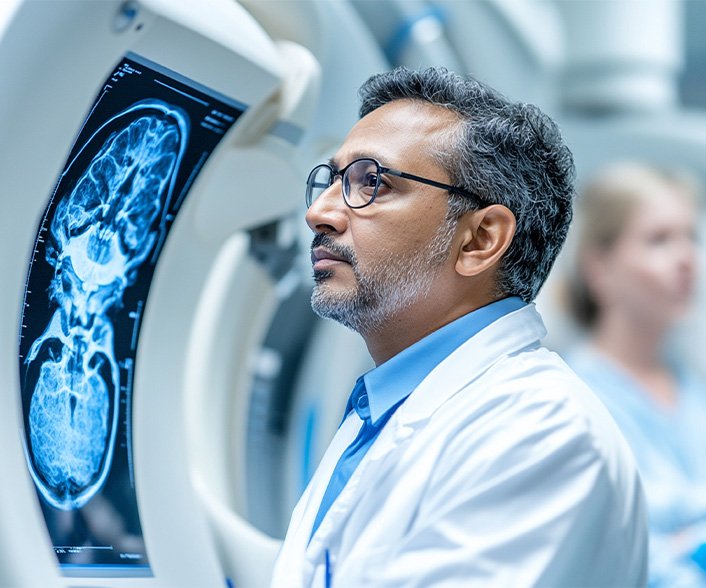
Imagine treating complex medical conditions without large surgical incisions, long hospital stays, or extended recovery periods. This is the reality that interventional radiologists have made possible. These specialized physicians are transforming healthcare by offering minimally invasive alternatives to traditional surgery, helping thousands of patients recover faster and return to their normal lives sooner.
According to Dr. Pradeep Muley, a leading Interventional Radiologist, The field of interventional radiology represents a paradigm shift in how we approach patient care. We can now treat conditions that once required major surgery using small incisions, advanced imaging, and precise catheter-based techniques.
In this comprehensive guide, we'll explore everything you need to know about interventional radiologists, their specialized training, the conditions they treat, and how this innovative field is revolutionizing patient care.
What Is an Interventional Radiologist?
An Interventional Radiologist is a medical doctor who specializes in performing minimally invasive, image-guided procedures to diagnose and treat a wide variety of conditions. Unlike diagnostic radiologists who primarily interpret medical images, interventional radiologists actively perform therapeutic procedures using real-time imaging technology such as X-rays, ultrasound, CT scans, and MRI.
These physicians serve as both diagnosticians and interventional specialists, combining their expertise in medical imaging with hands-on procedural skills. By using catheters, wires, and other small instruments guided by advanced imaging, they can navigate through blood vessels and other pathways in the body to deliver targeted treatment directly to the affected area.
Core Competencies of an Interventional Radiologist
The role of an Interventional Radiologist encompasses several key responsibilities:
- Diagnostic Excellence: Using advanced imaging to accurately diagnose vascular and non-vascular diseases
- Minimally Invasive Treatment: Performing precise procedures through small incisions or natural body openings
- Multidisciplinary Collaboration: Working alongside surgeons, oncologists, cardiologists, and other specialists to provide comprehensive patient care
- Patient-Centered Care: Offering treatment options that minimize pain, reduce recovery time, and improve quality of life
- Technological Innovation: Staying at the forefront of medical technology and imaging advancements
The Distinctive Approach: How Interventional Radiologists Differ from Traditional Surgeons
While both surgeons and interventional radiologists treat diseases and injuries, their approaches differ significantly. Understanding these differences helps patients make informed decisions about their treatment options.
1. Minimally Invasive Philosophy
Traditional surgeons often require large incisions to access the treatment area directly. In contrast, interventional radiologists typically work through incisions smaller than a quarter of an inch, using catheters and specialized instruments guided by real-time imaging. This fundamental difference translates into numerous patient benefits.
2. Key Advantages of Interventional Radiology
- Reduced Physical Trauma: Tiny incisions mean less tissue damage, minimal scarring, and reduced post-procedure pain
- Lower Complication Rates: Smaller incisions significantly decrease the risk of infection, bleeding, and other surgical complications
- Outpatient Procedures: Many interventional radiology treatments can be performed on an outpatient basis, eliminating the need for hospital admission
- Faster Recovery: Most patients return to their normal activities within days rather than weeks or months
- Local Anesthesia: Many procedures require only local anesthesia or conscious sedation rather than general anesthesia
- Cost-Effective: Shorter hospital stays and quicker recovery times often result in lower overall healthcare costs
Dr. Pradeep Muley emphasizes, "The goal of interventional radiology is not just to treat the condition but to do so in a way that preserves the patient's quality of life. We aim to minimize disruption to their daily routine while achieving excellent clinical outcomes."
Comprehensive Range of Conditions Treated by Interventional Radiologists
The versatility of interventional radiology allows these specialists to address an impressive array of medical conditions across multiple organ systems. Here's a detailed look at the health problems commonly treated by interventional radiologists.
1. Vascular and Circulatory Conditions
The vascular system is a primary focus of interventional radiology. These specialists excel at treating:
- Peripheral Artery Disease (PAD): Opening blocked arteries in the legs using angioplasty and stenting to restore blood flow and relieve pain
- Deep Vein Thrombosis (DVT): Removing dangerous blood clots from deep veins to prevent pulmonary embolism
- Varicose Veins: Treating enlarged, twisted veins using endogenous laser therapy or radiofrequency ablation
- Pulmonary Embolism: Removing life-threatening blood clots from the lungs using catheter-directed thrombolysis
- Aortic Aneurysms: Repairing weakened aortic walls with endovascular stent grafts to prevent rupture
- Carotid Artery Disease: Preventing stroke by opening blocked carotid arteries through angioplasty and stenting
- Dialysis Access Management: Creating and maintaining vascular access for kidney dialysis patients
2. Oncology and Tumor Treatments
Interventional radiologists play an increasingly vital role in cancer care:
- Tumor Ablation: Destroying cancerous tumors in the liver, kidney, lung, and bone using radiofrequency, microwave, or cryoablation techniques
- Chemoembolization: Delivering concentrated chemotherapy directly to liver tumors while blocking their blood supply
- Radioembolization: Using radioactive microspheres to treat liver cancer with precision radiation therapy
- Tumor Biopsy: Obtaining tissue samples for diagnosis using image-guided needle biopsy
- Pain Management: Providing palliative care through nerve blocks and vertebral augmentation for cancer-related pain
3. Gastrointestinal and Hepatobiliary Disorders
The digestive system and liver benefit from numerous interventional procedures:
- Gastrointestinal Bleeding Control: Stopping acute bleeding from ulcers, tumors, or vascular malformations
- Bile Duct Drainage: Relieving jaundice and bile duct obstruction through percutaneous biliary drainage
- Liver Disease Management: Treating portal hypertension with transjugular intrahepatic portosystemic shunt placement
- Ascites Management: Draining excess abdominal fluid in patients with cirrhosis or cancer
- Feeding Tube Placement: Establishing enteral nutrition access for patients unable to eat normally
4. Urological and Reproductive Health Issues
Interventional radiology offers effective solutions for urogenital conditions:
- Kidney Stone Management: Establishing drainage with percutaneous nephrostomy when stones block urine flow
- Benign Prostatic Hyperplasia (BPH): Treating enlarged prostate through prostate artery embolization as an alternative to surgery
- Varicocele Treatment: Correcting testicular vein abnormalities that can affect fertility
- Uterine Fibroid Embolization: Shrinking painful fibroids without hysterectomy, preserving the uterus
- Pelvic Congestion Syndrome: Treating chronic pelvic pain caused by varicose veins in the pelvis
5. Pain Management and Orthopedic Applications
Chronic pain conditions respond well to interventional techniques:
- Vertebral Compression Fractures: Stabilizing spine fractures through vertebroplasty or kyphoplasty, often providing immediate pain relief
- Chronic Back Pain: Addressing pain sources through targeted nerve blocks, radiofrequency ablation, or epidural steroid injections
- Joint Pain: Delivering precise intra-articular injections under image guidance for arthritis and other joint conditions
6. Emergency and Trauma Interventions
In critical situations, interventional radiologists provide life-saving treatments:
- Hemorrhage Control: Stopping internal bleeding from trauma, surgery, or spontaneous rupture through embolization
- Postpartum Hemorrhage: Managing severe bleeding after childbirth when other measures fail
- Acute Stroke Intervention: Removing blood clots in selected stroke cases through mechanical thrombectomy
Dr. Pradeep Muley notes, The breadth of conditions we can address continues to expand as technology advances. What makes interventional radiology particularly exciting is that we're constantly developing new techniques to help patients who previously had limited treatment options.
The Compelling Benefits of Choosing Interventional Radiology
Patients who undergo interventional radiology procedures consistently report high satisfaction levels. The benefits extend beyond the medical outcomes to impact overall quality of life.
Medical Advantages
- Precision Treatment: Image guidance allows for millimeter-level accuracy in targeting diseased tissue while sparing healthy structures
- Reduced Blood Loss: Minimal incisions and careful technique result in significantly less bleeding compared to open surgery
- Lower Infection Risk: Smaller wounds dramatically reduce the chance of post-procedure infections
- Preservation of Organ Function: Many procedures can treat disease while maintaining normal organ structure and function
Practical Benefits for Patients
- Same-Day Discharge: Most procedures allow patients to go home within hours rather than days
- Quick Return to Work: Many patients resume work within days of their procedure
- Minimal Scarring: Small puncture sites heal with barely visible marks
- Repeatable Procedures: If needed, most interventional treatments can be safely repeated
- Options for High-Risk Patients: Patients who cannot tolerate general anesthesia or major surgery often can undergo interventional procedures safely
The Rigorous Educational Journey to Becoming an Interventional Radiologist
The path to becoming an Interventional Radiologist requires extensive education, training, and dedication. Understanding this journey helps patients appreciate the expertise these specialists bring to their care.
Medical School Foundation (5.5 Years)
The journey begins with obtaining an MBBS (Bachelor of Medicine, Bachelor of Surgery) degree:
- Duration: Five and a half years, including a mandatory one-year internship
- Prerequisites: Successful completion of the NEET-UG (National Eligibility cum Entrance Test for Undergraduate) examination
- Curriculum: Comprehensive study of human anatomy, physiology, pathology, pharmacology, and basic clinical skills
- Clinical Exposure: Hands-on training across various medical specialties including internal medicine, surgery, and radiology
Specialized Radiology Training (3 Years)
After medical school, aspiring interventional radiologists must complete postgraduate training:
- Qualification Options: MD (Doctor of Medicine) in Radiodiagnosis or DNB (Diplomate of National Board) in Radiology
- Entry Requirement: High performance in the NEET-PG (National Eligibility cum Entrance Test for Postgraduate) examination
- Training Focus: Advanced imaging interpretation, cross-sectional anatomy, radiation physics, and introductory interventional procedures
- Institutional Training: Programs at premier institutions like AIIMS, PGIMER, and leading medical colleges across India
Advanced Fellowship in Interventional Radiology (1–2 Years)
The final stage involves subspecialty training specifically in interventional techniques:
- Comprehensive Procedural Training: Intensive hands-on experience in vascular and non-vascular interventions
- Mentorship: Working closely with experienced interventional radiologists to refine technical skills
- Research and Innovation: Exposure to cutting-edge techniques and participation in clinical research
- Volume Requirements: Performing a minimum number of supervised procedures to achieve competency
Continuous Professional Development
The learning doesn't stop after formal training. Interventional radiologists engage in:
- Board Certification: Maintaining certification through the Medical Council of India or National Board of Examinations
- Continuing Medical Education: Attending conferences, workshops, and seminars to stay current with evolving techniques
- Professional Societies: Active participation in organizations like the Indian Society of Vascular and Interventional Radiology (ISVIR)
How to Select the Right Interventional Radiologist for Your Care
Choosing the right Interventional Radiologist can significantly impact your treatment experience and outcomes. Consider these important factors when making your decision.
Credentials and Experience
- Board Certification: Verify that the physician is certified in radiology with additional fellowship training in interventional radiology
- Experience Level: Inquire about the number of procedures similar to yours the doctor has performed
- Subspecialty Expertise: Some interventional radiologists focus on specific areas like oncology, vascular disease, or women's health
Institutional Quality
Hospital Accreditation: Choose physicians affiliated with well-equipped hospitals that maintain high safety standards
Technology Access: Advanced imaging equipment and state-of-the-art catheterization labs contribute to better outcomes
Support Team: A skilled team of technologists, nurses, and support staff is essential for optimal care
Communication and Approach
- Patient Education: The right physician takes time to explain your condition, treatment options, and what to expect
- Shared Decision-Making: Your doctor should involve you in treatment decisions and respect your preferences
- Accessibility: Consider the physician's availability for follow-up care and addressing concerns
Research and Reviews
- Patient Testimonials: Read experiences from other patients who have undergone similar procedures
- Outcomes Data: Ask about success rates and complication rates for your specific procedure
- Professional Reputation: Recommendations from other physicians can provide valuable insights
Dr. Pradeep Muley advises, "Don't hesitate to ask questions during your consultation. A good interventional radiologist welcomes inquiries and wants you to feel confident in your treatment plan. This is your health, and you deserve to understand every aspect of your care."
Debunking Common Myths About Interventional Radiology
Despite the proven benefits of interventional radiology, several misconceptions persist. Let's separate fact from fiction.
Myth 1: Interventional Radiology Is Only for Emergency Situations
Reality: While interventional radiologists do provide emergency care, the majority of procedures are planned treatments for chronic conditions like fibroids, varicose veins, and tumors.
Myth 2: Interventional Procedures Are Experimental or Unproven
Reality: Most interventional radiology techniques are well established and supported by decades of research.
Myth 3: Only Patients Who Can't Have Surgery Are Candidates
Reality: Interventional radiology is often the preferred first-line treatment.
Myth 4: Interventional Radiology Only Treats Vascular Conditions
Reality: Interventional radiologists treat conditions affecting nearly every organ system.
Myth 5: Recovery Is Just as Long as Traditional Surgery
Reality: Recovery is significantly shorter in most interventional procedures.
Myth 6: The Procedures Are Too Risky
Reality: Complication rates are generally lower than open surgery.
The Exciting Future of Interventional Radiology
The field of interventional radiology continues to evolve rapidly.
Technological Advancements
- Artificial Intelligence Integration : AI algorithms are enhancing image analysis, improving procedure planning, and helping predict outcomes
- Robotic-Assisted Procedures : Robotic systems may soon provide even greater precision and enable procedures that are currently challenging
- 3D Printing Applications : Patient-specific models and devices created through 3D printing are improving procedural planning and outcomes
- Nanotechnology : Nanoparticles are being developed for targeted drug delivery and enhanced imaging
Expanded Treatment Options
- Molecular Interventions : Techniques that target specific molecular pathways in diseases like cancer
- Immunotherapy Delivery : Local delivery of immunotherapy agents directly to tumors
- Gene Therapy Applications : Using interventional techniques to deliver gene therapy to specific organs
Improved Patient Experience
- Virtual Reality : VR technology for patient education and anxiety reduction before procedures
- Enhanced Recovery Protocols : Optimized pre- and post-procedure care pathways for faster healing
- Telemedicine Integration : Remote consultation and follow-up capabilities for improved access to care
Dr. Pradeep Muley shares his vision: "The future of interventional radiology is incredibly bright. We're moving toward truly personalized medicine, where treatments are tailored not just to the disease but to each individual patient's unique characteristics. The combination of advanced imaging, artificial intelligence, and innovative techniques will allow us to achieve outcomes we once thought impossible.
When Should You Consider Consulting an Interventional Radiologist?
Consider seeking a consultation if you:
- Have been told you need major surgery and want to explore less invasive options
- Suffer from chronic pain that hasn't responded to conservative treatment
- Have been diagnosed with uterine fibroids, varicose veins, or benign tumors
- Experience vascular problems like peripheral artery disease or DVT
- Need ongoing dialysis access management
- Have cancer and want to explore targeted treatment options
- Were told you're too high-risk for traditional surgery
- Seek a second opinion on your treatment plan
Preparing for Your First Consultation
To make the most of your appointment with an Interventional Radiologist:
- Gather Medical Records : Bring previous imaging studies, test results, and medical history
- List Current Medications : Include prescriptions, over-the-counter drugs, and supplements
- Prepare Questions : Write down concerns and questions about your condition and treatment options
- Bring a Companion : A family member or friend can help remember information discussed
- Document Symptoms : Keep a journal of symptoms, including frequency, severity, and triggers
Frequently Asked Questions About Interventional Radiology
Q: Are interventional radiology procedures safe?
Yes, interventional procedures are generally very safe with lower complication rates than equivalent surgical procedures. However, like any medical procedure, they carry some risks, which your doctor will discuss with you.
Q: Will I need to stay in the hospital?
Most interventional radiology procedures are performed on an outpatient basis, allowing you to go home the same day. More complex procedures may require an overnight stay for observation.
Q: How much pain should I expect during and after the procedure?
Most procedures involve minimal pain due to local anesthesia and the small incision sizes. Post-procedure discomfort is typically mild and well-controlled with over-the-counter pain medication.
Q: How long before I can return to work and normal activities?
Recovery times vary by procedure, but most patients return to work within 2-7 days. Your interventional radiologist will provide specific guidelines based on your procedure and individual circumstances.
Q: Will my insurance cover interventional radiology procedures?
Most insurance plans cover medically necessary interventional procedures. It's advisable to check with your insurance provider and the treatment facility regarding coverage and pre-authorization requirements.
Q: How do I know if interventional radiology is right for my condition?
Schedule a consultation with an Interventional Radiologist who can review your case, explain available options, and help you make an informed decision about your care.
Q: Are the results permanent?
This depends on the condition being treated. Many interventional procedures provide long-lasting or permanent results, while others may need periodic maintenance or repeat treatments.
Q: What success rates can I expect?
Success rates vary by procedure and condition. Your interventional radiologist can provide specific statistics relevant to your situation based on current medical literature and their own experience.
Conclusion
Interventional radiology represents one of the most significant advances in modern medicine, offering patients effective treatment options with minimal disruption to their lives. The combination of advanced imaging technology, refined techniques, and physician expertise has created a specialty that truly puts patient well-being first.
Whether you're dealing with a chronic condition that has limited your quality of life, facing a diagnosis that traditionally required major surgery, or simply seeking the least invasive treatment option available, interventional radiology may offer the solution you need.
The field continues to expand and innovate, with new applications and techniques emerging regularly. What was once impossible is now routine, and what's routine today will seem elementary compared to the capabilities of tomorrow.
Dr. Pradeep Muley emphasizes, "Every patient deserves access to the most advanced, effective, and least invasive treatment options available. Interventional radiology allows us to meet this standard, providing hope and healing to patients who might otherwise face limited options or significant surgical procedures."