
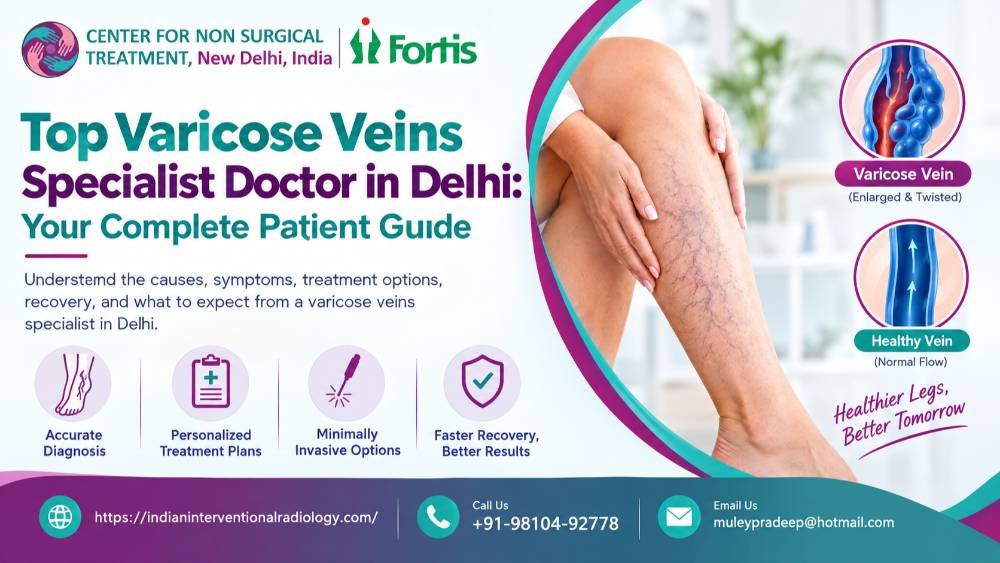
When you notice twisted, bluish veins spreading across your legs, or experience that heavy, aching sensation that worsens throughout the day, you’re dealing with a condition affecting millions worldwide. In Delhi’s climate and lifestyle—long working hours, extended commutes, and standing-intensive jobs—varicose veins have become increasingly common. The positive news: a qualified varicose veins specialist doctor in Delhi can resolve this issue effectively through modern, minimally invasive procedures, often in a single outpatient visit.
What Sets a True Varicose Veins Specialist Apart?
The distinction between a general physician and a dedicated varicose veins specialist doctor in Delhi is crucial. While your family doctor might recognise twisted veins during a routine visit, they lack the specialised training to identify which specific valve has malfunctioned or how to use image-guided technology for treatment.
A genuine varicose veins specialist doctor in Delhi—typically an interventional radiologist or vascular surgeon—employs sophisticated diagnostic tools. Dr Pradeep Muley, a senior consultant interventional radiologist at Fortis Hospital, Vasant Kunj, exemplifies this expertise. With hundreds of successful procedures under their belt, specialists like Dr Muley use duplex ultrasound to visualise blood flow, pinpoint faulty segments, and perform minimally invasive closure without traditional open surgery.
The interventional approach means: - Precise mapping of problematic veins - Treatment from within the vessel - No general anaesthesia required - Immediate return to normal activities - Reduced recurrence rates
Understanding Venous Insufficiency: How Varicose Veins Develop
Leg veins function through an elegant valve system. These one-way valves push blood upward against gravity towards the heart. When these valves weaken—a condition called venous insufficiency—blood flows backward, pooling in the vein and causing the vessel wall to stretch and bulge.
| Risk Factor | Impact on Vein Health | Prevalence in Delhi |
|---|---|---|
| Prolonged standing/sitting | Reduces calf muscle pump action | High (desk jobs, retail staff) |
| Genetic predisposition | Inherited weak vein walls | 60% of patients have family history |
| Pregnancy | Hormonal changes increase blood volume | Second/third trimester peak |
| Excess body weight | Increased venous system pressure | Rising with urban lifestyle |
| Age 40+ | Natural elasticity loss | Affects 1 in 3 adults over 50 |
| Hormonal contraception | Reduces vein wall elasticity | 3-4x increased risk |
| Occupational factors | Standing-heavy professions | Especially common in India |
Recognising Varicose Vein Symptoms: When to Seek Care
During your initial consultation with a varicose veins specialist doctor in Delhi, expect thorough questioning about specific symptoms:
- Visible appearance: Twisted, rope-like blue or purple veins on legs
- Physical sensations: Aching, throbbing, or heaviness—particularly worse by evening
- Swelling: Puffy ankles and lower legs, especially after standing
- Skin changes: Brownish discolouration or rash near the ankle area
- Unusual sensations: Itching or burning directly over the affected vein
- Nocturnal symptoms: Night-time leg cramps, particularly in the calf
- Restlessness: Uncomfortable legs after prolonged sitting or standing
The critical point: don’t wait for severe symptoms. Early intervention prevents progression to skin changes, eczema, or serious venous ulcers. The Cleveland Clinic confirms that untreated venous insufficiency can cause permanent skin damage.
The Diagnostic Process: What Happens at Your Appointment
When you visit a varicose veins specialist doctor in Delhi, the diagnostic approach is thorough and systematic.
Physical Examination: You’ll be examined whilst standing, since gravity makes veins more visible. The specialist checks for bulging, skin changes, and observes how the vein network responds to position changes.
Venous Duplex Ultrasound: This painless scan is essential—it’s not optional, despite what some clinics suggest. Duplex ultrasound reveals: - Exact vein structure and diameter - Direction and speed of blood flow - Location of faulty valves - Presence of blood clots - Overall venous insufficiency severity
This imaging precision explains why recurrence is uncommon with experienced specialists—there’s no guesswork involved.
Patient Discussion: Your varicose veins specialist doctor in Delhi reviews findings, discusses your lifestyle impact, and explores treatment options matched to your situation.
Modern Treatment Options: What Your Specialist Might Recommend
Contemporary vein treatment has advanced remarkably. The era of general anaesthesia and hospitalisation has largely passed. Today’s approaches are outpatient procedures.
Radiofrequency Ablation (RFA)
How it works: A thin catheter is guided into the affected vein under ultrasound. Radiofrequency energy heats the vein wall, causing it to collapse and seal shut. Blood then reroutes through healthy veins.
Recovery: Patients walk out the same day. Normal activities resume within 24-48 hours. Mild bruising or tightness is typical for 1-2 weeks.
Advantages: Highly effective, immediate results visible, minimal discomfort, excellent safety profile.
Endovenous Laser Treatment (EVLT)
How it works: Similar to RFA, but uses laser energy instead of radiofrequency to close the vein from within through a tiny puncture.
Recovery: Same-day discharge. Mild bruising for approximately one week. Full activity clearance within two weeks.
Advantages: Shorter procedure time, effective for various vein sizes, minimal scarring.
Sclerotherapy
How it works: A specially formulated solution is injected directly into spider or small varicose veins, causing them to collapse and fade.
Recovery: Zero downtime. You can return to work immediately.
Best for: Spider veins and small tributary veins. Often requires multiple sessions for complete results.
Advantages: Non-invasive, no needles beyond initial injection, ideal for cosmetic concerns.
Traditional Vein Stripping (Rarely Recommended Today)
How it works: The affected vein is surgically removed under general anaesthesia.
Recovery: 1-2 weeks of discomfort, visible scarring, significant activity restriction.
Current role: Reserved for extensive disease or when other methods aren’t suitable. Most varicose veins specialist doctors in Delhi offer this only as a last resort.
The Society for Vascular Surgery confirms that RFA and EVLT have become standard care, with superior outcomes to traditional stripping.
Selecting the Right Varicose Veins Specialist Doctor in Delhi
Not every clinic advertising vein treatment features a qualified specialist. Here’s what distinguishes exceptional providers:
Essential Credentials: - Board certification in interventional radiology or vascular surgery - Demonstrated experience with ultrasound-guided procedures - Active practice at recognised hospitals with proper imaging facilities - Published success rates or professional affiliations
Quality Indicators: - Insists on ultrasound confirmation before recommending treatment - Explains conservative options for mild cases (compression, lifestyle modifications) - Discusses all treatment options honestly, including pros and cons - Performs high volume of procedures annually (ideally 50+ yearly) - Provides detailed aftercare guidance including compression stocking protocols - Offers follow-up imaging to confirm treatment success
Red Flags: - Recommending treatment without ultrasound assessment - Pressure to choose expensive options immediately - Vague answers about procedure experience - No structured aftercare plan - Operating from clinics without proper imaging equipment
Dr Pradeep Muley at Fortis Hospital exemplifies these standards—years of specialist practice, cutting-edge equipment, and patient-centred care.
Recovery and Aftercare: What to Expect
Immediate Post-Treatment (0-24 hours): - Wear compression stocking as directed - Walk frequently—don’t rest immobilised - Avoid strenuous activity - Expect mild discomfort manageable with paracetamol
Week 1-2: - Continue compression stockings during waking hours - Resume normal walking and light activities - Bruising and mild swelling are normal - Avoid heavy lifting or intense exercise
Week 3-4: - Most patients cleared for gym and sports - Swelling should significantly improve - Compression stockings can be discontinued - Follow-up ultrasound may be scheduled to confirm success
Important: Your varicose veins specialist doctor in Delhi will provide personalised timelines. Some patients recover faster; others need slightly longer based on individual factors.
When to Arrange Your Consultation
Don’t delay seeking care. Early-stage varicose veins respond beautifully to minimally invasive treatment. Waiting allows progression to: - Skin hardening and discolouration - Development of eczema - Venous ulceration (severe cases) - Increased procedural complexity
Seek consultation if you notice: - Visible bulging veins - Leg heaviness or aching by day’s end - Swelling that doesn’t resolve overnight - Skin colour changes - Any symptoms interfering with daily life
Frequently Asked Questions
1. What’s the difference between a varicose vein specialist and a general surgeon?
A varicose vein specialist, particularly an interventional radiologist, uses ultrasound-guided, minimally invasive techniques to close faulty veins from within. General surgeons traditionally rely on open surgery involving larger incisions, general anaesthesia, and longer recovery. Modern specialists offer precision medicine; traditional surgeons offer traditional approaches. The results speak differently.
2. Is varicose vein treatment painful?
Not at all. Modern procedures under local anaesthesia cause mild discomfort at most—certainly nothing compared to open surgery pain. Patients often describe a sensation of pressure rather than pain. The numbing medication means you feel the procedure but experience no significant pain.
3. How long does a typical varicose vein procedure take?
Most RFA and EVLT procedures last 45 minutes to one hour, depending on vein complexity. Sclerotherapy can be quicker—15-30 minutes. Patients go home the same day, often within one to two hours of completion.
4. Will varicose veins return after treatment?
Recurrence of the treated vein is uncommon (less than 5%) when proper technique is used by experienced specialists. However, new varicose veins can develop elsewhere over years, particularly with genetic predisposition. This isn’t failure of initial treatment—it’s natural progression of underlying venous insufficiency.
5. Do I need general anaesthesia for treatment?
Absolutely not. Local anaesthesia suffices completely for minimally invasive procedures. You remain awake and can communicate with the specialist throughout, offering peace of mind and faster recovery.
6. How soon can I walk after treatment?
Walking is encouraged immediately. In fact, walking supports circulation and reduces clot risk. You’ll walk out of the clinic and can continue normal walking throughout recovery.
7. Are varicose veins purely cosmetic?
Not always. Whilst some cases are purely aesthetic concerns, many involve underlying venous insufficiency causing swelling, aching, and skin changes. A specialist assessment determines whether treatment addresses cosmetics, health concerns, or both.
8. How do I know if I need specialist assessment?
If you notice visible bulging veins, persistent aching, leg heaviness, swelling, or skin discolouration, scheduling an ultrasound assessment with a specialist is sensible. There’s no harm in assessment, and early detection enables simpler treatment.
9. What should I expect at my first appointment?
Expect a detailed symptom review, standing physical examination, discussion of medical history, and duplex ultrasound imaging. The appointment typically lasts 30-45 minutes. Your specialist will explain findings and discuss options before scheduling any treatment.
10. Does insurance cover varicose vein treatment?
Coverage depends entirely on your specific policy and insurer determination of medical necessity versus cosmetic treatment. Policies differ significantly. Check with your insurer before consultation to understand your coverage level.
The Bottom Line
Varicose veins won’t resolve independently—they worsen progressively without intervention. The encouraging news: they respond excellently to modern, minimally invasive treatment. If your legs cause you concern, consulting an experienced varicose veins specialist doctor in Delhi like Dr Pradeep Muley represents a sensible step toward comfortable, healthy legs. Specialist assessment costs nothing but delivers invaluable information about your vein health.