
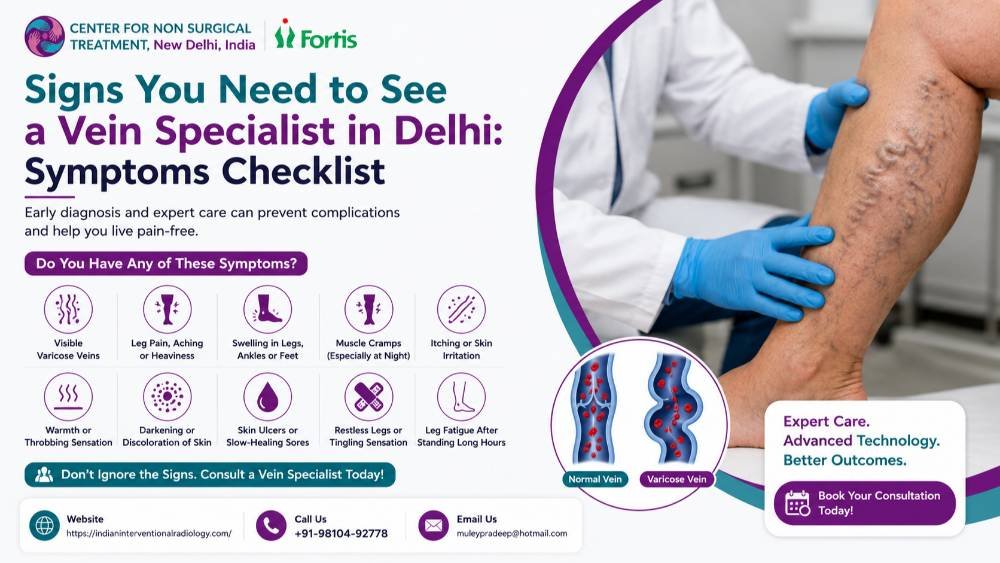
Persistent leg heaviness, aching, swelling, visible varicose veins or skin changes can be signs of venous disease and may warrant evaluation by a vein specialist. The need for assessment is greater when symptoms are persistent, worsening, affecting daily activities, or accompanied by skin changes or slow-healing wounds.
However, these symptoms are not specific to vein disease. A doctor may use a medical history, physical examination and, when appropriate, duplex ultrasound to determine whether venous reflux, obstruction or another condition is responsible.
Why Trust This Guide?
| Trust Signal | Details |
|---|---|
| Updated for 2026 | Latest clinical guidelines and vascular practices |
| Clinical Evidence | References to SVS, CEAP classification, established guidelines |
| Specialist Reviewer | Reviewed by Dr. Pradeep Muley, Senior Consultant Interventional Radiologist |
| Practical Checklist | Provides clear symptom checklists and action guidance |
| Transparency | Balanced discussion of symptoms and when to seek care |
This guide is based on established clinical guidelines and practical criteria for evaluating venous symptoms. It is written to help patients recognize when to seek medical evaluation for vein-related concerns.
Last Reviewed: July 2026
Quick Answer: When Should You See a Vein Specialist?
You should consider seeing a vein specialist doctor in Delhi if you have persistent or worsening:
- Varicose or bulging veins
- Leg aching, heaviness or discomfort
- Leg, ankle or foot swelling
- Brownish skin discoloration around the ankles
- Itching, dryness or other skin changes
- Recurrent cramps together with other venous symptoms
- Slow-healing wounds or suspected venous ulcers
Symptoms alone cannot confirm the cause. A specialist may perform a clinical examination and, when appropriate, duplex ultrasound to assess venous anatomy, blood flow and reflux.
Sudden one-sided leg swelling, pain, warmth or redness requires prompt medical assessment because DVT is one possible cause. Sudden shortness of breath or chest pain requires emergency medical attention because pulmonary embolism is a possibility.
Key Takeaways
- Persistent varicose veins with pain, heaviness or swelling deserve medical evaluation.
- Brown skin changes, skin thickening or slow-healing ankle wounds can occur with more advanced chronic venous disease.
- Duplex ultrasound may be used to assess venous anatomy, reflux and blood flow when clinically indicated.
- Sudden one-sided leg swelling or pain requires prompt assessment for possible DVT.
- Sudden chest pain or shortness of breath requires emergency medical attention.
- Treatment for varicose veins depends on the underlying venous problem and may range from conservative management to minimally invasive procedures.
Vein Symptoms Checklist: Signs You Shouldn't Ignore
| Symptom | What It May Indicate |
|---|---|
| Bulging, twisted, or rope-like veins | Possible varicose veins / superficial venous disease |
| Persistent leg pain or aching | Possible chronic venous insufficiency |
| Heavy, tired feeling in legs | Can occur with chronic venous disease, particularly when associated with aching, swelling or prolonged standing |
| Swelling in ankles or calves | Possible venous disease or other cause of edema |
| Skin discoloration (brownish patches) | Possible hemosiderin staining from chronic venous disease |
| Itching or burning around veins | Possible skin changes from venous disease |
| Leg cramps, especially at night | Can occur with chronic venous insufficiency |
| Slow-healing sores or ulcers | Possible venous ulcer / advanced venous disease |
| Painful, warm, tender superficial vein | Possible superficial thrombophlebitis |
| Sudden one-sided leg swelling/pain | Possible DVT — prompt medical assessment required |
What Is a Vein Specialist?
A vein specialist is a doctor with appropriate expertise in diagnosing and treating diseases of the veins. Depending on their training, they may be an interventional radiologist, vascular surgeon, vascular medicine specialist or another physician experienced in venous disease.
Phlebology refers to the medical field focused on venous disorders. The physician treating venous disease may have training in interventional radiology, vascular surgery, vascular medicine or another specialty with appropriate venous expertise.
1. Visible Varicose Veins
Varicose veins are enlarged, swollen, and twisted veins that appear dark blue or purple and feel firm or rope-like when touched. They commonly develop on the legs and may extend from the ankle to the thigh. While small spider veins are often cosmetic, bulging varicose veins can be associated with abnormal venous reflux and increased venous pressure. A clinical assessment, and duplex ultrasound when indicated, can help determine the underlying venous problem.
When to be concerned:
- Veins are becoming more visible, painful, or bothersome
- Veins feel hard, warm, or tender to touch (may indicate thrombophlebitis)
- Veins bleed or develop sores
2. Leg Pain, Aching or Heaviness
Leg aching, heaviness or discomfort can occur with chronic venous disease, particularly when symptoms worsen after prolonged standing or sitting and improve with leg elevation. However, these symptoms can also have non-venous causes.
Many patients describe a feeling of heavy legs, "as if weights are attached to your limbs." This heaviness may accompany visible swelling and can interfere with daily activities.
When to be concerned:
- Leg heaviness is persistent or worsening
- Pain interferes with daily activities or sleep
- Symptoms don't improve with rest or elevation
3. Leg or Ankle Swelling
Persistent swelling in the legs, ankles or feet, especially when it worsens later in the day, can occur with venous disease but may also have other causes. Persistent edema can contribute to skin changes and may occur with chronic venous disease, although swelling also has many non-venous causes. If your shoes feel tighter by evening or swelling leaves noticeable sock marks, mention these changes during a medical evaluation, particularly if they occur repeatedly.
When to be concerned:
- Swelling doesn't go away with rest or elevation
- Swelling is accompanied by pain or skin changes
- One leg is significantly more swollen than the other
4. Skin Discoloration and Skin Changes
Chronic venous disease can cause characteristic skin changes that may become more pronounced over time. One characteristic skin change is reddish-brown discoloration around the ankles, caused by iron deposits from leaked red blood cells. This hemosiderin staining appears as patches of rusty or bronze-colored skin that doesn't fade with elevation or rest.
Advanced skin changes include:
- Lipodermatosclerosis – skin becomes thick, hard, and leathery
- Dry, scaly, or itchy skin
- Brown-colored skin, often near the ankles
- Irritated or cracked skin
When to be concerned:
- Skin discoloration develops around your ankles
- Skin becomes thick, hard, or leathery
- You develop a rash or itching that doesn't resolve
5. Leg Cramps
Leg cramps can occur in people with chronic venous insufficiency, particularly when accompanied by swelling, aching, heaviness or other venous symptoms. Painful leg cramps, especially at night, may be associated with chronic venous disease. However, restless legs syndrome is a separate condition and should not automatically be attributed to venous disease.
When to be concerned:
- Leg cramps wake you up at night
- Cramps are accompanied by swelling, aching, or other venous symptoms
- Symptoms interfere with your sleep
6. Slow-Healing Wounds or Venous Ulcers
A slow-healing wound around the ankle or lower leg can be associated with advanced chronic venous disease and a venous ulcer, although other causes of non-healing wounds are also possible. Non-healing wounds can have arterial, diabetic, pressure-related and other causes.
When to be concerned:
- You have a sore that doesn't improve after a few weeks
- You notice red, deep, rounded sores on your legs
- Wounds develop near your ankles
7. Painful, Warm or Tender Veins
A superficial vein that becomes painful, warm, red or tender may indicate superficial thrombophlebitis (inflammation and clotting of a superficial vein). Superficial thrombophlebitis is different from DVT, but some cases require medical assessment because clot extension or associated deep-vein thrombosis can occur.
When to be concerned:
- A varicose vein becomes hard, warm, or tender
- The area becomes red or inflamed
- You develop fever or other systemic symptoms (seek medical attention)
Can Leg Symptoms Be Caused by Something Other Than Vein Disease?
Yes. Leg pain, swelling, heaviness and skin changes can have causes other than chronic venous disease. Depending on the symptoms, possibilities may include musculoskeletal conditions, lymphatic disorders, medication-related edema, heart or kidney conditions, arterial disease and DVT.
Because these symptoms overlap with several other conditions, symptoms alone cannot establish a diagnosis. A clinician may use medical history, physical examination and targeted testing to determine the underlying cause.
Symptoms That Need Prompt Medical Assessment
While many vein conditions can be managed with lifestyle changes and minimally invasive treatments, certain symptoms require immediate medical attention.
Possible DVT Symptoms
Deep vein thrombosis (DVT) is a blood clot that forms in a deep vein, usually in the leg. It can cause pain, swelling, and redness. If a clot breaks loose and travels to the lungs, it can cause a life-threatening pulmonary embolism.
Seek prompt medical assessment if you develop sudden or unexplained swelling, pain, tenderness, warmth or redness affecting one leg. DVT cannot be confirmed from symptoms alone and requires appropriate diagnostic assessment.
Possible Pulmonary Embolism Symptoms
A pulmonary embolism occurs when a blood clot travels to the lungs. This is a medical emergency.
Seek emergency medical attention immediately if you experience:
- Sudden shortness of breath
- Chest pain
- Coughing up blood
- Fainting or severe dizziness
Sudden one-sided leg swelling or pain should not automatically be assumed to be varicose veins. Deep vein thrombosis requires prompt medical assessment. Sudden breathing difficulty, chest pain, coughing blood or fainting may indicate a pulmonary embolism and require immediate emergency medical evaluation.
Risk Factors for Venous Disease
You may be at higher risk for varicose veins and venous disease if you have:
| Risk Factor | Why It Matters |
|---|---|
| Age | Risk of varicose veins and chronic venous disease generally increases with age |
| Family history | Positive family history significantly increases risk |
| Female sex | Varicose veins are more common in women, with pregnancy and hormonal factors among possible contributors |
| Pregnancy | Major predisposing factor (especially multiple pregnancies) |
| Overweight/obesity | Associated with increased risk |
| Prolonged standing or sitting | Long periods of standing may aggravate venous symptoms, while prolonged immobility can increase venous thromboembolism risk in appropriate circumstances |
| Sedentary lifestyle | Reduced physical activity may contribute to venous disease |
Varicose Veins vs DVT: Why the Difference Matters
| Feature | Varicose Veins | DVT |
|---|---|---|
| Problem | Abnormal superficial venous flow/reflux | Blood clot in a deep vein |
| Typical appearance | Visible enlarged/twisted veins | Usually no visible vein required |
| Common symptoms | Aching, heaviness, swelling | Swelling, pain, tenderness |
| Urgency | Usually non-emergency | Requires prompt medical assessment |
| Diagnosis | Clinical assessment + duplex ultrasound when indicated | Medical assessment + diagnostic testing |
Varicose veins are usually related to superficial venous dilation and/or venous reflux. DVT is a blood clot in a deep vein and requires a different diagnostic and treatment approach. Symptoms alone cannot confirm or exclude DVT. Medical assessment and appropriate diagnostic testing are required.
When Should You See a Vein Specialist?
Do I Need a Vein Specialist?
- Visible varicose veins only? → Consider a routine vein evaluation, especially if they are increasing or symptomatic.
- Varicose veins + pain/heaviness/swelling? → Schedule a venous assessment.
- Skin discoloration, thickening or a slow-healing ankle wound? → Arrange medical evaluation because these may indicate more advanced chronic venous disease.
- Sudden one-sided swelling/pain/warmth? → Seek prompt medical assessment for possible DVT.
- Sudden chest pain or breathing difficulty? → Seek emergency medical care.
Which Vein Symptoms Are Not Normal?
Not every visible vein requires treatment. However, symptoms deserve medical evaluation when they are persistent, progressive or associated with other signs of venous disease.
Consider an evaluation if you notice:
- New or worsening varicose veins
- Persistent leg heaviness or aching
- Recurrent swelling
- Brownish skin changes around the ankles
- Skin thickening or irritation
- A wound that heals slowly
- A painful or tender superficial vein
- Symptoms that interfere with walking, work or sleep
Sudden one-sided leg swelling or pain is different and should be assessed promptly because DVT is a possible cause.
What Happens During a Vein Consultation?
When you visit a vein specialist doctor in Delhi, the evaluation typically includes:
1. Medical History and Physical Examination
Your doctor will ask about your symptoms, medical history, family history, and risk factors. They will examine your legs for visible veins, swelling, skin changes, and other signs of venous disease.
2. Duplex Ultrasound
Duplex ultrasound is commonly used when a clinician needs to evaluate venous anatomy, blood flow and reflux, particularly when symptomatic varicose veins are being assessed for treatment. The Society for Vascular Surgery identifies duplex ultrasound as an important vascular diagnostic test.
Do all varicose veins require an ultrasound? No. Not every visible vein automatically requires an ultrasound; the decision depends on the clinical assessment and whether further evaluation or treatment is being considered.
3. Treatment Recommendations
Based on your evaluation, your doctor may recommend:
- Conservative management – Lifestyle changes, leg elevation, compression stockings, and exercise
- Minimally invasive procedures – Such as endovenous laser ablation (EVLT), radiofrequency ablation (RFA), or sclerotherapy
- Surgical treatment – In selected cases where minimally invasive treatments are not suitable
How Doctors Classify Chronic Venous Disease
Doctors may use the CEAP classification to describe the clinical severity and underlying characteristics of chronic venous disease. CEAP stands for Clinical, Etiological, Anatomical and Pathophysiological. It is a classification system, not a substitute for clinical assessment or imaging. The SVS/AVF/AVLS guideline recommends the updated CEAP classification for chronic venous disorders.
Treatment Options for Varicose Veins
Treatment depends on symptoms, venous anatomy, reflux pattern, severity and the patient's goals. Depending on the diagnosis, management may include observation, lifestyle measures, compression when appropriate, sclerotherapy, endovenous ablation or other procedures. For comprehensive information on available treatments, visit our varicose veins treatment in Delhi page.
Conservative Management
- Lifestyle changes – Elevating the legs, avoiding prolonged standing, maintaining a healthy weight, and regular exercise
- Compression stockings – Specially designed socks that improve circulation by applying pressure to the legs
Minimally Invasive Treatments
| Treatment | How It Works |
|---|---|
| Endovenous Laser Ablation (EVLT/EVLA) | Laser energy is used to close off the affected vein |
| Radiofrequency Ablation (RFA) | Radio waves heat and seal off the vein |
| Sclerotherapy | A sclerosant is injected to close targeted veins |
| Foam Sclerotherapy | May be used for selected larger or deeper veins depending on venous anatomy and the treatment plan |
| VenaSeal | A medical adhesive is used to close the targeted vein |
| Microphlebectomy | Removal of superficial varicose veins through tiny incisions |
Surgical Treatment
- Vein stripping – Surgical removal of severely damaged veins
- Ligation – Tying off the affected vein to prevent blood from flowing through it
Open surgical treatment may be considered in selected patients when endovenous or other less-invasive approaches are unsuitable, unavailable or unlikely to provide the appropriate treatment.
Need a Vein Evaluation in Delhi?
If persistent leg pain, swelling, visible varicose veins or skin changes are affecting your daily life, a specialist evaluation can help identify whether venous disease is present and whether treatment is appropriate.
What to bring:
- Previous Doppler/duplex reports
- Medication list
- Previous treatment records
- Details of your symptoms
Book a Vein Consultation in Delhi
How to Choose a Vein Specialist in Delhi
When choosing a vein specialist for your condition, consider:
- Relevant specialist qualification
- Experience treating your specific venous condition
- Availability of duplex ultrasound
- Experience with minimally invasive venous procedures
- Appropriate hospital or procedure facility
- Follow-up and post-treatment care
- Ability to manage complications or refer for vascular surgery when required
Before your consultation, bring any previous Doppler/duplex ultrasound reports, medical records, medication list and details of previous vein treatments.
Which Doctor Treats Vein Problems?
Depending on the condition, venous disease may be evaluated and treated by an interventional radiologist, vascular surgeon, vascular medicine specialist or another physician with appropriate venous expertise.
Learn more: What Does a Vein Specialist Do? Interventional Radiologist vs Vascular Surgeon in Delhi
Why Consider Dr. Pradeep Muley for Vein Care in Delhi?
For patients considering evaluation of venous conditions in Delhi, Dr. Pradeep Muley is a Senior Consultant in Interventional Radiology at Fortis Vasant Kunj. His qualifications include MBBS and M.D. in Radio Diagnosis (Interventional Radiology), and his Fortis profile reports 30 years of experience and more than 20,000 diagnostic and interventional radiological procedures. His clinical work includes image-guided minimally invasive procedures for vascular and venous conditions.
Dr. Muley also specialises in treating pelvic congestion syndrome, varicocele, and AVM and hemangioma using minimally invasive embolization techniques.
Frequently Asked Questions (FAQs)
1. What are the early signs of varicose veins?
Early signs include visible twisted or bulging veins, a heavy or achy feeling in the legs, and mild swelling that worsens with standing or sitting.
2. When should I see a doctor about varicose veins?
Consider medical evaluation if varicose veins are painful, progressively increasing, associated with persistent swelling, skin changes, bleeding, a slow-healing wound or other symptoms that interfere with daily activities. Sudden one-sided leg swelling or pain requires prompt assessment because DVT is another possible cause.
3. Can varicose veins be dangerous?
While usually not life-threatening, varicose veins can lead to complications such as superficial thrombophlebitis, skin changes, venous ulcers, and bleeding. More advanced venous disease may also involve other complications.
4. What is the best treatment for varicose veins in Delhi?
There is no single best treatment for every person with varicose veins. Treatment depends on the affected vein, symptoms, venous reflux pattern, anatomy and duplex ultrasound findings. Depending on the individual case, options may include endovenous laser ablation, radiofrequency ablation, sclerotherapy, phlebectomy or conservative management.
5. How do I know if I need to see a vein specialist?
You should see a specialist if you have visible bulging veins, persistent leg pain or heaviness, swelling, skin changes, leg cramps, or non-healing sores.
6. Do I need a referral to see a vein specialist?
Whether you need a referral depends on the doctor, hospital and insurance or healthcare arrangement. Check the clinic's appointment requirements before scheduling.
7. Is varicose vein treatment painful?
Pain and discomfort vary by procedure and individual. Endovenous treatments such as EVLT and RFA are commonly performed using local or tumescent anaesthesia, which helps control discomfort during the procedure. Your specialist can explain the expected experience and recovery for the treatment recommended for you.
8. Can varicose veins come back after treatment?
While treated veins do not return, new varicose veins can develop over time. Healthy activity, weight management, and compression therapy may help manage symptoms in selected patients. Compression therapy should be used according to your clinician's advice, particularly if there is concern about arterial circulation or another underlying condition.
9. What should I bring to my first vein consultation?
Bring any previous Doppler or duplex ultrasound reports, relevant medical records, a list of current medications, previous treatment details, and a description of when your symptoms started or what makes them better or worse.
10. What is a venous Doppler ultrasound?
A venous Doppler or duplex ultrasound is a non-invasive imaging test used to evaluate blood flow through the veins and identify abnormalities such as reflux, obstruction or thrombus.
11. Do varicose veins always need treatment?
No. Not every varicose vein requires a procedure. Treatment depends on symptoms, complications, venous anatomy, reflux and the patient's goals. Some people may be managed with observation, lifestyle measures or compression when appropriate.
12. Can varicose veins cause leg swelling?
Yes. Varicose veins associated with chronic venous disease can contribute to leg swelling, particularly after prolonged standing. However, leg swelling has many possible causes, so persistent or unexplained swelling should be medically evaluated.
13. Can varicose veins cause skin discoloration?
Yes. Chronic venous disease can cause reddish-brown or brownish skin changes around the lower legs and ankles. Other skin conditions can cause discoloration, so examination may be needed to determine the cause.
14. Should I see a vein specialist for spider veins?
Spider veins are often harmless and may be primarily cosmetic. However, evaluation may be appropriate if they are accompanied by pain, swelling, skin changes or other symptoms of venous disease.
Conclusion
Varicose veins and other vein problems are not just a cosmetic concern. They can sometimes reflect underlying chronic venous disease, particularly when accompanied by pain, swelling or skin changes. Some patients develop complications such as skin changes, bleeding or venous ulcers, although not every person with varicose veins will develop complications.
If these symptoms are persistent, worsening or affecting your daily life, consider arranging a medical evaluation to determine whether venous disease is contributing to your symptoms. If venous disease is suspected or confirmed, a qualified vein specialist can discuss appropriate management options.
If you're in Delhi and seeking evaluation for varicose veins, Dr. Pradeep Muley offers advanced, minimally invasive treatment options with over 30 years of experience in interventional radiology.
About Dr. Pradeep Muley
Dr. Pradeep Muley is a Senior Consultant Interventional Radiologist based in New Delhi. He leads the Department of Interventional Radiology at Fortis Hospital, Vasant Kunj, New Delhi. With over 30 years of experience, he specialises in minimally invasive, image-guided treatments for varicose veins, spider veins, pelvic congestion syndrome, varicocele, AVM and hemangioma, and other venous conditions.
Contact Dr. Pradeep Muley to schedule a consultation for your vein treatment needs.