
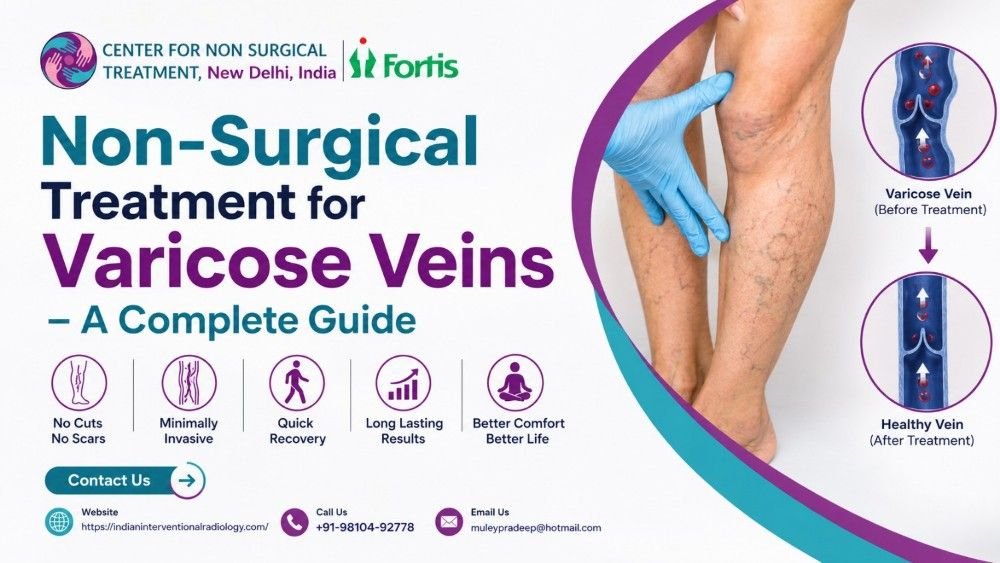
Varicose veins are more than just a cosmetic concern. For millions of people, they cause daily discomfort, pain, and even serious health complications if left untreated. The good news is that you no longer need to undergo invasive surgery to get rid of them. Modern medicine has made it possible to treat varicose veins effectively without any surgical incisions.
If you are looking for the best varicose veins doctor in Delhi, you have come to the right place. This guide will walk you through everything you need to know about non-surgical treatment options, their benefits, and why Dr. Pradeep Muley is the trusted name for varicose veins treatment in Delhi.
What Are Varicose Veins?
Varicose veins are enlarged, swollen, and twisted veins that typically appear blue or dark purple just beneath the surface of the skin. They most commonly develop in the legs and feet because standing and walking increase the pressure in the veins of the lower body.
To understand varicose veins, you need to know how healthy veins work. Normally, your leg veins contain tiny valves that open and close to help blood flow in one direction—toward your heart. When these valves become weak or damaged, they fail to keep blood moving upward. Blood flows backward and pools in the veins, causing them to stretch, swell, and twist.
How Common Are Varicose Veins?
Varicose veins are extremely common. Globally, up to 23% of adults are affected, with significantly higher prevalence in women compared to men. In India, varicose veins impact nearly 22 million women and 11 million men between the ages of 40 and 80. Studies suggest that varicose veins among Indian adults range from 7% to 36%, with higher rates in urban populations.
According to estimates, 15 to 20 percent of the population in India is suffering from varicose vein disease today. Women suffer from this condition four times more than men.
Symptoms of Varicose Veins
Varicose veins can cause a range of symptoms that affect your daily life. The most common symptoms include:
- Pain on and off – a throbbing, burning, or aching sensation in the legs
- Swelling – particularly prominent at the end of the day, especially around the ankles and feet
- Heaviness – a feeling of tired, heavy legs
- Fatigue – legs feel exhausted even after minimal activity
- Prominent and dilated veins – visible twisted veins that bulge under the skin
- Pigmentation – skin discoloration near the affected area
- Venous ulcers – non-healing wounds that can develop in severe cases
- Muscle cramps – especially at night
- Itching or skin irritation
- Restless legs
If left untreated, the condition can worsen over time and may lead to the formation of stubborn, non-healing ulcers on the legs. Ultimately, a person may be forced to lead a disabled life.
Causes and Risk Factors
Several factors contribute to the development of varicose veins. The important causative factors include:
- Obesity – excess weight puts additional pressure on leg veins
- Lack of exercise – sedentary lifestyle weakens the calf muscle pump that helps push blood upward
- Pregnancy – increased pressure on leg veins and hormonal changes weaken vein walls
- Prolonged standing – occupations that require standing for long hours
- Prolonged sitting – desk jobs with little movement of the legs
- Advanced age – veins lose elasticity and valves weaken over time
- Genetics – family history increases your risk
- Hormonal changes – especially in women during pregnancy, menopause, or from birth control pills
Certain professions put people at higher risk. Computer professionals, receptionists, security guards, traffic policemen, salesmen working at counters, and people doing desk jobs day in and day out are the worst sufferers of varicose veins.
Why Are Women More Susceptible?
Among females, hormonal influences cause vein valves to weaken, making them stretched, enlarged, and dilated. During pregnancy, the increased pressure exerted on the leg veins further weakens them, often leading to varicose veins.
Lifestyle choices also play a major role. Wearing high heels, tight belts, or restrictive undergarments can obstruct smooth blood circulation in the veins, contributing to the onset and progression of varicose veins.
Complications of Untreated Varicose Veins
Many people ignore varicose veins, thinking they are just a cosmetic issue. However, without proper treatment, they can lead to serious complications:
- Bleeding from superficial veins – due to high pressure after long standing, small weak spots may form that start to bleed through very small openings, often no bigger than a pinhole. These bleeds are most commonly seen around the ankle region.
- Venous pigmentation (Hemosiderin staining) – a relatively common late complication of untreated superficial chronic venous hypertension.
- Venous stasis dermatitis (venous eczema) – a common inflammatory skin disease that occurs on the lower extremities. Symptoms include swelling, changes in skin color and texture, pain, and itchy, irritated skin that may appear red, purple, or discolored.
- Venous ulcers – non-healing wounds that are difficult to treat and can significantly impact quality of life.
Non-Surgical Treatment Options for Varicose Veins
The best part about modern varicose vein treatment is that surgery is no longer the only option. Today, there are several non-surgical treatments that are safe, effective, and minimally invasive. These procedures are performed on an outpatient basis, meaning you can go home the same day and return to your normal activities quickly.
At Indian Interventional Radiology, under the expert care of Dr. Pradeep Muley, you have access to the most advanced non-surgical treatments available. Here are the primary options:
1. Endovenous Laser Ablation (EVLA)
Endovenous Laser Ablation is one of the gold-standard treatments for large varicose veins. This procedure uses focused laser energy to close the damaged vein from the inside.
How it works: A thin laser fiber is inserted into the affected vein under ultrasound guidance. The laser is activated and slowly withdrawn along the course of the vein. The laser energy causes the vein to heat up, collapse, and seal shut. Blood is then naturally rerouted to healthier veins.
Benefits of EVLA:
- Minimally invasive – no surgical incisions
- Performed under local anesthesia
- Excellent long-term results
- Little to no scarring
- Quick recovery – most patients resume normal activities the same day
EVLA is widely recognized as a safe and effective alternative to surgery, showing high success rates with significant quality-of-life improvements.
2. Radiofrequency Ablation (RFA)
Radiofrequency Ablation is another advanced thermal ablation technique that works similarly to EVLA but uses radiofrequency energy instead of laser energy.
How it works: A catheter is inserted into the diseased vein under ultrasound guidance. Radiofrequency energy is delivered through the catheter, heating the vein wall and causing it to collapse and seal shut.
Benefits of RFA:
- Latest, most effective, and comfortable non-surgical treatment
- Less pain compared to traditional surgery
- Faster recovery
- Minimal scarring
Endovenous ablation techniques, including both EVLA and RFA, are valid and safe alternatives to surgery, showing high success rates with significant quality-of-life improvements.
3. Ultrasound-Guided Foam Sclerotherapy
Foam sclerotherapy is an excellent option for smaller varicose veins and spider veins.
How it works: A special foam solution is injected directly into the affected vein under ultrasound guidance. The foam irritates the vein lining, causing it to collapse and stick together. Over time, the treated vein is absorbed by the body and fades away.
Studies have shown that 84% of veins are successfully blocked using foam sclerotherapy. This treatment is particularly effective for veins that are not suitable for laser or radiofrequency ablation.
4. Microphlebectomy
Microphlebectomy is a minimally invasive procedure used to remove large, bulging varicose veins through tiny punctures.
How it works: Very small incisions are made along the path of the varicose vein. The vein is then removed in segments using specialized instruments. The tiny incisions are so small that they typically do not require stitches.
5. Compression Therapy and Medical Management
For mild cases or as a complementary treatment, compression therapy is often recommended.
How it works: Graduated compression stockings apply gentle pressure to the legs, helping improve blood flow and preventing blood from pooling in the veins. Compression stockings can provide symptom relief, particularly for symptoms such as heavy or tired legs and leg swelling.
Why Choose Dr. Pradeep Muley for Varicose Veins Treatment in Delhi?
When it comes to varicose veins treatment in Delhi, choosing the right doctor makes all the difference. Dr. Pradeep Muley is a highly experienced Senior Consultant Interventional Radiologist with an outstanding reputation.
Here is why he is regarded as the varicose veins best doctor in Delhi:
Extensive Experience and Qualifications
Dr. Pradeep Muley has performed more than 20,000 diagnostic and various interventional radiological procedures. His academic qualifications include:
- Fellow Interventional Radiology, Singapore General Hospital, Singapore
- Visiting Associate, Neurointerventional Radiology, Iowa University Hospitals, USA
- Visiting Fellow, Neurointerventional Radiology, Johns Hopkins Medical Institutions, USA
- Lecturer, Vascular & Interventional Radiology, KEM Hospital, Mumbai, India
- Neuroradiology, All India Institute of Medical Sciences (AIIMS), New Delhi, India
- Consultant Interventional Radiologist, KIMS Hospital, Trivandrum, Kerala, India
Advanced Technology and Facilities
The Department of Interventional Radiology, established by Dr. Pradeep Muley, is specifically designed with two well-equipped and modern Cath-labs for all diagnostic and radiological interventional procedures. He is assisted by a team of trained nurses and practicing radiologists and personally participates in all interventional procedures.
Pioneer in Non-Surgical Treatments
Dr. Pradeep Muley is a pioneer in Delhi & NCR for non-surgical treatments. He has been at the forefront of offering minimally invasive solutions for various conditions, including varicose veins.
Personalized, Patient-Centric Care
At Indian Interventional Radiology, the focus is on providing safe, effective, and long-term relief. The team offers customized therapies and treatments with guaranteed results. The first step is a thorough consultation and duplex ultrasound to map your veins and determine the most appropriate course of action. The team takes care of you at every stage—from evaluation and treatment to recovery and follow-up.
Trusted by Thousands
With over 2,250,000 happy patients, 180 hospitals, and 30 cities served, Dr. Pradeep Muley is one of the most trusted names for varicose veins treatment in Delhi.
Comparison of Non-Surgical Treatments
| Treatment | Best For | Procedure Time | Recovery Time | Scarring |
|---|---|---|---|---|
| Endovenous Laser Ablation (EVLA) | Large varicose veins | 45-60 minutes | Same day | Minimal to none |
| Radiofrequency Ablation (RFA) | Large varicose veins | 45-60 minutes | Same day | Minimal to none |
| Foam Sclerotherapy | Small to medium veins | 30-45 minutes | Same day | None |
| Microphlebectomy | Large bulging veins | 30-60 minutes | Few days | Tiny punctures |
| Compression Therapy | Mild cases / Maintenance | N/A | N/A | None |
What to Expect During Your Consultation
If you are considering varicose veins treatment in Delhi, here is what you can expect when you visit Dr. Pradeep Muley:
- Initial Consultation – A thorough discussion of your symptoms, medical history, and concerns.
- Duplex Ultrasound – A painless ultrasound scan to map your veins, assess valve function, and identify the source of the problem.
- Treatment Plan – Based on the ultrasound findings, Dr. Muley will recommend the most suitable non-surgical treatment option for your specific condition.
- Procedure – The chosen treatment is performed on an outpatient basis under local anesthesia.
- Recovery and Follow-Up – You can return home the same day and resume normal activities quickly. Follow-up appointments ensure optimal healing and results.
You can schedule a consultation or contact us to begin your journey toward healthier legs.
Frequently Asked Questions (FAQs)
1. What is the best non-surgical treatment for varicose veins?
The best treatment depends on the size and location of your varicose veins. Endovenous Laser Ablation (EVLA) and Radiofrequency Ablation (RFA) are considered gold-standard treatments for large varicose veins. Foam sclerotherapy is excellent for smaller veins. A varicose veins specialist doctor in Delhi like Dr. Pradeep Muley can help determine the best option for you.
2. Is varicose vein treatment painful?
No. Most non-surgical treatments are performed under local anesthesia, so you will not feel pain during the procedure. Some patients may experience mild discomfort or a sensation of heat during laser or radiofrequency ablation, but this is generally well-tolerated.
3. How long does recovery take after non-surgical varicose vein treatment?
Most patients can return to normal activities the same day or within a day or two. You may be advised to wear compression stockings for a few weeks and avoid strenuous exercise for a short period.
4. Will my varicose veins come back after treatment?
The treated veins are permanently closed and will not return. However, new varicose veins can develop over time in other veins, especially if you have underlying risk factors. Maintaining a healthy lifestyle can help prevent new veins from forming.
5. Are non-surgical treatments covered by insurance?
Many health insurance plans cover medically necessary varicose vein treatments. It is best to check with your insurance provider about coverage details. The team at Indian Interventional Radiology can assist you with the necessary documentation.
6. Can varicose veins be treated without surgery?
Yes! Modern medicine offers several highly effective non-surgical treatments for varicose veins, including Endovenous Laser Ablation, Radiofrequency Ablation, Foam Sclerotherapy, and Compression Therapy. These procedures are minimally invasive, safe, and require no surgical incisions.
7. How do I know if I need to see a vein specialist?
You should see a vein specialist doctor in Delhi if you experience persistent leg pain, swelling, heaviness, visible twisted veins, skin discoloration, or if your varicose veins are affecting your quality of life. Early treatment can prevent complications.
8. Is walking good for varicose veins?
Yes. Walking and other forms of exercise help strengthen the calf muscles, which act as a pump to push blood upward toward the heart. Regular physical activity is one of the best ways to prevent and manage varicose veins.
9. What happens if varicose veins are left untreated?
Untreated varicose veins can lead to serious complications, including bleeding, skin pigmentation, venous eczema, and non-healing ulcers on the legs. In severe cases, they can significantly impact your mobility and quality of life.
10. Why should I choose Dr. Pradeep Muley for varicose vein treatment?
Dr. Pradeep Muley is a highly experienced Senior Consultant Interventional Radiologist with over 20,000 procedures performed. He has trained at prestigious institutions including Johns Hopkins and AIIMS. He is recognized as the varicose veins best doctor in Delhi and offers advanced, personalized, non-surgical care.
Final Thoughts
Varicose veins are a common condition that affects millions of people. The good news is that you no longer need to live with the pain, discomfort, or cosmetic concerns. Modern non-surgical treatments offer safe, effective, and long-lasting results without the need for invasive surgery.
If you are in Delhi or the NCR region and looking for the best varicose veins doctor in Delhi, Dr. Pradeep Muley at Indian Interventional Radiology is your trusted partner in vein care. With decades of experience, advanced technology, and a patient-first approach, he provides world-class varicose veins treatment in Delhi that is tailored to your needs.
Don't wait for your condition to worsen. Book a consultation today and take the first step toward healthier, pain-free legs.
Contact Information
Dr. Pradeep Muley
Senior Consultant Interventional Radiologist
Indian Interventional Radiology
Fortis
Hospital, Vasant Kunj, New Delhi, India
Phone: +91-98104-92778
Email: muleypradeep@hotmail.com
Contact Us for more information or to schedule your appointment.