
What is liver tumour treatment?
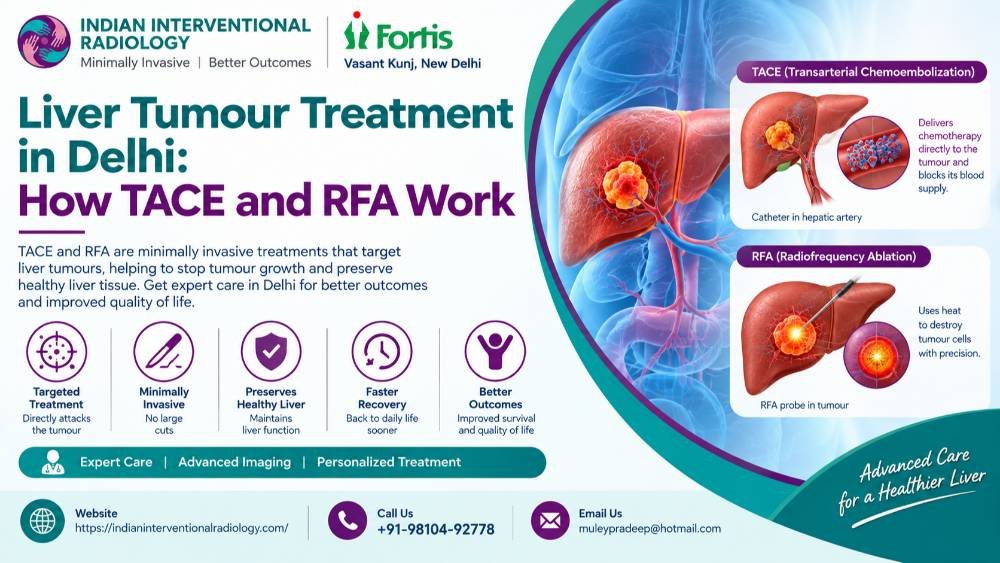
Liver tumour treatment does not always mean a major operation. Transarterial chemoembolisation (TACE) delivers chemotherapy straight to the tumour through its own blood supply and then blocks that supply. Radiofrequency ablation (RFA) uses heat from a needle to destroy small tumours. Both are done by interventional radiologists through small punctures, often as part of a team plan with liver surgeons and oncologists.
Who is it for?
Patients with small or limited liver tumours, or those with cirrhosis for whom major surgery is risky. Liver function, tumour size and number decide eligibility, and a multidisciplinary team should guide the plan.
Is it safe and effective?
These treatments can control or, for small tumours, sometimes cure disease, but they carry risks including pain, fever, infection and temporary worsening of liver function. Outcomes depend on stage and liver health, not on technique alone.
Why Trust This Guide?
| Trust Signal | Details |
|---|---|
| Updated for 2026 | Reviewed in October 2026 against current patient-information guidance |
| Local Expertise | Based on interventional radiology practice at Fortis Hospital, Vasant Kunj, New Delhi |
| Industry References | NHS, Mayo Clinic, European Association for the Study of the Liver (EASL), WHO, Society of Interventional Radiology (SIR) |
| Patient-Focused Approach | Organised around the questions patients commonly raise before treatment |
| Content Standards | Risks and limits stated openly, with no guaranteed outcomes |
This guide is written in plain language for patients and families. It explains what a treatment can and cannot do, and it should be read alongside advice from your own doctor. It is general information and does not replace personal medical advice.
Last Reviewed: October 2026
Introduction
Many liver tumours are found in people who already have cirrhosis or chronic hepatitis, which makes major surgery risky. Image-guided options have grown for exactly this reason.
This guide explains TACE and RFA, who may benefit, what to expect and what follow-up involves.
Why liver tumours need a team approach
The liver is unusual: it can hold up to a certain amount of damage and still work, which is why tumours can grow quietly. Most primary liver cancers, mainly hepatocellular carcinoma (HCC), arise in livers already scarred by cirrhosis. Long-term hepatitis B or C, fatty liver disease and heavy alcohol use are the main background causes. The liver can also host cancers that spread from the bowel, breast and other organs.
Because the tumour and the underlying liver both matter, choosing liver tumour treatment depends on tumour size and number, liver function (often graded as Child-Pugh), blood tests such as AFP, and your general fitness. A multidisciplinary meeting is the best way to decide. Our page on TACE and RFA for liver tumour outlines how patients are assessed.
Symptoms that should not be ignored
Early disease is often silent. Later signs include:
- a dull ache or fullness in the upper right abdomen
- unexplained weight loss and loss of appetite
- yellowing of the eyes or skin
- swelling of the abdomen or legs
- unusual tiredness
People with cirrhosis or chronic hepatitis are usually advised to have an ultrasound and blood tests every six months. Catching a small tumour early gives more treatment options.
What is TACE?
TACE is done through a catheter, usually from the groin or wrist, guided by live X-ray. The doctor finds the artery feeding the tumour, delivers chemotherapy mixed with tiny particles or drug-loaded beads, and then blocks the vessel. The tumour receives a strong dose of drug while healthy liver, which gets most blood from a different vein, is relatively protected.
It is often used for tumours too large for ablation, for several tumours at once, or as a bridge while a patient waits for a transplant or other treatment. Many people stay one or two nights in hospital. Fever, nausea and right-sided pain for a few days are common, a pattern known as post-embolisation syndrome.
What is radiofrequency ablation?
In RFA, a thin electrode is placed into the tumour under ultrasound or CT guidance. Radiofrequency energy heats the tissue to destroy the cancer cells and a thin margin around it. RFA suits small tumours, generally under about three centimetres, and may be curative in carefully selected early cases. Microwave ablation is a related technique that some centres prefer for certain locations.
TACE and RFA compared
| Feature | TACE | RFA |
|---|---|---|
| How it works | Chemotherapy plus blockage of blood supply | Heat destroys the tumour directly |
| Access | Catheter in artery | Needle through skin |
| Best for | Larger or multiple tumours | Small, limited tumours |
| Anaesthesia | Sedation or local | Sedation, local or general |
| Hospital stay | 1 to 2 nights | 0 to 1 night |
| Can be repeated | Yes, in cycles | Yes |
| Often combined with | Ablation, surgery, systemic drugs | TACE, surgery |
The two are frequently used together, with TACE shrinking a bigger lesion before ablation. They also appear alongside surgery, transplant and systemic drugs in broader plans, depending on stage.
Risks and realistic expectations of liver tumour treatment
Possible effects include post-procedure pain, fever, infection or abscess, temporary worsening of liver function, and bleeding at the puncture site. People with poor liver function face more risk, which is why careful selection matters. These treatments can control or cure some tumours, but outcomes vary with stage and liver health. A frank discussion about goals, whether cure, control or comfort, should come first.
After liver tumour treatment
Follow-up scans, usually CT or MRI after about four to six weeks, show how the tumour responded. Some people need repeat sessions. Keep up with hepatitis treatment, avoid alcohol, and discuss any supplements or herbal medicines with your doctor, since several can strain the liver.
Why consult Dr. Pradeep Muley
Dr. Pradeep Muley practises interventional radiology at Fortis Hospital, Vasant Kunj, and works with hepatologists and oncologists so liver tumour treatment decisions are shared. The Centre For Non-Surgical Treatment reviews outside scans and reports, which helps patients who live far from Delhi. For related image-guided procedures, you can also read about vertebroplasty for painful spine fractures, and watch patient education clips on the video page.
Trusted Sources for Further Reading
- NHS: Liver cancer
- Mayo Clinic: Liver cancer
- European Association for the Study of the Liver
- Society of Interventional Radiology
- World Health Organization: Hepatitis
Expert Tip
Before any procedure, make sure staging scans, liver function tests and a team discussion happen before the procedure. The best treatment for the tumour is not always the best for a scarred liver.
Reviewed By
Interventional radiology specialists at the Centre For Non-Surgical Treatment, New Delhi, with practical experience in image-guided, minimally invasive treatment. This content is reviewed periodically to reflect current best practice and service information.
Frequently Asked Questions (FAQs)
1. What is TACE for a liver tumour?
TACE is a catheter treatment that delivers chemotherapy directly into the tumour's artery and then blocks the vessel, starving the tumour while limiting drug exposure elsewhere.
2. Can RFA cure liver cancer?
For small, early tumours in suitable locations, RFA can achieve complete destruction and may be curative. Larger or multiple tumours usually need other or combined treatments.
3. Is liver tumour treatment without surgery effective?
In selected patients, yes. Image-guided treatments can control or eliminate tumours, especially when surgery is risky because of cirrhosis. The best option depends on staging.
4. How many TACE sessions will I need?
It varies. Some people need one, others repeat sessions every few months depending on scan results and liver function.
5. Does TACE cause hair loss?
Typically not, because the chemotherapy is delivered locally in a small dose compared with intravenous chemotherapy. Fatigue and nausea are more usual.
6. How long is the hospital stay?
TACE usually needs one or two nights. RFA may need a night or less, depending on the approach and your health.
7. Can I have these treatments if I have cirrhosis?
Often yes, if liver function is adequate. Poor liver function increases risk and may rule out TACE, so assessment comes first.
8. What are the warning signs after the procedure?
High persistent fever, worsening abdominal pain, yellowing, vomiting or confusion need immediate medical attention.
9. What does liver tumour treatment cost?
Cost depends on the procedure, number of sessions, hospital category and tests. A personalised estimate follows consultation.
10. Can overseas patients send scans for opinion?
Yes. Recent CT or MRI images and reports can be reviewed before travel so a plan is ready when you arrive.
Conclusion
TACE and RFA offer minimally invasive control, and sometimes cure, for carefully selected patients. Early detection, accurate staging and shared decision-making make the biggest difference.
If you are looking for liver tumour treatment in Delhi, the Centre For Non-Surgical Treatment offers specialist, image-guided care at Fortis Hospital, Vasant Kunj, New Delhi. Clinic hours are Monday to Saturday, 8:00 AM to 5:00 PM, and international patients can share reports for remote review before travelling.
Ready to discuss your options? Call or WhatsApp +91-98104-92778 or contact the clinic to book your consultation.
This article is for general information and does not replace personal medical advice.