
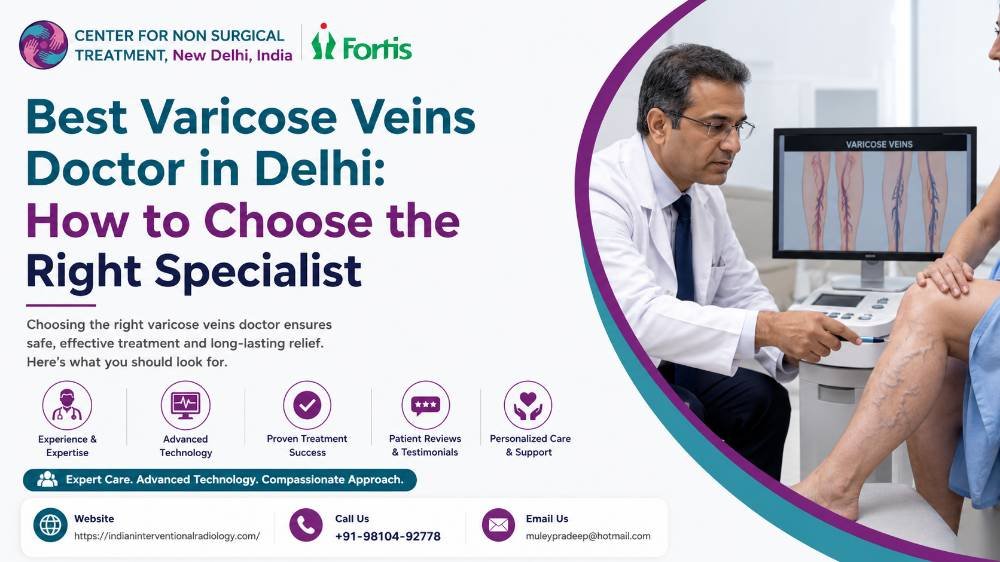
A suitable varicose veins doctor in Delhi should have:
- Relevant specialist training in venous disease
- Experience with the procedure being considered
- Access to duplex ultrasound for diagnosis and treatment planning
- Ability to explain the diagnosis, reflux pattern and treatment rationale
- More than one appropriate treatment option when clinically relevant
- Clear discussion of risks, recovery and follow-up
The best varicose veins doctor in Delhi is not necessarily the doctor with the highest online rating or the newest procedure. Instead, choose a specialist who can accurately assess the underlying venous problem, interpret duplex ultrasound findings, explain suitable treatment options and communicate risks, alternatives and follow-up clearly.
Why Trust This Guide?
| Trust Signal | Details |
|---|---|
| Updated for 2026 | Based on latest clinical guidelines (NICE, ESVS, SVS) |
| Clinical Evidence | References established guidelines for diagnosis and treatment |
| Specialist Reviewer | Reviewed by Dr. Pradeep Muley, Senior Consultant Interventional Radiologist |
| Practical Criteria | Provides checklists and red flags for patient decision-making |
| Transparency | Independent verification of credentials and hospital affiliation |
This guide is based on established clinical guidelines and practical criteria for evaluating vascular specialists. It is written to help patients make informed decisions when choosing a varicose veins doctor.
Last Reviewed: July 2026
Key Takeaways
- Choose a specialist based on relevant venous training and procedural experience, not online ratings alone.
- Duplex ultrasound is important for confirming venous reflux and mapping affected veins before treatment.
- Treatment may include EVLA, RFA, foam sclerotherapy, phlebectomy or surgery, depending on the patient's anatomy and diagnosis.
- Ask about risks, alternatives, expected recovery and follow-up before agreeing to treatment.
- Verify the doctor's professional credentials, hospital affiliation and relevant experience.
- Seek prompt medical attention for complications such as bleeding, significant swelling, severe new pain or a non-healing ulcer.
What to Look for in a Varicose Veins Doctor
| Factor | What a good consultation should provide |
|---|---|
| Diagnosis | Clinical assessment and appropriate duplex ultrasound |
| Expertise | Relevant venous training and procedural experience |
| Treatment | Options based on anatomy and reflux |
| Safety | Risks, contraindications and alternatives |
| Follow-up | Clear recovery and follow-up instructions |
| Credentials | Independently verifiable professional information |
Who Is This Guide For?
This guide is useful if you:
- Have visible varicose veins in your legs
- Experience leg pain, heaviness, swelling or itching
- Have already been diagnosed with venous reflux
- Are comparing EVLA, RFA or other treatment options
- Are looking for a varicose veins specialist in Delhi
- Want to understand what to check before choosing a specialist
Why Choosing the Right Specialist Matters
Varicose veins can cause symptoms and, in some patients, may be associated with complications such as skin changes, bleeding, superficial venous thrombosis and venous ulceration. Evaluation is particularly important when symptoms or complications are present.
A trustworthy specialist should explain the diagnosis, show how the ultrasound findings relate to the symptoms, discuss appropriate treatment options and explain potential risks and follow-up.
Who Treats Varicose Veins?
A primary-care clinician may initially assess symptoms and visible veins, but specialist evaluation may be appropriate when symptoms are persistent, complications are present, or an intervention is being considered.
| Specialist | Typical Role |
|---|---|
| Vascular Surgeon | Surgical and endovascular management of venous disease |
| Interventional Radiologist | Image-guided minimally invasive venous procedures |
| Other appropriately trained venous clinicians | Diagnosis or treatment depending on qualifications and scope |
The appropriate specialist depends on the patient's symptoms, venous anatomy, diagnosis and required treatment. The specialty title alone does not establish who is most appropriate; relevant venous training, experience with the proposed procedure and the ability to evaluate the underlying venous anatomy are also important.
Vascular Surgeon vs Interventional Radiologist
Neither specialty is automatically better for every patient. The appropriate clinician depends on the patient's venous anatomy, diagnosis, symptoms and required treatment, as well as the clinician's relevant training and experience.
Vascular surgeons are trained in both open and endovascular procedures and may perform surgery when other treatments are unsuitable. Interventional radiologists are trained in image-guided minimally invasive techniques and may perform endovenous ablation and other non-surgical venous procedures.
NICE recommends endothermal ablation (including EVLA and RFA) for suitable patients with confirmed varicose veins and truncal reflux, with foam sclerotherapy or surgery considered when endothermal treatment is unsuitable.
How to Choose a Varicose Veins Doctor in Delhi
1. Check Their Qualifications
Look for a doctor with relevant specialist training. Depending on the specialist's professional pathway, relevant qualifications may include advanced training in vascular surgery or interventional radiology. Verify the individual doctor's qualifications, registration, procedural experience and scope of practice.
2. Ask About Their Experience
Ask about the clinician's relevant experience with venous procedures and whether they routinely perform the treatment being considered.
3. Look for Duplex Ultrasound Assessment
Before endovenous treatment is recommended, the specialist should be able to explain the relevant duplex ultrasound findings, identify the refluxing vein or veins, and explain why the proposed treatment is appropriate for the patient's anatomy and symptoms. NICE recommends duplex ultrasound to confirm varicose veins and assess truncal reflux before treatment.
4. Evaluate Treatment Options
A good consultation should explain appropriate alternatives, including when endovenous treatment, sclerotherapy or surgery may be considered. Treatment should be based on the patient's venous anatomy and symptoms, not a one-procedure-fits-all approach.
5. Check Risk Communication and Follow-Up
The specialist should explain potential complications, expected recovery and follow-up requirements. A trustworthy specialist should be transparent about diagnosis, treatment suitability, expected outcomes, potential complications and alternatives.
6. Verify Hospital Affiliation and Professional Credentials
Hospital affiliation helps verify where procedures are performed. Professional credentials and experience can be independently checked through official sources such as hospital profiles.
Red Flags When Choosing a Varicose Veins Doctor
Be cautious if a clinic:
- Recommends treatment without appropriate venous assessment
- Cannot explain which vein is refluxing
- Promises guaranteed results
- Claims one procedure is best for everyone
- Does not explain alternatives
- Does not discuss potential complications
- Gives a treatment recommendation based only on visible veins
- Uses unsupported claims such as "100% painless" or "100% permanent"
- Cannot explain who will perform the procedure
- Does not provide a clear follow-up plan
- Does not provide a clear explanation of the diagnosis or expected treatment outcome
What Should You Ask During Your Consultation?
When you meet a potential varicose veins doctor in Delhi, ask these questions:
- Which veins are refluxing?
- What is causing reflux in these veins?
- Which treatment is best for my anatomy?
- How many sessions are needed?
- What results should I expect?
- What are the risks?
- Will I need follow-up ultrasounds?
- Who will perform the procedure, and where will it be performed?
If the answers are vague or unclear, the clinic may not be thorough.
How Are Varicose Veins Diagnosed?
Duplex Ultrasound: The Key Test for Treatment Planning
A visible bulging vein does not necessarily identify the vein causing the reflux. Duplex ultrasound helps map the underlying reflux pathway before treatment is selected.
A duplex ultrasound combines imaging with blood-flow assessment. It identifies:
- The location of venous reflux
- Which superficial veins are affected (great saphenous, small saphenous)
- The extent of reflux
- Deep-vein involvement
- Anatomical details relevant to treatment planning
NICE recommends duplex ultrasound to confirm the diagnosis and assess truncal reflux before treatment.
Treatment planning should not rely on the appearance of visible veins alone; duplex ultrasound is used to confirm venous reflux and map the veins involved.
Does Every Varicose Vein Need Treatment?
No. Not every varicose vein requires an intervention. The need for treatment depends on symptoms, complications, venous reflux, the patient's preferences and clinical assessment. A specialist may recommend monitoring or conservative management when an intervention is not clinically appropriate.
Depending on symptoms and clinical findings, not every patient needs an intervention immediately. A specialist may recommend observation, symptom management or other conservative measures when the clinical situation does not warrant a procedure. The appropriate approach depends on the individual's symptoms, examination and venous findings.
Varicose Veins Treatment Options
Treatment should be selected based on the patient's symptoms, venous anatomy and duplex ultrasound findings, rather than a single default procedure.
| Treatment | Main Principle | Typical Role |
|---|---|---|
| Endovenous Laser Ablation (EVLA) | Uses laser energy to close a targeted refluxing vein | Used for selected patients with superficial truncal reflux when clinically appropriate |
| Radiofrequency Ablation (RFA) | Uses radiofrequency energy to close a targeted refluxing vein | Used for selected patients with superficial truncal reflux when clinically appropriate |
| Foam Sclerotherapy | Uses a sclerosant to close selected veins | Used in selected patients when clinically appropriate, including when endothermal treatment is unsuitable |
| Phlebectomy | Removes selected superficial tributaries through small punctures | Bulging tributary veins |
| Surgery | Operatively treats affected veins | Selected cases when other approaches are unsuitable |
No single treatment is appropriate for every patient. Duplex ultrasound, vein anatomy, reflux pattern, symptoms and treatment suitability determine the treatment plan.
How Specialists Select a Treatment
Treatment planning should focus on identifying the specific veins responsible for abnormal blood flow rather than treating visible veins alone. The choice between EVLA, RFA, foam sclerotherapy, phlebectomy or surgery depends on the duplex ultrasound findings, venous anatomy, reflux pattern, symptoms, previous treatment and overall health.
When Should You See a Varicose Veins Specialist?
Consider medical evaluation if you have:
- Persistent leg aching or heaviness
- Swelling that becomes worse during the day
- Itching or skin changes around the ankle
- Recurrent superficial vein inflammation
- Bleeding from a varicose vein
- A non-healing leg ulcer
- Symptoms that interfere with daily activities
NICE recommends referral to a vascular service for symptomatic varicose veins and several complications including skin changes, superficial venous thrombosis and venous ulcers.
How to Verify a Doctor's Credentials
Patients should be able to verify the doctor's professional qualifications, hospital affiliation and relevant experience through reliable sources.
- Check the doctor's official hospital profile
- Review the doctor's qualifications and professional registration
- Ask about the doctor's experience with venous procedures
- Verify where procedures are performed
- Ensure the doctor performs duplex ultrasound assessment
- Check whether the doctor's stated qualification, specialty and hospital affiliation can be independently confirmed through an official institutional or professional source
Patients searching for the best varicose veins doctor in Delhi should compare qualifications, relevant experience, diagnostic approach, treatment options, hospital affiliation and follow-up care.
Choosing a Varicose Veins Specialist in South Delhi
Patients searching for a varicose veins doctor in Delhi may consider the specialist's hospital affiliation, location, diagnostic facilities and availability for follow-up. Dr. Pradeep Muley's current Fortis profile identifies him as a Senior Consultant in Interventional Radiology at Fortis Vasant Kunj, New Delhi.
Patients in South Delhi and nearby parts of Delhi NCR may also consider hospital accessibility, follow-up arrangements and availability of venous diagnostic services when selecting a specialist.
Dr. Pradeep Muley: Professional Profile
The following profile is included as an example of how readers can evaluate a specialist using the criteria discussed above; it is not intended as a comparative ranking of Delhi doctors.
Dr. Pradeep Muley is a Senior Consultant Interventional Radiologist at Fortis Vasant Kunj, New Delhi.
Professional credentials:
- Qualification: MBBS, M.D. (Radio Diagnosis) / Interventional Radiology as listed by the official profile
- Experience: 30 years of experience according to his Fortis profile
- Procedures: His official professional profiles report more than 20,000 diagnostic and interventional radiological procedures
Clinical practice: His work involves minimally invasive, image-guided procedures across vascular and non-vascular conditions. Patients considering treatment for varicose veins should undergo appropriate clinical assessment and venous imaging before a treatment option is selected.
To learn more about his professional background, patients can review Dr. Pradeep Muley's official Fortis profile and the treatment information available through Indian Interventional Radiology.
If you want to understand the broader treatment options, learn more about varicose veins treatment in Delhi and varicose vein treatment.
What Happens During a Consultation?
Step 1: Clinical Assessment
The doctor reviews your symptoms, previous treatment, medical history and visible vein changes.
Step 2: Venous Ultrasound
A duplex ultrasound may be performed to identify reflux and map the affected veins.
Step 3: Treatment Discussion
Depending on the findings, possible options may include:
- Endovenous laser ablation
- Radiofrequency ablation
- Ultrasound-guided foam sclerotherapy
- Treatment of tributary veins
- Conservative management
- Other procedures when clinically indicated
Step 4: Personalised Treatment Plan
The recommended approach is based on your anatomy, symptoms, ultrasound findings and overall health.
Step 5: Follow-Up
Follow-up allows the treating team to assess recovery and the response to treatment.
The purpose of the consultation is to connect your symptoms and examination findings with the venous imaging results and determine whether treatment, monitoring or another approach is appropriate.
What to Bring to Your Appointment
Bringing the right information helps the specialist understand your situation:
- Previous Doppler or duplex ultrasound reports
- Records of any previous vein treatments
- A current list of all medications you take
- Relevant medical history details
- Information about previous surgeries
- Any history of blood clots
- A written list of your main symptoms and when they occur
Varicose Veins Doctor Checklist
Before your consultation, check:
- ☐ Relevant medical qualification
- ☐ Venous treatment experience
- ☐ Duplex ultrasound assessment
- ☐ Explanation of your reflux pattern
- ☐ More than one appropriate treatment option discussed
- ☐ Risks and benefits explained
- ☐ Recovery instructions provided
- ☐ Follow-up plan explained
- ☐ Hospital/professional credentials verified
Comparing Two Varicose Veins Specialists
| Factor | Doctor A | Doctor B |
|---|---|---|
| Relevant qualification | ||
| Venous procedure experience | ||
| Duplex ultrasound assessment | ||
| Treatment options explained | ||
| Risks explained | ||
| Follow-up plan | ||
| Hospital/professional credentials |
This comparison table can help you evaluate specialists objectively using the criteria discussed in this guide.
What Should You Do Next?
- If you have symptoms but no diagnosis: Arrange a clinical evaluation with a qualified specialist.
- If you already have a duplex ultrasound: Bring the report to your consultation so the specialist can review your venous findings.
- If treatment has been recommended: Ask why that procedure is appropriate for your specific anatomy and reflux pattern.
- If you are comparing doctors: Compare qualifications, venous experience, diagnostic approach, treatment options and follow-up — not just online ratings.
When to Seek Prompt Medical Attention
Seek prompt medical assessment for:
- Bleeding from a varicose vein
- Significant new leg swelling
- Severe or rapidly worsening leg pain
- Skin breakdown or a non-healing ulcer
Seek emergency medical care for symptoms such as:
- Sudden shortness of breath
- Sudden chest pain
- Coughing blood
- Fainting or severe unexplained weakness
Do not rely on online information to diagnose these symptoms. Seek urgent medical attention rather than relying on online information.
Frequently Asked Questions
1. Who is the best varicose veins doctor in Delhi?
There is no single doctor who is objectively best for every patient. The appropriate specialist should have relevant venous training, experience with the treatment being considered, access to appropriate diagnostic assessment such as duplex ultrasound, and a clear approach to risks, alternatives and follow-up. Patients should independently verify professional credentials and choose a specialist based on their individual diagnosis and treatment needs.
2. How do I choose a varicose veins doctor in Delhi?
Choose a specialist based on relevant venous training, experience with the proposed treatment, duplex ultrasound assessment, appropriate treatment alternatives, transparent risk communication and follow-up arrangements. A high online rating alone is not enough to determine clinical suitability.
3. What qualifications should a varicose veins specialist have?
Depending on the specialist's professional pathway, relevant qualifications may include advanced training in vascular surgery or interventional radiology. Patients should verify the individual doctor's qualifications, registration, procedural experience and scope of practice.
4. Should I get a duplex ultrasound before varicose vein treatment?
Duplex ultrasound is an important investigation for confirming venous reflux, determining the extent of truncal reflux and planning treatment. NICE specifically recommends its use for diagnosis and treatment planning.
5. Who can treat varicose veins: vascular surgeon or interventional radiologist?
Neither specialty is automatically better for every patient. The appropriate clinician depends on the patient's venous anatomy, diagnosis, symptoms and required treatment, as well as the clinician's relevant training and experience.
6. What treatments are available for varicose veins?
Treatment options depend on the patient's venous anatomy and symptoms. They may include endovenous laser ablation, radiofrequency ablation, ultrasound-guided foam sclerotherapy, phlebectomy or surgery. The choice should be based on duplex ultrasound findings and clinical assessment.
7. Is endovenous laser ablation suitable for everyone?
Endovenous laser ablation is an established treatment for suitable patients with superficial venous reflux. Like other medical procedures, it has potential complications, so suitability should be determined through clinical assessment and appropriate venous ultrasound.
8. Is RFA suitable for everyone?
Radiofrequency ablation is an established treatment for suitable patients with superficial venous reflux. Suitability depends on venous anatomy, reflux pattern, symptoms and clinical assessment. Not every patient is suitable for RFA.
9. Can varicose veins return after treatment?
The treated vein is intended to remain closed, but new varicose veins can develop in other veins over time. Follow-up is important to monitor for any new venous problems.
10. How long does recovery take after varicose vein treatment?
Recovery depends on the procedure, treated veins, symptoms and individual health. Many endovenous procedures can be performed without an overnight hospital stay, but the appropriate setting and post-procedure instructions depend on the individual treatment plan.
11. When should varicose veins be treated?
Consider evaluation if you have persistent leg aching, heaviness, swelling, skin changes, recurrent inflammation, bleeding, a non-healing ulcer or symptoms affecting daily activities. NICE recommends referral to a vascular service for symptomatic varicose veins and associated complications.
12. What should I ask a vein specialist?
Ask which veins are refluxing, what treatment options are appropriate for your anatomy, what results to expect, what the risks are, and what follow-up is required.
13. Where can I consult Dr. Pradeep Muley in Delhi?
Dr. Pradeep Muley practices at Fortis Vasant Kunj, New Delhi. You can book a consultation through his practice website.
14. Is a vascular surgeon better than an interventional radiologist for varicose veins?
Neither specialist is automatically better for every patient. The appropriate specialist depends on the patient's venous anatomy, diagnosis, required treatment and the clinician's relevant training and experience. Both specialties may be involved in venous care.
15. How can I verify a vein specialist's credentials?
Check the doctor's official hospital profile, review their qualifications and professional registration, ask about their experience with venous procedures, and verify where procedures are performed. Professional credentials should be independently verifiable through official institutional or professional sources.
16. Do all varicose veins require a procedure?
No. Not every varicose vein requires an intervention. The need for treatment depends on symptoms, complications, venous reflux, patient preferences and clinical assessment. A specialist may recommend monitoring or conservative management when appropriate.
Evidence and Clinical Guidelines
Clinical Evidence and Guidelines
This article uses established clinical guidance for varicose vein diagnosis, duplex ultrasound assessment and treatment selection. The references below are provided so readers can review the underlying recommendations directly.
Key references include:
- NICE Guideline CG168: Varicose veins: diagnosis and management — Duplex ultrasound and treatment recommendations
- 2022 ESVS Guidelines on the Management of Chronic Venous Disease
- 2023 SVS/AVF/AVLS Clinical Practice Guidelines for Management of Varicose Veins
- Fortis Healthcare — Dr. Pradeep Muley profile
The Bottom Line
If you are searching for the best varicose veins doctor in Delhi, remember these four things:
- Check qualifications — Relevant specialist training and venous expertise
- Check experience — Venous experience with the proposed treatment
- Check diagnosis — Duplex ultrasound for reflux and vein mapping
- Check communication — Explanation of risks, benefits, alternatives and follow-up
The first step is not choosing a treatment. The first step is finding a qualified specialist who will perform a proper diagnosis with a duplex ultrasound and create a personalised treatment plan based on your anatomy.
The right specialist is not necessarily the doctor offering the newest procedure; it is the clinician who can correctly diagnose the venous problem and explain why a particular treatment is appropriate.
If you have already undergone a duplex ultrasound, bring the report to your consultation so the specialist can review your venous findings and discuss appropriate treatment options.
Discuss Your Varicose Vein Symptoms With a Specialist
Share your symptoms and previous ultrasound reports during a consultation to understand whether further venous assessment or treatment is appropriate.
Book a Varicose Vein Consultation
About the Medical Reviewer
Dr. Pradeep Muley is a Senior Consultant Interventional Radiologist at Fortis Vasant Kunj, New Delhi. His official Fortis profile lists 30 years of experience, a qualification of MBBS, M.D. (Radio Diagnosis) (Interventional Radiology), and more than 20,000 diagnostic and interventional radiological procedures.
His work involves minimally invasive, image-guided procedures across vascular and non-vascular conditions. Patients considering treatment for varicose veins should undergo appropriate clinical assessment and venous imaging before a treatment option is selected.
Editorial transparency: Dr. Pradeep Muley is both the medical reviewer of this article and the specialist profiled on this page. His professional information is presented using publicly available institutional information, while treatment recommendations are based on established clinical guidance. The article does not claim that he is objectively the best doctor for every patient.