
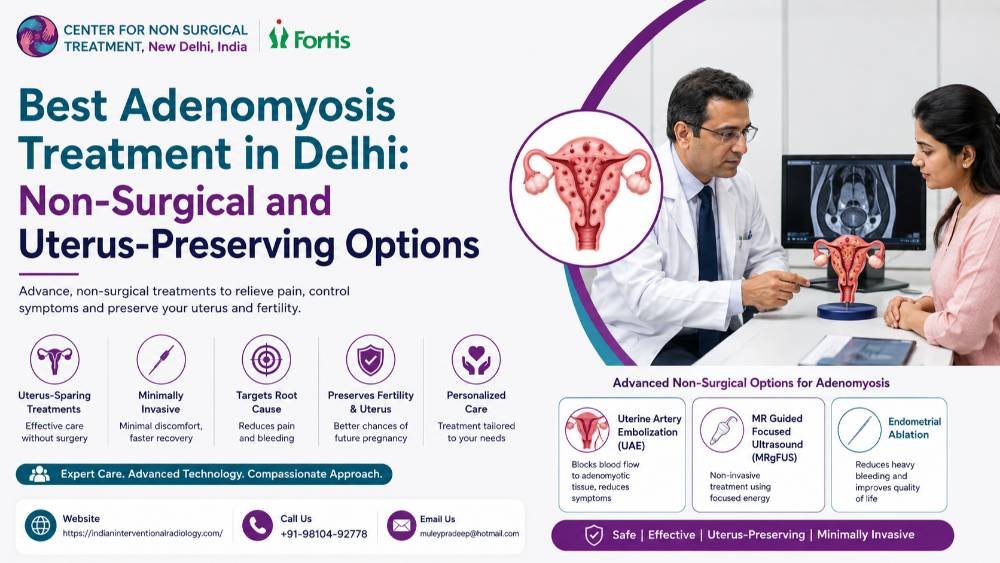
If you have been struggling with heavy periods, severe menstrual cramps, or chronic pelvic pain, you may have heard the term adenomyosis. It is a condition that affects many women, yet it remains surprisingly underdiagnosed. The good news is that you do not have to live with the pain, and you do not always need major surgery to find relief.
This guide explains everything you need to know about adenomyosis, the non-surgical treatment options available, and how to find the best adenomyosis treatment doctors in Delhi who can help you preserve your uterus while improving your quality of life.
Why Trust This Guide?
| Trust Signal | Details |
|---|---|
| Updated for 2026 | Latest clinical guidelines and treatment evidence |
| Clinical Evidence | References to BMJ Best Practice, QUESTA study, systematic reviews, RCTs |
| Specialist Reviewer | Reviewed by Dr. Pradeep Muley, Senior Consultant Interventional Radiologist |
| Evidence-Based | Includes data from 2026 systematic review (22 studies, 1,701 patients) |
| Practical Guidance | Provides clear treatment comparisons and decision-making frameworks |
This guide is based on established clinical guidelines, peer-reviewed evidence, and practical experience in treating adenomyosis. It is written to help patients make informed decisions about their care.
Last Reviewed: July 2026
What Is the Best Non-Surgical Treatment for Adenomyosis?
There is no single best treatment for every woman with adenomyosis. Treatment depends on symptom severity, age, uterine findings, previous treatments, and fertility goals.
Hormonal therapy — particularly the levonorgestrel-releasing intrauterine system (LNG-IUS) — is commonly used as a first-line treatment to control heavy bleeding and pelvic pain. For women with persistent symptomatic adenomyosis who want a uterus-preserving alternative to hysterectomy, Uterine Artery Embolization (UAE) is a minimally invasive option that can significantly improve symptoms in appropriately selected patients.
The best treatment depends on your symptoms, imaging findings, age, previous treatments, and fertility goals. If future pregnancy is important, discuss fertility implications with a gynaecologist or fertility specialist before choosing UAE or another procedure.
Adenomyosis Treatment: At a Glance
| Treatment | Main Purpose | Uterus Preserved? | Fertility Considerations | Typical Role |
|---|---|---|---|---|
| Hormonal Therapy (LNG-IUS) | Control bleeding and pain | Yes | Depends on medication and pregnancy plans | Often first-line symptom management |
| NSAIDs | Pain relief | Yes | Does not treat the underlying adenomyosis | Symptom relief |
| Tranexamic Acid | Reduce heavy bleeding | Yes | Discuss use when trying to conceive | Bleeding control |
| Uterine Artery Embolization (UAE) | Reduce adenomyosis-related symptoms | Yes | Fertility effects remain uncertain | Minimally invasive option for selected patients |
| HIFU / Thermal Ablation | Target abnormal tissue | Usually | Evidence varies by technique | Selected patients / centres |
| Hysterectomy | Definitive treatment | No | Pregnancy is no longer possible | Definitive treatment when appropriate |
What Is Adenomyosis?
Adenomyosis is a benign (non-cancerous) condition of the uterus where the tissue that normally lines the inside of the uterus (endometrial tissue) grows into the muscular wall of the uterus (myometrium). This misplaced tissue continues to respond to hormonal cycles, causing the uterus to thicken and enlarge. With each menstrual cycle, this tissue swells, breaks down, and bleeds inside the muscle wall, leading to pain and inflammation.
For a detailed explanation of the condition, read our guide on How Adenomyosis Affects You: Symptoms, Causes & Treatment Options.
How Common Is Adenomyosis?
Adenomyosis is relatively common, although its true prevalence is difficult to determine because many women have no symptoms and diagnostic methods have changed over time. It is most commonly identified in women between 35 years of age and menopause. Reported prevalence varies substantially between populations and diagnostic methods.
What Causes Adenomyosis?
The exact cause of adenomyosis is unknown. Experts suspect that it may result from surgical disruptions (like cesarean sections) or developmental factors allowing endometrial cells to embed in the muscle. High estrogen levels seem to fuel the growth. However, an individual woman's adenomyosis cannot usually be attributed to one specific cause.
Symptoms of Adenomyosis
Many women with adenomyosis experience no symptoms or only mild discomfort. However, others have symptoms that significantly interfere with daily life. The typical symptoms are dysmenorrhoea, menorrhagia, dyspareunia, and chronic pelvic pain.
Common Symptoms Include:
- Heavy or prolonged menstrual bleeding — Flooding or soaking through pads every hour during peak flow
- Severe menstrual cramps (dysmenorrhea) — Intense, sharp pelvic pain starting before or during the period
- Chronic pelvic pain — Persistent ache or pressure in the lower abdomen, even outside of menstruation
- Pain during intercourse (dyspareunia) — Deep pain in the pelvis with sexual activity
- Enlarged, tender uterus — The uterus may feel larger and tender to touch
- Abdominal fullness or bloating — Constant feeling of pelvic heaviness
- Infertility or pregnancy complications — May interfere with fertility and increase risks of miscarriage or preterm birth
- Fatigue and anaemia — Due to excessive blood loss
Why Is Adenomyosis Often Underdiagnosed?
Adenomyosis is frequently misdiagnosed or overlooked because its symptoms are very similar to those of uterine fibroids and endometriosis. Many women are told their symptoms are "normal" period problems. Advances in imaging, particularly transvaginal ultrasound and MRI, have made non-invasive diagnosis much more accurate.
Adenomyosis vs Fibroids vs Endometriosis
| Condition | Where It Occurs | Common Symptoms | Common Imaging |
|---|---|---|---|
| Adenomyosis | Within uterine muscle | Heavy bleeding, painful periods, pelvic pain | Ultrasound, MRI |
| Fibroids | Benign growths in uterine muscle or surrounding tissue | Heavy bleeding, pressure, pelvic pain | Ultrasound, MRI |
| Endometriosis | Endometrial-like tissue outside the uterus | Pelvic pain, painful intercourse, infertility | Ultrasound/MRI; diagnosis varies by presentation |
For more information on related conditions, explore uterine fibroid treatment in Delhi and hysterectomy treatment in Delhi.
How Is Adenomyosis Diagnosed?
Diagnosing adenomyosis starts with a thorough medical history and physical examination. On examination, a bulky, tender, diffusely enlarged uterus is highly suggestive of the diagnosis.
Diagnostic Tests:
- Transvaginal Ultrasound — This is the first-line imaging test. It can show characteristic features like a thickened uterine wall, heterogeneous texture, and small cysts within the muscle.
- Pelvic MRI — MRI provides more detailed images and is particularly useful for differentiating adenomyosis from fibroids.
- Clinical and Gynaecological Assessment — Including assessment for associated conditions such as fibroids or endometriosis.
Definitive diagnosis relies on histopathological confirmation of endometrial stroma and glandular tissue in the smooth muscle of the myometrium, usually following hysterectomy. However, many patients can receive an imaging-supported diagnosis without undergoing surgery.
According to the BMJ Best Practice clinical summary, transvaginal ultrasound is the preferred first-line imaging investigation for adenomyosis, and the levonorgestrel intrauterine device (IUD) is the preferred first-line medical treatment.
Who Needs Treatment?
Not every woman with adenomyosis requires treatment. The decision to treat depends on:
- Symptom severity — How much do symptoms affect your daily life?
- Fertility goals — Do you wish to become pregnant in the future?
- Age — How close are you to menopause?
- Response to previous treatments — Have you tried medication without success?
- Imaging findings — How extensive is the adenomyosis?
Treatment is generally considered for women with moderate to severe symptoms that significantly impact quality of life, or when fertility is affected.
Which Adenomyosis Treatment May Be Right for You?
| Situation | Treatment Options to Discuss |
|---|---|
| Mild symptoms | Observation, NSAIDs, hormonal treatment |
| Heavy menstrual bleeding | LNG-IUS, hormonal therapy, tranexamic acid |
| Severe pain | Hormonal treatment, NSAIDs, UAE or other specialist options |
| Symptoms despite medication | UAE or other uterus-preserving procedures |
| Future pregnancy is important | Individual fertility-focused assessment before any procedure |
| No future pregnancy and severe treatment-resistant symptoms | Hysterectomy may be considered |
| Adenomyosis with fibroids/endometriosis | Individualized multidisciplinary evaluation |
There is no universally best treatment for adenomyosis. The appropriate choice depends on symptom severity, imaging findings, age, previous treatment, reproductive plans and personal preferences.
The Taiwan Endometriosis Society Expert Consensus, published in Gynecology and Minimally Invasive Therapy in 2025, provides comprehensive guidance on imaging diagnosis, hormonal treatment, surgical treatment, and non-invasive/minimally invasive treatment.
Adenomyosis Treatment Options
If you have been diagnosed with adenomyosis, you have several treatment options. The choice depends on the severity of your symptoms, your age, and whether you wish to preserve your fertility.
1. Medical Management (Hormonal and Non-Hormonal)
For women with mild to moderate symptoms, medication can be effective.
- Levonorgestrel Intrauterine Device (LNG-IUS) — This is the preferred first-line medical treatment. It releases a hormone locally in the uterus, reducing bleeding and pain.
- Oral Contraceptives — Combined hormonal contraceptives can help regulate hormones and reduce symptoms.
- NSAIDs — Non-steroidal anti-inflammatory drugs like ibuprofen can relieve pain and reduce inflammation.
- Tranexamic Acid — This medication helps reduce heavy menstrual bleeding.
- Dienogest — A progestin medication that can help manage symptoms.
2. Uterine Artery Embolization (UAE) — A Leading Minimally Invasive Option
Uterine Artery Embolization (UAE) is a minimally invasive, image-guided procedure performed by an interventional radiologist. It is an established uterus-preserving treatment option for selected women with symptomatic adenomyosis, particularly when medical treatment has not provided adequate relief and hysterectomy is being considered.
Learn more about uterine adenomyosis treatment in Delhi.
How Does UAE Work?
The procedure is performed through a tiny puncture, usually in the groin or wrist:
- A thin catheter is inserted into an artery and guided to the uterine arteries using real-time X-ray imaging.
- Tiny particles (embolic agents) are injected to block the blood supply to the adenomyotic tissue.
- Without blood flow, the abnormal tissue shrinks, and symptoms improve over time.
- The uterus is preserved.
Who May Be a Candidate for Uterine Artery Embolization?
UAE may be considered for women who:
- Have symptomatic adenomyosis confirmed or strongly supported by imaging
- Experience significant heavy menstrual bleeding or pelvic pain
- Have not obtained adequate relief from medical treatment
- Want to avoid or postpone hysterectomy
- Prefer a minimally invasive treatment
- Have been evaluated for other causes of their symptoms
- Understand the current uncertainty surrounding fertility outcomes after UAE
Who May Need a Different Approach?
UAE may not be the preferred option when:
- Future pregnancy is the immediate priority
- Symptoms are mild and controlled with medication
- Another pelvic condition better explains the symptoms
- There are specific anatomical or medical reasons making UAE unsuitable
- The patient requires definitive treatment
What Does the Evidence Say About UAE?
Recent evidence suggests that UAE can improve symptoms in women with symptomatic adenomyosis, although outcomes vary according to disease characteristics, treatment technique, and follow-up duration.
A 2026 systematic review published in CVIR Endovascular pooled data from 22 studies involving 1,701 patients. It found that UAE has demonstrated high technical success rates across studies, with 76.4% of patients experiencing significant improvement in heavy menstrual bleeding, dysmenorrhea, and bulky-related symptoms at short- and mid-term follow-up.
A 2025 study reported a technical success rate of 100% with no serious complications.
The QUESTA study, published in Acta Obstetricia et Gynecologica Scandinavica in 2025, compared UAE with hysterectomy for symptomatic adenomyosis. It found that both UAE and hysterectomy significantly increased health-related quality of life (HRQOL), with UAE offering a valid less-invasive alternative to hysterectomy.
A 2026 randomized controlled trial involving 60 women with MRI-confirmed symptomatic adenomyosis found that UAE achieved better symptom relief and anatomical outcomes than dienogest at 6 months, supporting UAE as an effective uterine-sparing therapy.
Benefits of UAE:
- No large incisions — only a tiny puncture site
- Short hospital stay — often same-day discharge
- Faster recovery compared to surgery
- Significant reduction in pain and bleeding
- Preserves the uterus
Risks and Considerations:
- Common side effects include pelvic pain, cramping, nausea, and low-grade fever for a few days after the procedure
- Fertility effects remain uncertain
- Recurrence is possible in some cases
Recovery After Uterine Artery Embolization for Adenomyosis
UAE recovery varies between patients. Pelvic cramping, fatigue, nausea and low-grade fever can occur during the first few days. Pain is usually managed with prescribed medication. Many patients gradually return to normal daily activities within approximately one to two weeks, although recovery can vary depending on individual circumstances and the extent of treatment.
What to expect:
- First 24–48 hours: cramping and fatigue may be most noticeable
- First several days: pain and menstrual-type symptoms may gradually improve
- First 1–2 weeks: gradual return to routine activities
- Following months: symptom improvement may continue as the treated tissue responds
3. Other Minimally Invasive Techniques
Several other uterus-preserving techniques have emerged as promising alternatives:
- High-Intensity Focused Ultrasound (HIFU) — Uses focused ultrasound waves to heat and destroy adenomyotic tissue. Evidence suggests that HIFU combined with GnRH agonists or LNG-IUS achieves superior outcomes in pain relief, lesion shrinkage, and recurrence prevention compared to monotherapy.
- Radiofrequency Ablation (RFA) — Uses heat generated by radio waves to destroy tissue.
- Microwave Ablation — Uses microwave energy to ablate abnormal tissue.
These techniques are less widely available than UAE and require specialized equipment and expertise. Their availability, evidence base, long-term outcomes, and suitability vary, so they should be discussed with a specialist rather than presented as interchangeable with UAE.
4. When Is Surgery Considered?
Hysterectomy (removal of the uterus) is a definitive treatment option for women with severe symptoms who do not desire future fertility. It may be considered when symptoms are severe, other treatments have failed or are unsuitable, and the patient does not wish to become pregnant. The decision should be individualized with a gynaecologist.
Both UAE and hysterectomy significantly increased health-related quality of life for symptomatic adenomyosis. UAE is a valid less-invasive alternative to hysterectomy, with preservation of the uterus. Hysterectomy remains the treatment of choice for patients seeking a definite solution.
For women considering surgical options, learn more about myomectomy surgery in Delhi and hysterectomy treatment in Delhi.
UAE vs Medication vs Hysterectomy
| Treatment | Main Purpose | Uterus Preserved? | Fertility Considerations | Typical Role |
|---|---|---|---|---|
| Hormonal Therapy | Control bleeding and pain | Yes | Depends on medication and pregnancy plans | Often first-line symptom management |
| NSAIDs | Pain relief | Yes | Does not treat the underlying adenomyosis | Symptom relief |
| Tranexamic Acid | Reduce heavy bleeding | Yes | Discuss use when trying to conceive | Bleeding control |
| UAE | Reduce adenomyosis-related symptoms | Yes | Fertility effects remain uncertain | Minimally invasive option for selected patients |
| HIFU / RFA / Microwave Ablation | Target abnormal tissue | Usually | Evidence varies by technique | Selected patients / centres |
| Hysterectomy | Definitive treatment | No | Pregnancy is no longer possible | Definitive treatment when appropriate |
How Effective Is UAE?
There is no single "success rate" that applies to every UAE procedure. Outcomes depend on the patient's specific condition, the technique used, and how success is defined.
What studies show about symptom improvement after UAE:
- A 2026 systematic review of 22 studies (1,701 patients) found that 76.4% experienced significant improvement in heavy menstrual bleeding, dysmenorrhea, and bulky-related symptoms.
- A 2025 study reported a technical success rate of 100%.
- A 2026 randomized controlled trial found that UAE achieved better symptom relief and anatomical outcomes than dienogest at 6 months.
- The QUESTA study confirmed that UAE significantly increases health-related quality of life.
Important to know: Symptom recurrence occurs in approximately 24% of patients within 18 months. Individual study results should not be interpreted as a guaranteed outcome for every patient.
Can Adenomyosis Be Treated Without Surgery?
Yes. Adenomyosis can be effectively managed without surgery in many cases.
Non-surgical options include:
- Hormonal therapy — LNG-IUS, oral contraceptives, dienogest
- Uterine Artery Embolization (UAE) — A minimally invasive procedure that reduces symptoms while preserving the uterus
- HIFU and thermal ablation — Emerging techniques for selected patients
However, hysterectomy remains the only definitive cure for adenomyosis.
Can Adenomyosis Go Away on Its Own?
Adenomyosis does not usually disappear on its own during the reproductive years, although symptoms may change over time and often improve after menopause when hormone levels decline. Treatment is generally focused on controlling pain and bleeding, improving quality of life, and addressing fertility or reproductive goals when relevant.
Can Adenomyosis Affect Fertility?
Adenomyosis can interfere with fertility and has been linked to higher risks of miscarriage and preterm birth.
Important: UAE preserves the uterus, but preservation of the uterus does not guarantee preservation of fertility. Minimally invasive thermal ablation therapies and hysteroscopic techniques offer promising fertility-sparing options, although long-term data on fertility outcomes remain limited. If future pregnancy is a priority, fertility counselling should be part of treatment planning.
What If Medication Doesn't Work?
If hormonal or non-hormonal treatment does not provide adequate relief, your doctor may reassess the diagnosis, review imaging findings and discuss other options. Depending on your symptoms and reproductive goals, these may include UAE, selected thermal ablation techniques, or surgery. UAE is usually appropriate for patients who fail conservative measures and desire uterus-preserving therapy.
When Should You See a Specialist for Adenomyosis?
Consider medical evaluation if you experience:
- Periods that are unusually heavy or prolonged
- Severe menstrual cramps that interfere with daily activities
- Persistent pelvic pain
- Pain during intercourse
- Symptoms of anaemia such as unusual fatigue or weakness
- Difficulty becoming pregnant
- Symptoms that continue despite medication
Seek urgent medical care for exceptionally heavy bleeding associated with dizziness, fainting, severe weakness, shortness of breath, or other concerning symptoms.
Adenomyosis Treatment in Delhi
Patients considering adenomyosis treatment in Delhi should first undergo a clinical assessment to determine whether treatment is necessary and which approach is appropriate.
Indian Interventional Radiology provides image-guided minimally invasive treatments for adenomyosis and other uterine conditions under the care of an experienced interventional radiology team.
Depending on the clinical situation, evaluation may include:
- Physical examination
- Transvaginal ultrasound
- Pelvic MRI when indicated
- Assessment of symptoms and fertility goals
- Review of previous treatments
Learn more about uterine adenomyosis treatment in Delhi.
For patients experiencing chronic pelvic pain, explore chronic pelvic pain treatment options.
How to Choose an Adenomyosis Specialist in Delhi
When choosing an adenomyosis specialist in Delhi, look for relevant training, experience with the proposed treatment, transparent discussion of alternatives, and appropriate follow-up.
For UAE: Look for an appropriately trained interventional radiologist with experience in uterine artery embolization.
For medical management: A gynaecologist with experience in adenomyosis management.
For surgical options: A gynaecological surgeon with expertise in uterus-preserving and definitive surgical options.
Ask about:
- Experience with the proposed treatment
- Treatment alternatives
- Expected recovery
- Complications and how they are managed
- How recurrent cases are handled
About Dr. Pradeep Muley
Dr. Pradeep Muley is a Senior Consultant Interventional Radiologist in New Delhi with extensive experience in image-guided minimally invasive procedures. He is associated with Fortis Hospital, Vasant Kunj, New Delhi.
Speciality: Interventional Radiology
Location: New Delhi
Hospital association: Fortis Hospital, Vasant Kunj
Clinical focus: Image-guided minimally invasive procedures, including uterine artery embolization for adenomyosis and fibroids
Experience: The department reports extensive experience with uterine artery embolization for uterine fibroids and adenomyosis and more than 20,000 diagnostic and interventional radiological procedures overall.
Contact Dr. Pradeep Muley to schedule a consultation and explore your treatment options.
What to Expect During a Consultation
If you are considering treatment, here is what typically happens during a consultation:
- Medical history — Your doctor will ask about your symptoms, menstrual history, and any previous treatments.
- Physical examination — The doctor will examine your abdomen and pelvis.
- Imaging — A transvaginal ultrasound or MRI may be ordered to confirm the diagnosis and assess the severity.
- Discussion of options — Based on the findings, your doctor will discuss whether treatment is recommended and which option is best for you.
Schedule an adenomyosis consultation with Dr. Pradeep Muley.
Questions to Ask Your Specialist
- Is my diagnosis confirmed by imaging?
- What is the severity of my adenomyosis?
- What are my non-surgical treatment options?
- Am I a good candidate for uterine artery embolization?
- What do studies show about symptom improvement after UAE?
- What are the risks and complications?
- How long will recovery take?
- Will treatment affect my fertility?
- What happens if the treatment doesn't work?
Frequently Asked Questions (FAQs)
1. What is the best non-surgical treatment for adenomyosis?
There is no single best non-surgical treatment for every woman. Hormonal treatment (particularly the LNG-IUS) is commonly used for symptom control, while UAE is a minimally invasive option for selected women with symptomatic adenomyosis who want to avoid hysterectomy.
2. Can adenomyosis be cured without surgery?
Adenomyosis cannot be "cured" without removing the uterus (hysterectomy). However, non-surgical treatments like UAE, hormonal therapy, and other minimally invasive techniques can provide significant symptom relief and improve quality of life.
3. Is uterine artery embolization effective for adenomyosis?
Yes. A 2026 systematic review of 22 studies (1,701 patients) found that 76.4% experienced significant improvement in symptoms. The QUESTA study confirmed that UAE significantly increases health-related quality of life.
4. How long does it take to recover from UAE?
Recovery from UAE is much faster than from surgery. Most women can return to light activities within a few days and resume normal activities within 1–2 weeks.
5. Will UAE affect my fertility?
UAE preserves the uterus, but preservation of the uterus does not guarantee preservation of fertility. Minimally invasive thermal ablation therapies and hysteroscopic techniques offer promising fertility-sparing options, although long-term data on fertility outcomes remain limited. If future pregnancy is a priority, fertility counselling should be part of treatment planning.
6. What are the symptoms of adenomyosis?
Common symptoms include heavy or prolonged menstrual bleeding, severe menstrual cramps, chronic pelvic pain, pain during intercourse, abdominal bloating, and fatigue. Some women also experience infertility or pregnancy complications.
7. How is adenomyosis diagnosed?
Adenomyosis is diagnosed through a combination of medical history, physical examination, and imaging tests. Transvaginal ultrasound is the first-line test, and MRI can provide more detailed information.
8. Can adenomyosis be treated with medication?
Yes. Medications like the levonorgestrel IUD, oral contraceptives, NSAIDs, and tranexamic acid can help manage symptoms. However, these treatments do not cure adenomyosis and may not be sufficient for severe cases.
9. Is adenomyosis the same as endometriosis?
No. Adenomyosis involves endometrial tissue growing into the uterine muscle wall. Endometriosis involves endometrial tissue growing outside the uterus, such as on the ovaries, fallopian tubes, or pelvic lining. The two conditions can occur together.
10. When should I see a specialist for adenomyosis?
You should see a specialist if you have heavy menstrual bleeding, severe period pain, chronic pelvic pain, or if you are having difficulty conceiving. Early diagnosis and treatment can significantly improve your quality of life.
11. What do studies show about symptom improvement after UAE?
A 2026 systematic review of 22 studies (1,701 patients) found that 76.4% experienced significant improvement in heavy menstrual bleeding, dysmenorrhea, and bulky-related symptoms. A 2026 randomized controlled trial found that UAE achieved better symptom relief and anatomical outcomes than dienogest at 6 months.
12. Is hysterectomy the only cure for adenomyosis?
Hysterectomy is the only definitive cure for adenomyosis. However, many women find significant relief with non-surgical options like UAE and hormonal therapy, allowing them to preserve their uterus.
13. Can I get pregnant after UAE for adenomyosis?
Pregnancy after UAE is possible, but fertility outcomes are not guaranteed. If you are planning to conceive, discuss your options with a fertility specialist and interventional radiologist.
14. How do I find the best adenomyosis doctors in Delhi?
When choosing an adenomyosis specialist in Delhi, look for relevant training, experience with the proposed treatment, transparent discussion of alternatives, and appropriate follow-up. Dr. Pradeep Muley is a Senior Consultant Interventional Radiologist with extensive experience in image-guided procedures.
15. Does adenomyosis cause infertility?
Adenomyosis can interfere with fertility and has been linked to higher risks of miscarriage and preterm birth. However, many women with adenomyosis can conceive and carry pregnancies to term.
16. What happens if adenomyosis is left untreated?
If left untreated, adenomyosis can cause worsening symptoms, including severe pain, heavy bleeding leading to anaemia, and potentially impact fertility. However, adenomyosis is not life-threatening.
17. Is adenomyosis cancerous?
No. Adenomyosis is a benign (non-cancerous) condition.
18. How long does the UAE procedure take?
The UAE procedure typically takes about 1 to 2 hours. You will be awake but sedated, and you will be monitored for a few hours after the procedure before going home.
19. Will I need to stay in the hospital after UAE?
Most women go home the same day or after a short overnight stay. UAE is an outpatient procedure in many cases.
20. What are the side effects of UAE?
Common side effects include pelvic pain, cramping, nausea, and low-grade fever for a few days after the procedure. These are usually managed with medication and resolve within a week.
Conclusion
Adenomyosis is a common but often misunderstood condition that can significantly impact your quality of life. The good news is that you have options. You do not have to live with pain and heavy bleeding, and you do not have to undergo a hysterectomy to find relief.
Uterine Artery Embolization (UAE) is a safe, effective, and uterus-preserving minimally invasive treatment that has helped thousands of women regain control of their lives. With evidence of symptom improvement, a minimally invasive approach, and preservation of the uterus, UAE is an excellent option for many women with symptomatic adenomyosis.
If you are considering adenomyosis treatment in Delhi, an individualized consultation can help determine whether medical management, UAE or another uterus-preserving approach is appropriate for your condition and reproductive goals.
Schedule a consultation with Indian Interventional Radiology to discuss your diagnosis and treatment options.
About Dr. Pradeep Muley
Dr. Pradeep Muley is a Senior Consultant Interventional Radiologist in New Delhi with extensive experience in image-guided minimally invasive procedures. He is associated with Fortis Hospital, Vasant Kunj, New Delhi, and his department has performed more than 20,000 diagnostic and interventional radiological procedures.
Contact Dr. Pradeep Muley to schedule a consultation and explore your treatment options.
Medical Disclaimer
This article provides general educational information and does not replace a medical examination, diagnosis, or individualized treatment plan. Adenomyosis treatment should be recommended only after appropriate clinical assessment and, when indicated, relevant investigations.