
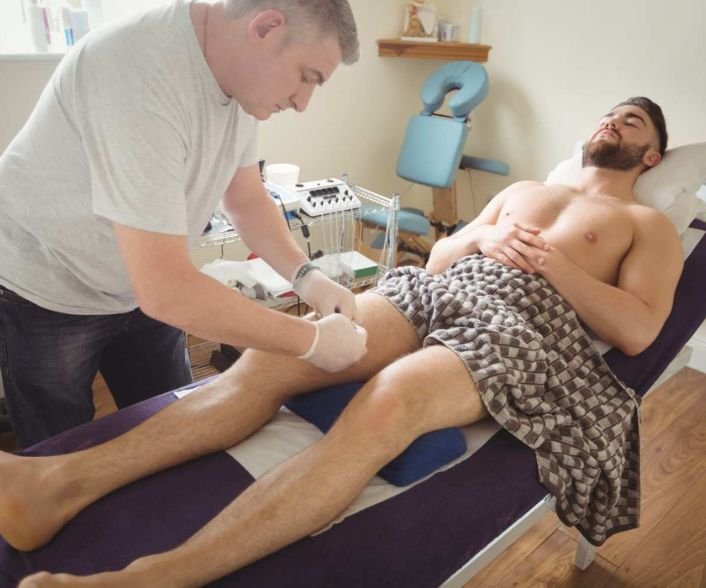
Varicocele is an enlargement of veins within the scrotum, similar to varicose veins that appear in the legs. This common male health condition affects approximately 15 to 20 percent of all men and occurs when the valves inside the veins that carry blood away from the testicles fail to function properly. When these one-way valves malfunction, blood pools in the veins rather than flowing efficiently back to the heart, causing the veins to swell and become enlarged. While many men with varicoceles experience no symptoms, others may face complications including scrotal pain, testicular atrophy, and fertility issues, making early detection and appropriate management essential for maintaining reproductive health.
Understanding Varicocele: The Basics
The male reproductive system relies on a complex network of blood vessels to maintain optimal testicular function. The pampiniform plexus, a group of veins surrounding the spermatic cord, plays a crucial role in temperature regulation and blood circulation within the scrotum. In a healthy system, valves within these veins ensure blood flows in one direction toward the heart.
When varicocele develops, these valves become weakened or damaged. Blood begins to flow backward and accumulate in the veins, causing them to dilate and enlarge. This pooling of blood increases the temperature around the testicles, which normally need to remain approximately three degrees cooler than core body temperature for optimal sperm production.
Varicoceles most commonly occur on the left side of the scrotum due to anatomical differences in how blood drains from each testicle. The left testicular vein connects to the left renal vein at a right angle, creating higher pressure and making valve failure more likely. Research indicates that about 85 to 90 percent of varicoceles are left-sided, while bilateral varicoceles affecting both sides occur in approximately 10 to 15 percent of cases.
Varicocele Grading System: From Mild to Severe
Medical professionals use a grading system to classify varicoceles based on their size and detectability during physical examination. Understanding these grades helps determine the appropriate treatment approach.
- Grade 1 (Subclinical): The smallest form of varicocele, detectable only through specialized imaging tests like Doppler ultrasound or during a Valsalva maneuver—a breathing technique where the patient bears down as if having a bowel movement. Most Grade 1 varicoceles remain asymptomatic and may not require immediate treatment.
- Grade 2 (Moderate): At this stage, the varicocele can be felt during a physical examination without requiring the Valsalva maneuver, but remains invisible to the naked eye. Some men may begin experiencing mild discomfort or a dragging sensation in the scrotum, particularly after prolonged standing or physical exertion.
- Grade 3 (Large): The enlarged veins become both visible and palpable. Patients often describe feeling a mass that resembles a "bag of worms" above the affected testicle. Grade 3 varicoceles are frequently associated with testicular discomfort and show stronger correlation with fertility problems.
- Grade 4 Varicocele: While not universally included in all classification systems, grade 4 represents the most severe presentation. Advanced diagnostic tools and the Sarteschi classification system identify grade 4 varicocele as having spontaneous reverse blood flow that intensifies during the Valsalva maneuver, resulting in significant scrotal deformation and increased risk of testicular atrophy.
Varicocele Grade 4 Symptoms: Recognizing Advanced Cases
The symptoms of grade 4 varicocele are typically more pronounced and may significantly impact quality of life. Patients with this severe form commonly experience:
- Visible Venous Enlargement: The dilated veins are clearly visible through the scrotal skin, appearing as twisted, rope-like structures that remain prominent even when lying down. This distinguishes grade 4 from lower grades, where veins may become less noticeable in the supine position.
- Persistent Scrotal Pain: Many men report dull, aching pain or sharp discomfort in the affected testicle that worsens throughout the day. The pain typically intensifies after prolonged standing, physical activity, or exposure to warm temperatures. Unlike lower grades where discomfort is intermittent, grade 4 varicocele symptoms often include more consistent pain.
- Testicular Atrophy: One of the most concerning aspects of severe varicocele is testicular shrinkage. The increased temperature and impaired blood flow can damage testicular tissue, causing the affected testicle to become noticeably smaller than its healthy counterpart. Studies show that testicular size differences exceeding 20 percent may indicate significant varicocele-related damage.
- Heavy or Dragging Sensation: Patients frequently describe feeling heaviness or pressure in the scrotum, as if something is pulling downward. This sensation typically worsens as the day progresses and improves when lying flat, as gravity no longer contributes to blood pooling.
- Fertility Complications: Varicoceles are identified as the most common correctable cause of male infertility, contributing to approximately 40 percent of primary infertility cases. The elevated scrotal temperature and oxidative stress caused by blood pooling can reduce sperm count, decrease sperm motility, and affect sperm morphology.
Also Read:- How to Treat Varicoceles Without Surgery?
What Causes Varicocele Development?
The exact mechanisms triggering varicocele formation involve multiple factors:
- Valve Dysfunction: The primary cause stems from faulty or absent valves in the testicular veins. These valves normally prevent blood from flowing backward. When they fail, gravity allows blood to accumulate in the pampiniform plexus.
- Anatomical Factors: The left testicular vein's perpendicular entry into the renal vein creates higher venous pressure compared to the right side, where the testicular vein enters the inferior vena cava at an angle. This anatomical difference explains the higher prevalence of left-sided varicoceles.
- Increased Abdominal Pressure: Conditions or activities that raise intra-abdominal pressure—including heavy lifting, chronic constipation, or straining during bowel movements—can contribute to varicocele development by increasing pressure on the testicular veins.
- Genetic Predisposition: Research suggests hereditary factors may play a role in varicocele susceptibility. Men with family members who have varicoceles or varicose veins may face increased risk due to inherited vein wall weakness or valve abnormalities.
- Age-Related Development: Varicoceles commonly develop during puberty when rapid testicular growth increases blood flow demand. The condition affects 10 to 15 percent of adolescents and becomes more prevalent with age, as vein walls naturally weaken over time.
Comprehensive Diagnosis: From Physical Exam to Advanced Imaging
Accurate varicocele diagnosis combines clinical examination with advanced diagnostic tools:
- Physical Examination: A thorough scrotal examination forms the foundation of varicocele diagnosis. Healthcare providers examine the scrotum in both standing and supine positions, as varicoceles typically become more prominent when standing and may reduce or disappear when lying down. The physician palpates for enlarged veins and may request the patient perform a Valsalva maneuver to make smaller varicoceles more detectable.
- Scrotal Ultrasound with Doppler: This non-invasive imaging technique provides detailed visualization of blood flow and vein diameter. Doppler ultrasound can detect subclinical varicoceles, measure vessel size (veins larger than 2-3 mm are considered abnormal), and confirm the presence of retrograde blood flow. The examination is performed in multiple positions to assess how gravity affects venous filling.
- Semen Analysis: For men concerned about fertility, comprehensive semen analysis evaluates sperm concentration, motility, and morphology. This testing helps determine whether varicocele treatment might improve reproductive potential. Follow-up semen analysis is typically performed three to four months after treatment, as spermatogenesis cycles require approximately 74 days.
- Hormonal Testing: Blood tests measuring testosterone and other reproductive hormones can reveal whether varicocele has affected hormonal balance. While many men maintain adequate testosterone levels despite having varicoceles, some experience hormone disruption that may benefit from treatment.
- Thermography: This specialized technique detects temperature differences within the scrotum by identifying heat pockets created by pooled blood. Elevated temperatures around affected testicles provide additional evidence of varicocele presence and severity.
- Treatment Options: Balancing Benefits and Individual Needs Treatment decisions depend on symptom severity, fertility concerns, testicular size discrepancy, and patient preferences. Not all varicoceles require intervention.
Conservative Management
- Observation: Men with asymptomatic or minimally symptomatic varicoceles may opt for watchful waiting with periodic monitoring. Approximately 80 percent of men with varicoceles remain fertile without treatment, and many experience no significant discomfort throughout life.
- Lifestyle Modifications: Supportive measures can alleviate mild symptoms. Wearing supportive underwear or athletic supporters reduces gravitational stress on enlarged veins. Avoiding prolonged standing, managing body weight, and limiting activities that increase abdominal pressure may provide symptom relief.
- Pain Management: Over-the-counter anti-inflammatory medications like ibuprofen or naproxen can address occasional discomfort. Cold compresses applied to the scrotum (wrapped in cloth, never directly on skin) may reduce pain and swelling temporarily.
Surgical Interventions
- Varicocelectomy: This surgical procedure involves ligating (tying off) the affected veins to redirect blood flow through healthier vessels. Multiple surgical approaches exist:
- Microsurgical Varicocelectomy: Using a surgical microscope, surgeons can precisely identify and preserve the testicular artery while ligating only abnormal veins. This technique offers the lowest recurrence rates (1-2 percent) and reduces complications.
- Laparoscopic Approach: Minimally invasive laparoscopic surgery involves small abdominal incisions and typically allows faster recovery than open procedures while maintaining good success rates.
- inguinal or Subinguinal Approach: These methods access the spermatic cord through the groin area. Recovery time averages one to two weeks, with most men resuming normal activities within days.
Varicocele Embolization: A Modern Alternative
Varicocele embolization represents an increasingly popular minimally invasive treatment performed by interventional radiologists. This technique has gained recognition for excellent outcomes with minimal downtime.
The Procedure: Under local anaesthesia and mild sedation, the interventional radiologist makes a tiny puncture in the groin or neck to access a vein. Using advanced imaging guidance (fluoroscopy), a thin catheter is carefully navigated through the venous system to the testicular vein. Once positioned correctly, small metal coils, sclerosing foam, or embolic agents are deployed to block the abnormal vein, redirecting blood flow to healthy vessels.
Key Advantages:
- Performed as an outpatient procedure with same-day discharge
- No general anaesthesia required
- Single puncture site can treat bilateral varicoceles
- Minimal scarring (no visible surgical incisions)
- Faster recovery—most men return to normal activities within 2-3 days
- Comparable success rates to surgery (approximately 90 percent)
- Lower risk of testicular artery injury compared to surgical approaches
Recovery Experience: Most patients report mild discomfort at the catheter insertion site for a day or two. Strenuous exercise and heavy lifting should be avoided for one to two weeks. Sexual activity can typically resume after one to two weeks as directed by the physician.
Expert Care and Treatment Success
Men experiencing symptoms consistent with varicocele should consult healthcare professionals specializing in male reproductive health. Early evaluation and appropriate treatment can preserve fertility, relieve discomfort, and prevent testicular damage.
Dr. Pradeep Muley at Indian Interventional Radiology specializes in advanced minimally invasive treatments for varicocele, offering patients the benefits of modern embolization techniques with personalized care. Treatment success rates demonstrate significant improvements in pain relief, with many men experiencing enhanced fertility parameters within three to six months following intervention.
Understanding Treatment Outcomes and Long-Term Prognosis
- Symptom Resolution: Studies indicate that 80 to 90 percent of men experience substantial pain relief following varicocele treatment. Discomfort typically diminishes within weeks, though some men notice improvements immediately after intervention.
- Fertility Improvements: Research consistently shows that treating clinically significant varicoceles in men with abnormal semen parameters leads to improved sperm quality. Approximately 50 to 70 percent of men demonstrate enhanced sperm concentration, motility, or morphology. Natural pregnancy rates increase for many couples following successful treatment, though individual results vary based on multiple fertility factors.
- Testosterone Enhancement: Emerging evidence suggests varicocele repair may benefit testosterone production. Over 80 percent of men with low-normal testosterone levels experience increases following treatment, potentially improving overall well-being, energy levels, and metabolic health.
- Recurrence Rates: Varicocele recurrence occurs in approximately 5 to 10 percent of cases following embolization, with similar rates for most surgical techniques. Microsurgical approaches demonstrate the lowest recurrence rates. Persistent or recurrent varicoceles can be successfully retreated using the same or alternative methods.
Living with Varicocele: Practical Considerations
Men diagnosed with varicocele should understand that the condition is common, generally harmless, and highly treatable when necessary. Regular follow-up examinations help monitor testicular size, assess symptoms, and evaluate fertility status for those planning future pregnancies.
Maintaining healthy lifestyle habits—including regular exercise, balanced nutrition, avoiding tobacco, limiting alcohol consumption, and managing stress—supports overall reproductive health. Men concerned about fertility should discuss early treatment options with their healthcare providers, as prolonged untreated varicocele may cause progressive testicular damage in some cases.
When to Seek Medical Attention
Consult a healthcare provider if you experience:
- New scrotal mass, swelling, or visible vein enlargement
- Persistent testicular pain or discomfort
- Changes in testicle size or consistency
- Difficulty achieving pregnancy after one year of trying
- Concerns about testosterone levels or general reproductive health
Early diagnosis enables informed treatment decisions and better long-term outcomes. With appropriate care, most men with varicocele maintain excellent quality of life and reproductive function.
Conclusion
Varicocele represents one of the most common yet treatable causes of male fertility issues and testicular discomfort. From mild Grade 1 presentations to severe grade 4 varicocele cases with prominent symptoms, understanding this condition empowers men to seek timely evaluation and appropriate intervention. Modern treatment options, particularly minimally invasive varicocele embolization, offer safe, effective solutions with excellent success rates and minimal recovery time. Whether experiencing varicocele grade 4 symptoms or discovering an asymptomatic varicocele during routine examination, consulting experienced specialists ensures personalized care tailored to individual health goals and circumstances.
Frequently Asked Questions About Varicocele
1. What is a varicocele?
A varicocele is an enlargement of veins within the scrotum, similar to varicose veins in the legs. It occurs when valves inside the veins that carry blood away from the testicles malfunction, causing blood to pool and the veins to swell. This condition affects approximately 15 to 20 percent of all men.
2. Why do varicoceles usually occur on the left side?
About 85 to 90 percent of varicoceles develop on the left side due to anatomical differences. The left testicular vein connects to the left renal vein at a right angle, creating higher pressure and making valve failure more likely. The right testicular vein enters the inferior vena cava at an angle, resulting in lower pressure.
3. At what age do varicoceles typically develop?
Varicoceles commonly develop during puberty when rapid testicular growth increases blood flow demand. The condition affects 10 to 15 percent of adolescents and becomes more prevalent with age as vein walls naturally weaken over time.
4. Are varicoceles hereditary?
Research suggests hereditary factors may play a role. Men with family members who have varicoceles or varicose veins may face increased risk due to inherited vein wall weakness or valve abnormalities.
5. What is the difference between Grade 1, 2, 3, and 4 varicoceles?
- Grade 1 (Subclinical): Detectable only through imaging tests or during a Valsalva maneuver; usually asymptomatic
- Grade 2 (Moderate): Can be felt during examination but not visible; may cause mild discomfort
- Grade 3 (Large): Both visible and palpable; often described as feeling like a "bag of worms"; frequently associated with discomfort and fertility problems
- Grade 4: Most severe presentation with spontaneous reverse blood flow, significant scrotal deformation, and increased risk of testicular atrophy
6. When will symptoms improve after treatment?
Pain and discomfort typically diminish within weeks, though some men notice immediate improvements. Fertility parameters generally improve within three to six months following intervention.
7. Can varicocele come back after treatment?
Recurrence occurs in approximately 5 to 10 percent of cases following embolization and similar rates for most surgical techniques. Persistent or recurrent varicoceles can be successfully retreated using the same or alternative methods.