
Uterine fibroids are extremely common. In fact, between 20 to 70 percent of women will develop fibroids during their reproductive years. Many women have fibroids and never even know it because they cause no symptoms at all. But for others, fibroids can disrupt daily life, cause severe pain, and lead to serious health complications.
The question is: how do you know when your fibroids actually need treatment? When should you stop "waiting and watching" and start exploring your options?
If you are searching for the best doctor for uterine fibroids in Delhi or considering uterine fibroid embolization treatment in Delhi , this guide will help you recognize the warning signs. By the end, you will know exactly when to seek help and what treatment options are available with a trusted expert like Dr. Pradeep Muley .
What Are Uterine Fibroids?
Uterine fibroids, also called leiomyomas or myomas, are benign (non-cancerous) growths that develop from the muscle tissue of the uterus. They are not cancer, and they almost never turn into cancer. Fibroids can vary greatly in number and size. You can have a single fibroid or multiple growths. Some are too small to see with the eyes, while others can grow to the size of a grapefruit or even larger.
Fibroids are classified based on their location:
| Type | Location | Common Symptoms |
|---|---|---|
| Intramural fibroids | Within the muscular wall of the uterus | Heavy bleeding; may cause no symptoms if small |
| Submucosal fibroids | Bulge into the uterine cavity | Heavy bleeding; fertility problems; painful periods |
| Subserosal fibroids | On the outside of the uterus | Pressure on bladder and bowel; back pain; constipation |
| Cervical fibroids | In the wall of the cervix | Infertility; pain; bleeding; problems during vaginal delivery |
Fibroids are the most frequent tumour found in the female reproductive system. Women between the ages of 30 and 50 are most prone to developing fibroids. Being overweight or obese further increases the likelihood of fibroids compared to women with a healthy body weight.
Common Symptoms of Uterine Fibroids
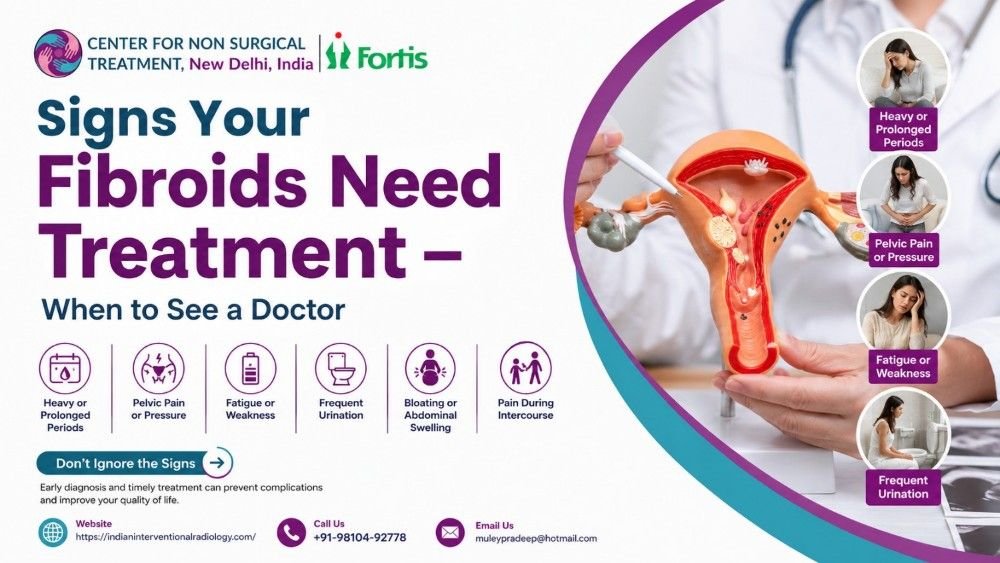
Many women with fibroids do not have any symptoms. But when symptoms do appear, they can significantly affect your quality of life. The most common symptoms include:
Bleeding Symptoms
- Heavy menstrual bleeding – soaking through pads or tampons every hour
- Prolonged periods – periods lasting longer than normal
- More frequent periods – shorter cycles
- Bleeding between periods
- Bleeding with blood clots
Pain Symptoms
- Painful periods with severe cramping
- Pelvic pain or pressure
- Lower back pain
- Pain during sex
Pressure Symptoms (Bulk Symptoms)
- Frequent urination or trouble emptying your bladder
- Constipation – pressure on the bowel
- Feeling of fullness or pressure in the lower belly
- Growing stomach area – you may look pregnant
- Swollen belly area
Other Symptoms
- Anemia (low red blood cell count) from heavy bleeding, causing tiredness and weakness
- Infertility or difficulty getting pregnant
- Miscarriage
When Do Fibroids Need Treatment?
Here is the most important thing to understand: not all fibroids need treatment. If you have no symptoms or only mild symptoms, the best treatment may be no treatment at all. Many women with small fibroids and no bothersome symptoms are simply monitored with annual pelvic exams and ultrasounds.
But when fibroids start causing symptoms that affect your daily life, it is time to consider treatment. Approximately 25 to 30 percent of women with fibroids experience significant symptoms that require intervention.
Here are the key signs that your fibroids need treatment:
1. Heavy or Painful Periods That Disrupt Your Life
If your periods are so heavy that you cannot leave the house, need to change pads or tampons every hour, or are constantly worried about leaks, it is time to seek help. Heavy bleeding that limits what you can do is a clear sign that treatment is needed.
2. Bleeding Between Periods
Spotting or bleeding between periods is not normal and should be evaluated by a doctor.
3. Anemia from Blood Loss
Heavy menstrual bleeding can lead to iron-deficiency anemia. If you feel constantly tired, weak, pale, or short of breath, your fibroids may be causing significant blood loss. Untreated severe anemia can lead to serious complications including heart problems.
4. Pelvic Pain That Doesn't Go Away
Persistent pelvic pain or pressure that interferes with your daily activities is a sign that your fibroids need attention.
5. Bladder or Bowel Problems
If you feel the need to urinate frequently, have trouble emptying your bladder, or experience constipation due to pressure from fibroids, treatment may be needed.
6. Rapidly Growing Fibroids
A fibroid that grows rapidly should be evaluated promptly. While fibroids are almost always benign, rapid growth may require investigation.
7. Fertility Problems
If you are having difficulty getting pregnant or have experienced miscarriage, and fibroids are suspected to be the cause, treatment may be recommended.
8. Emergency Symptoms – Seek Immediate Care
Get medical care right away if you have:
- Severe vaginal bleeding
- Sharp, sudden pelvic pain that does not go away with pain medication
- Signs of severe anemia such as lightheadedness, extreme fatigue, and weakness
Rarely, a fibroid can outgrow its blood supply and start to die, causing sudden, serious pain. Pedunculated fibroids can also twist on their stalks, causing severe pain and requiring emergency treatment.
Treatment Options for Symptomatic Fibroids
If your fibroids are causing symptoms, you have several treatment options. The right choice depends on your symptoms, fibroid size and location, age, and whether you want to have children in the future.
Non-Surgical Options
Uterine Fibroid Embolization (UFE) – This is a minimally invasive, non-surgical procedure performed by an interventional radiologist. It works by blocking the blood supply to the fibroids, causing them to shrink naturally over time. UFE is not a major surgery, so you may recover faster and may not need to stay in the hospital.
UFE is recommended for women who wish to preserve the uterus but are not pursuing future pregnancy. It can treat all fibroids at once, including those too small or hard to remove surgically.
Learn more about Uterine Fibroid Embolization treatment in Delhi
Medical Management – Medications can help manage symptoms:
- Hormonal birth control to reduce bleeding
- Tranexamic acid to reduce blood flow during periods
- GnRH agonists to shrink fibroids temporarily
- Pain relievers like ibuprofen for cramps
Surgical Options
Myomectomy – This is a surgical procedure that removes fibroids while leaving the uterus in place. It is the preferred option for women who want to preserve fertility. Myomectomy can be done laparoscopically (minimally invasive) or through open surgery depending on the size and location of fibroids.
Hysterectomy – Removal of the uterus. This is only recommended for women who have completed their childbearing and have severe symptoms.
Comparison Table: When to Choose Each Treatment
| Factor | Uterine Fibroid Embolization (UFE) | Myomectomy | Medical Management |
|---|---|---|---|
| Procedure Type | Non-surgical, minimally invasive | Surgical | Medication only |
| Hospital Stay | Usually 1 day | 1-3 days or longer | None |
| Recovery Time | 1-2 weeks | 2-6 weeks | Immediate |
| Uterus Preserved | Yes | Yes | Yes |
| Fertility | Possible but less evidence | Preferred for fertility | Does not affect fertility |
| Treats | All fibroids at once | Individual fibroids | Symptoms only |
| Best For | Women not planning pregnancy soon | Women planning pregnancy | Mild to moderate symptoms |
Why Choose Dr. Pradeep Muley for Fibroid Treatment in Delhi?
When it comes to uterine fibroid embolization treatment in Delhi or uterine fibroids surgery in Delhi , choosing the right doctor is essential. Dr. Pradeep Muley is a highly experienced Senior Consultant Interventional Radiologist with an outstanding reputation.
Pioneer in Uterine Fibroid Embolization
Dr. Pradeep Muley is a pioneer in Uterine Fibroid Embolization (UFE) , offering a non-surgical alternative to myomectomy that shrinks fibroids without cutting. He has performed more than 20,000 diagnostic and interventional radiological procedures and has helped thousands of women find relief from fibroid symptoms.
Unmatched Qualifications
Dr. Pradeep Muley's academic qualifications include:
- Fellow Interventional Radiology, Singapore General Hospital, Singapore
- Visiting Associate, Neurointerventional Radiology, Iowa University Hospitals, USA
- Visiting Fellow, Neurointerventional Radiology, Johns Hopkins Medical Institutions, USA
- Lecturer, Vascular & Interventional Radiology, KEM Hospital, Mumbai, India
- Neuroradiology, All India Institute of Medical Sciences (AIIMS), New Delhi, India
- Consultant Interventional Radiologist, KIMS hospital, Trivandrum, Kerala, India
Advanced Technology and Facilities
The Department of Interventional Radiology, established by Dr. Pradeep Muley, is equipped with two modern Cath-labs for all diagnostic and interventional procedures. He is assisted by a team of trained nurses and practicing radiologists and personally participates in all interventional procedures.
Personalized, Patient-Centric Care
At Indian Interventional Radiology , the focus is on providing safe, effective, and long-term relief. The team offers customized treatment plans based on your specific symptoms, fibroid characteristics, age, and fertility goals. The team works closely with expert gynaecologists to ensure the most appropriate care.
You can schedule a consultation or contact us to begin your journey toward relief.
Frequently Asked Questions (FAQs)
1. How do I know if my fibroids need treatment?
You should consider treatment if your fibroids cause heavy or painful periods that disrupt your life, bleeding between periods, anemia, persistent pelvic pain, bladder or bowel problems, or fertility issues. If you have no symptoms, treatment is usually not needed.
2. What size fibroid requires treatment?
There is no specific size that automatically requires treatment. The decision depends on your symptoms. However, fibroids over 5 cm are often more likely to cause significant symptoms and may need treatment. Some women with large fibroids have no symptoms, while others with small fibroids have severe symptoms.
3. Can fibroids cause emergency situations?
Yes. You should seek emergency care if you have severe vaginal bleeding or sharp, sudden pelvic pain that does not go away with pain medication. Rarely, a fibroid can outgrow its blood supply and cause severe pain, or a pedunculated fibroid can twist and cause acute pain.
4. What is the best treatment for fibroids?
There is no single "best" treatment. The right choice depends on your symptoms, fibroid size and location, age, and fertility goals. Uterine Fibroid Embolization is an excellent non-surgical option for women who want to preserve the uterus. Myomectomy is preferred for women planning pregnancy. The best doctor for uterine fibroids in Delhi can help you make the right choice.
5. Can fibroids cause infertility?
Yes. Fibroids can affect fertility if they are large or change the shape of the uterine cavity. Submucosal fibroids that bulge into the uterine cavity are most likely to affect fertility. If you are having difficulty getting pregnant, your doctor may recommend removing fibroids that affect the uterine cavity.
6. Is UFE better than myomectomy?
Both are effective treatments with different advantages. UFE is non-surgical, has no incisions, faster recovery, and treats all fibroids at once. Myomectomy physically removes fibroids and is preferred for women planning pregnancy. The choice depends on your individual situation.
7. How long does recovery take after UFE?
Most patients can return to normal activities within one to two weeks. The procedure usually requires just one day in the hospital.
8. Can fibroids come back after treatment?
Yes. New fibroids can develop after both UFE and myomectomy. However, UFE treats all fibroids at once, including those too small to see, which may reduce the chance of recurrence.
9. What are the signs of anemia from fibroids?
Signs of anemia include ongoing tiredness, weakness, pale skin, shortness of breath, and feeling lightheaded. If you experience these symptoms along with heavy menstrual bleeding, you should see a doctor promptly.
10. Why should I choose Dr. Pradeep Muley for fibroid treatment?
Dr. Pradeep Muley is a pioneer in Uterine Fibroid Embolization with over 20,000 procedures performed. He has trained at prestigious institutions including Johns Hopkins and AIIMS. He offers advanced, personalized care with a focus on non-surgical, uterus-preserving solutions.
Final Thoughts
Uterine fibroids are common, and many women live with them without any problems. But when fibroids start causing symptoms—heavy bleeding, pain, pressure, or fertility issues—it is time to take action. The signs are clear: if your symptoms are affecting your quality of life, you deserve treatment.
If you are in Delhi or the NCR region and looking for the best doctor for uterine fibroids in Delhi or uterine fibroid embolization treatment in Delhi , Dr. Pradeep Muley at Indian Interventional Radiology is your trusted partner in fibroid care. With decades of experience, advanced technology, and a patient-first approach, he provides world-class care tailored to your needs.
Don't ignore the signs. Book a consultation today and take the first step toward relief.
Contact Information
Dr. Pradeep Muley
Senior Consultant Interventional Radiologist
Indian Interventional Radiology
Fortis
Hospital, Vasant Kunj, New Delhi, India
Phone: +91-98104-92778
Email: muleypradeep@hotmail.com
Contact Us for more information or to schedule your appointment.