
What is peripheral artery disease treatment?
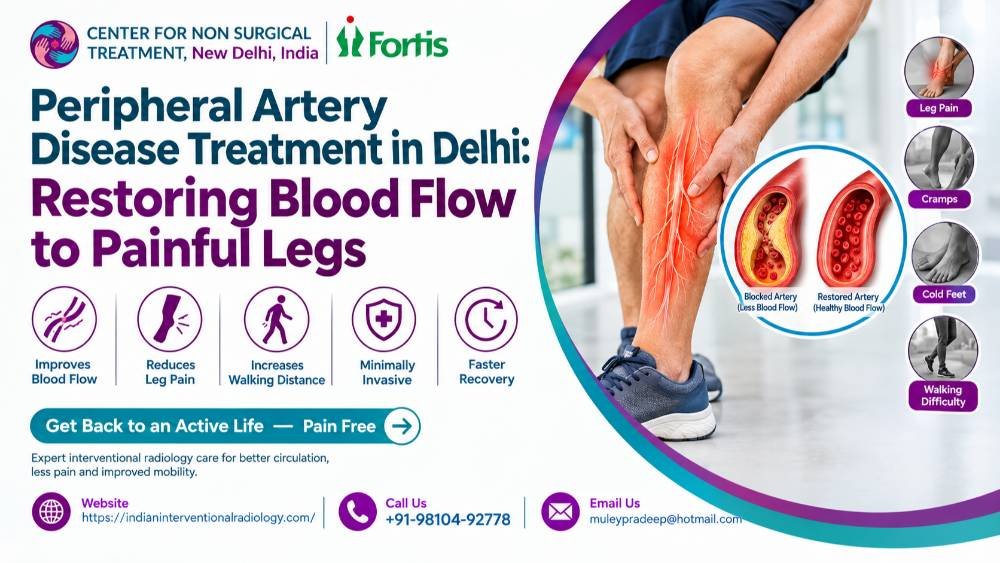
Peripheral artery disease (PAD) happens when fatty deposits narrow the arteries that carry blood to the legs. Peripheral artery disease treatment starts with stopping smoking, walking programmes and medicines. When blockages cause severe pain, non-healing wounds or a threatened limb, an interventional radiologist can reopen the artery with angioplasty and stenting through a small puncture, often without a surgical cut.
Who is it for?
People with calf or thigh cramps on walking, cold feet, non-healing foot sores or rest pain, particularly smokers and people with diabetes. Mild disease needs lifestyle change and medicines, while severe blockages may need a procedure.
Is it safe and effective?
Angioplasty and stenting are widely used and generally safe, with risks such as bleeding, artery injury and re-narrowing. They improve blood flow but do not cure the underlying disease, so stopping smoking and controlling diabetes remain essential.
Why Trust This Guide?
| Trust Signal | Details |
|---|---|
| Updated for 2026 | Reviewed in October 2026 against current patient-information guidance |
| Local Expertise | Based on interventional radiology practice at Fortis Hospital, Vasant Kunj, New Delhi |
| Industry References | NHS, Mayo Clinic, NICE, American Heart Association, Society of Interventional Radiology (SIR) |
| Patient-Focused Approach | Organised around the questions patients commonly raise before treatment |
| Content Standards | Risks and limits stated openly, with no guaranteed outcomes |
This guide is written in plain language for patients and families. It explains what a treatment can and cannot do, and it should be read alongside advice from your own doctor. It is general information and does not replace personal medical advice.
Last Reviewed: October 2026
Introduction
Leg pain on walking is easy to blame on age or arthritis, yet it can signal narrowed arteries. Left alone, severe blockages can threaten the limb.
This guide explains how PAD is treated, from walking programmes and medicines to angioplasty and stenting, and when to seek urgent help.
What is peripheral artery disease?
Think of the arteries as pipes. Over the years, cholesterol, calcium and scar tissue line the walls and narrow the channel. Muscles in the leg then receive less blood than they need, especially during walking. The same process silently affects the heart and brain arteries, so PAD is also a warning sign of wider vascular disease.
The main risk factors are smoking, diabetes, high blood pressure, high cholesterol, kidney disease and age above 50. In India, diabetes and tobacco use make PAD a major concern, including in people younger than you might expect.
Our page on leg pain and PAD treatment summarises how the clinic approaches it.
Symptoms and warning signs
- cramping in the calf, thigh or buttock when walking, which eases within minutes of rest (called claudication)
- cold, pale or bluish feet
- hair loss and shiny skin on the legs
- weak or absent foot pulses
- pain in the foot or toes at night, relieved by hanging the leg down
- sores or ulcers on the toes or heels that do not heal
- blackened skin, which needs urgent care
Pain from PAD is often confused with sciatica, arthritis or varicose veins. If you have swollen, twisted veins instead, see our guide to varicose veins treatment in Delhi. The treatment paths differ completely.
How PAD is diagnosed
- A pulse check and leg examination.
- Ankle-brachial index (ABI), which compares blood pressure in the ankle with that in the arm.
- Doppler ultrasound to see flow and narrowed segments.
- CT or MR angiography, or catheter angiography, to map blockages before planning treatment.
Peripheral artery disease treatment options compared
| Stage | Typical approach | Role of interventional radiology |
|---|---|---|
| Mild claudication | Stop smoking, structured walking, antiplatelet and cholesterol medicines | Usually none yet |
| Lifestyle-limiting claudication | Same plus procedure if walking is badly limited | Angioplasty or stenting for suitable blockages |
| Rest pain or ulcers (chronic limb-threatening ischaemia) | Urgent revascularisation, wound and diabetes care | Angioplasty, stenting, atherectomy, sometimes in combination with bypass |
| Acute blockage by a clot | Emergency treatment | Clot removal or dissolving techniques |
How angioplasty and stenting work
A thin catheter is placed through a pinhole in the groin, wrist or sometimes near the ankle. Under X-ray, the doctor passes a wire through the narrowing and inflates a small balloon to widen the artery. If the artery springs back, a stent (a tiny mesh tube) may be left to keep it open. In some cases, devices clear the plaque or drug-coated balloons are used to lower the chance of re-narrowing.
Local anaesthetic with light sedation is typical, and many people stay one or two nights. Walking often becomes easier quickly, though ulcers need time and wound care.
Recovery and keeping arteries open after peripheral artery disease treatment
A procedure opens the pipe but does not fix the cause. To protect your results:
- stop smoking completely, as this is the single most useful step
- take antiplatelet tablets and cholesterol medicines exactly as prescribed
- control blood sugar and blood pressure
- walk regularly, building up as advised
- check your feet daily if you have diabetes, and report any cut or blister promptly
Risks and honest limits
Possible problems include bleeding or bruising at the puncture site, artery injury, kidney strain from contrast dye, and re-narrowing of the treated artery over time. Long blockages, heavy calcium and small vessels in the lower leg are harder to treat. Sometimes bypass surgery is the better route. A team discussion, including a vascular surgeon when needed, helps you choose.
Why Dr. Pradeep Muley
Dr. Pradeep Muley is a senior interventional radiologist at Fortis Hospital, Vasant Kunj, with a practice built around catheter-based treatments for blood vessels. The Centre For Non-Surgical Treatment also treats abnormal blood vessel conditions such as AVM and haemangioma. You can browse short educational clips on the video page, and if you have been advised amputation, a second opinion on limb salvage may be worthwhile.
Trusted Sources for Further Reading
- NHS: Peripheral arterial disease
- Mayo Clinic: Peripheral artery disease
- NICE: Peripheral arterial disease guideline
- American Heart Association
- Society of Interventional Radiology
Expert Tip
If you have diabetes and a foot sore that is not healing, ask for an artery assessment early. Treatment works best before tissue damage becomes extensive.
Reviewed By
Interventional radiology specialists at the Centre For Non-Surgical Treatment, New Delhi, with practical experience in image-guided, minimally invasive treatment. This content is reviewed periodically to reflect current best practice and service information.
Frequently Asked Questions (FAQs)
1. What is the best peripheral artery disease treatment?
It depends on severity. Mild disease responds to lifestyle changes and medicines, while severe blockages may need angioplasty, stenting or bypass.
2. Can PAD be cured?
The underlying artery disease cannot be cured, but symptoms and limb risk can be controlled very well with treatment and risk-factor control.
3. Is angioplasty for leg arteries painful?
You are numbed and lightly sedated, so most people feel little. Mild soreness at the puncture site settles in a few days.
4. How long does a leg stent last?
There is no fixed duration. Many remain open for years, but arteries can re-narrow, so follow-up scans are important.
5. Can PAD lead to amputation?
In advanced disease with non-healing wounds or gangrene, yes. Early diagnosis and revascularisation lower that risk considerably.
6. Does walking help peripheral artery disease?
Yes. Regular walking, ideally in structured sessions, builds small collateral vessels and improves walking distance.
7. How is PAD different from varicose veins?
PAD involves narrowed arteries bringing blood to the leg, while varicose veins involve leaking veins returning blood. Symptoms and treatment differ.
8. Is PAD related to diabetes?
Strongly. Diabetes speeds up arterial damage and affects small vessels, so foot care and glucose control matter.
9. What does PAD treatment cost?
Cost depends on the type of procedure, devices used and hospital stay. The clinic provides a personalised estimate after assessment.
10. When is leg pain an emergency?
A suddenly cold, pale, numb or very painful leg needs emergency care immediately, as it may signal a blocked artery.
Conclusion
Treatment of PAD ranges from lifestyle change to catheter-based angioplasty and stenting. Early diagnosis, risk-factor control and a second opinion on limb salvage can protect both mobility and independence.
If you are looking for peripheral artery disease treatment in Delhi, the Centre For Non-Surgical Treatment offers specialist, image-guided care at Fortis Hospital, Vasant Kunj, New Delhi. Clinic hours are Monday to Saturday, 8:00 AM to 5:00 PM, and international patients can share reports for remote review before travelling.
Ready to discuss your options? Call or WhatsApp +91-98104-92778 or contact the clinic to book your consultation.
This article is for general information and does not replace personal medical advice.