
If you are reading this, chances are you have been dealing with periods that are absolutely wrecking your life. The pain is not normal. The bleeding is not normal. And you are tired of people telling you "yeh sab chalta hai" or "bachche ke baad theek ho jayega."
I have seen this with my own family. A loved one suffered for seven years. Seven years of missing work, curling up in bed with hot water bottles, changing pads every hour. Seven years of doctors telling her it was all in her head or just "bad periods." Turns out it was adenomyosis.
If you are looking for the best gynecologist for adenomyosis treatment in Delhi , this guide is for you. Let me share what I learned the hard way so you do not waste years like we did.
What Actually Is Adenomyosis?
Let me explain in simple words. Inside your uterus, there is a lining called the endometrium. Every month, this lining builds up and then sheds—that is your period.
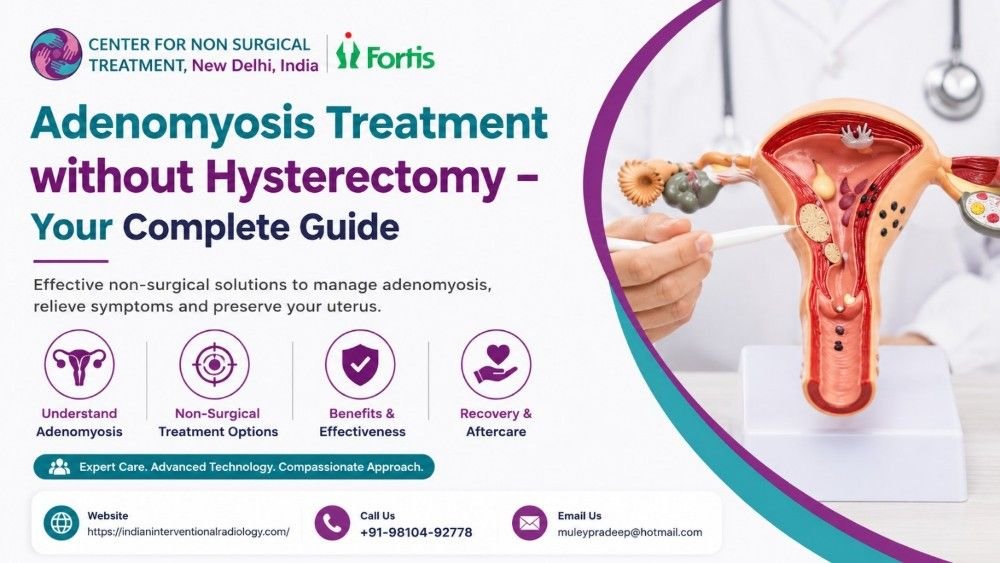
In adenomyosis, this lining starts growing into the muscle wall of the uterus. Imagine tiny islands of endometrial tissue deep inside the muscle. Every month, when your hormones tell the lining to bleed, these islands inside the muscle also try to bleed. But they have nowhere to go. So blood gets trapped, causes inflammation, and the muscle wall gets thicker and thicker.
Your uterus becomes like a balloon that is too big and too heavy. That is why you feel pain. That is why you bleed so much.
Adenomyosis is a non-cancerous disease of the uterus where symptoms and signs are similar to uterine fibroids . The condition can involve the entire uterus, which becomes bulky and heavy—called diffuse adenomyosis—or it may be localized in one spot, called focal adenomyosis.
This condition mainly affects women aged 30 to 50 years old.
Adenomyosis vs Fibroids – What Is the Difference?
Many women confuse adenomyosis with uterine fibroids. Here is the simple difference:
| Feature | Adenomyosis | Uterine Fibroids |
|---|---|---|
| What It Is | Endometrial tissue grows into the uterine muscle wall. | Non-cancerous lumps grow in or on the uterus. |
| Location | Inside the muscle wall itself. | In or on the uterus (not inside the muscle). |
| Bleeding | Heavy, prolonged periods. | Heavy periods with clots. |
| Pain | Severe cramping that worsens with age. | Cramping and pelvic pressure. |
| Uterus | Becomes bulky, heavy, and tender. | May become enlarged. |
Think of fibroids as little lumps that grow in or on the uterus. Adenomyosis is when the lining grows into the muscle itself. Both cause heavy bleeding and pain.
Symptoms You Should Never Ignore
Adenomyosis may be mild and may cause no symptoms at all. However, when symptoms do appear, they can significantly affect your quality of life.
Here is what many women go through. See if this sounds familiar:
| Symptom | What It Feels Like |
|---|---|
| Heavy Bleeding | Changing pads every 1–2 hours. Passing clots the size of coins. |
| Severe Cramps | Pain that starts days before periods and continues after. Painkillers stop working. |
| Chronic Pelvic Pain | Dull ache even when not on periods. Feeling of pressure down there. |
| Pain During Sex | Deep pain that makes intimacy impossible. |
| Bloating | Uterus gets so enlarged you look 3–4 months pregnant. |
| Fatigue | From losing so much blood every month. Always tired. |
The common symptoms are:
- Heavy or prolonged menstrual bleeding
- Severe menstrual cramping pain that worsens with age
- Discomfort or pain during intercourse
- Passing of blood clots during period, bleeding between periods or light spotting
- Pressure on the bladder that creates a frequent or persistent urge to urinate
- Pressure on bowel, leading to constipation and bloating
- Abnormally enlarged abdomen
- The uterus might increase in size and feel very tender to touch
If you have three or more of these, do not ignore it. Do not let anyone tell you this is normal. The best adenomyosis doctors in Delhi will tell you the same thing—early diagnosis makes treatment much easier.
Experiencing any symptoms such as pain or intense bleeding are signs you should get to the doctor immediately to be checked out. The quicker you can get a diagnosis, the quicker you will be able to find appropriate treatment.
How Is Adenomyosis Diagnosed?
This is where things get tricky. For years, doctors could only confirm adenomyosis after removing the uterus and sending it to the lab. By then, it was too late to save the uterus.
Now things are better.
Step 1: Pelvic Exam
The doctor presses on your belly and feels your uterus. In adenomyosis, the uterus feels bulky, tender, and sometimes bigger than it should be.
Step 2: Transvaginal Ultrasound
This is the first real test. A small wand goes inside the vagina and uses sound waves to create pictures. A good radiologist can see if the uterine muscle looks abnormal.
Transvaginal ultrasound is the most accurate, cheap, and widely available imaging approach for diagnosing adenomyosis. On ultrasound, the uterus will have a heterogeneous and ill-defined pattern.
Step 3: MRI
If ultrasound is not clear, MRI gives much more detailed pictures. It shows exactly how deep the adenomyosis has gone and whether it is focal (one spot) or diffuse (all over).
MRI provides better diagnostic capability due to the increased soft tissue differentiation and can differentiate adenomyosis from multiple small uterine fibroids. A thickness of the junctional zone greater than 10 to 12 mm is diagnostic of adenomyosis.
The only way to be 100% sure is still after hysterectomy. But with modern imaging, good doctors can diagnose with high confidence without surgery.
Traditional Treatment: Hysterectomy
For many years, hysterectomy—removal of the uterus—was considered the only definitive treatment for adenomyosis.
Hysterectomy is still recommended for women who:
- Have completed their childbearing
- Have severe symptoms that do not respond to other treatments
- Want a permanent solution
However, hysterectomy is major surgery. It requires:
- General anaesthesia
- Hospital stay of several days
- Weeks of recovery
- Permanent loss of the uterus
If you are looking for hysterectomy surgery in Delhi or the best hysterectomy doctors in Delhi , those options exist. But more and more women are now choosing a different path—one that preserves the uterus.
At Indian Interventional Radiology , surgery is only an option after trying the non-surgical alternatives first. The team works with hysterectomy doctors in Delhi who are known for their expertise, but they never expedite a hysterectomy without exploring all other options.
Adenomyosis Treatment Without Hysterectomy: Uterine Artery Embolization (UAE)
Here is the good news. You do not have to lose your uterus to get rid of adenomyosis symptoms.
Uterine Artery Embolization (UAE) is a minimally invasive, non-surgical procedure that treats adenomyosis while preserving the uterus.
How UAE Works
Think of it like this. Your adenomyosis needs blood to survive and grow. UAE blocks the blood supply to the affected tissue. Without blood, the tissue shrinks, and your symptoms improve.
The procedure involves three main steps:
- A small catheter is inserted into an artery, typically in the wrist or the groin
- Tiny particles are delivered through the catheter to the arteries that feed the adenomyosis
- Blood flow to the affected tissue is blocked, causing it to shrink
UAE provides a safe and effective alternative treatment option for adenomyosis patients who have failed conservative treatment but still wish to maintain their fertility or preserve the uterus.
Dr. Pradeep Muley is a pioneer in this field. He has performed more than 20,000 diagnostic and interventional radiological procedures and his department has performed the maximum numbers of uterine artery embolization for fibroids and uterine adenomyosis in the country.
Benefits of UAE
| Feature | UAE (Uterine Artery Embolization) |
|---|---|
| Procedure Type | Non-surgical, minimally invasive |
| Uterus Preserved | Yes |
| Hospital Stay | Usually 1 day |
| Anaesthesia | Local anaesthesia |
| Recovery Time | 1–2 weeks |
| Scarring | None |
| Fertility | Preserved |
UAE offers several compelling advantages:
- No surgical incisions – no cuts, no scars
- Uterus is preserved – you keep your uterus
- Short hospital stay – often just one day
- Faster recovery – return to normal activities within 1-2 weeks
- No general anaesthesia – procedure done with local anaesthesia
- Treats adenomyosis effectively – without removing the uterus
As one study noted, "Uterine artery embolization is an alternative treatment for controlling the symptoms of adenomyosis with less trauma while preserving the uterus."
Success Rates and Evidence
The evidence for the UAE is strong.
- Up to 80% clinical efficacy in treating adenomyosis
- 88.2% patient satisfaction rate
- 94.1% of patients were able to avoid a hysterectomy
- Long-term durability with cumulative success rate of 80% at mean 52 months
- 82% of UAE-treated patients avoided hysterectomy after 7 years of follow-up
A study showed that in patients with adenomyosis, UAE using advanced embolic materials can achieve favorable therapeutic effects. All patients showed significant improvement in their clinical symptoms, including reduced dysmenorrhea, shortened menstrual periods, and decreased menstrual flow.
UAE vs Hysterectomy – What Does the Research Say?
Both UAE and hysterectomy significantly increase health-related quality of life for symptomatic adenomyosis.
| Comparison Point | UAE | Hysterectomy |
|---|---|---|
| Hospital Stay | 1 day | 5 days |
| Blood Transfusions | 0.7% | 1.8% |
| Pelvic Floor Prolapse | 1.7% | 7.1% |
| Uterus Preserved | Yes | No |
| Recovery Time | 1–2 weeks | 4–6 weeks |
As the QUESTA study concluded: "UAE is a valid less-invasive alternative to hysterectomy, with preservation of the uterus."
The study also found that one-year HRQOL (health-related quality of life) scores were comparable between UAE and hysterectomy.
Why Choose Dr. Pradeep Muley for Adenomyosis Treatment in Delhi?
When it comes to best adenomyosis treatment doctors Delhi, choosing the right doctor makes all the difference.
Pioneer in Uterine Artery Embolization
Dr. Pradeep Muley is a pioneer in Delhi & NCR for non-surgical treatments. He is a Senior Consultant Interventional Radiologist with an outstanding reputation.
- Performed more than 20,000 diagnostic and interventional radiological procedures
- Performed the maximum numbers of uterine artery embolization for fibroids and uterine adenomyosis in the country
- 30 years of experience in the field
World-Class Training
Dr. Pradeep Muley's qualifications are truly impressive:
- Fellow Interventional Radiology, Singapore General Hospital, Singapore
- Visiting Associate, Neurointerventional Radiology, Iowa University Hospitals, USA
- Visiting Fellow, Neurointerventional Radiology, Johns Hopkins Medical Institutions, USA
- Lecturer, Vascular & Interventional Radiology, KEM Hospital, Mumbai, India
- Neuroradiology, All India Institute of Medical Sciences (AIIMS), New Delhi, India
- Consultant Interventional Radiologist, KIMS hospital, Trivandrum, Kerala, India
Advanced Facilities
The Department of Interventional Radiology, established by Dr. Pradeep Muley, is specifically designed with two well-equipped and modern Cath-labs for all diagnostic and interventional procedures.
He is assisted by a team of trained nurses and practicing radiologists and personally participates in all interventional procedures.
Patient-Centric Care
At Indian Interventional Radiology , the focus is on providing safe, effective, and long-term relief. The team offers customized treatment plans based on your specific symptoms and needs.
The hospital offers tertiary care in 42 Super-Specialties supported by a large and competent team of doctors, nurses, technicians and paramedical staff.
You can schedule a consultation or contact us to begin your journey toward relief.
What to Expect During UAE
If you choose UAE for adenomyosis treatment, here is what you can expect:
Before the Procedure
- A thorough consultation with Dr. Pradeep Muley
- Imaging studies (ultrasound or MRI) to confirm the diagnosis
- Discussion of your symptoms, medical history, and treatment goals
During the Procedure
- Performed under local anaesthesia
- A small catheter is inserted into an artery (usually in the wrist)
- Tiny particles are delivered to block the blood supply to the adenomyosis
- The procedure typically takes 1-2 hours
After the Procedure
- Most patients go home the next day
- You may experience cramping and pain for a few days (managed with medication)
- Most patients return to normal activities within 1-2 weeks
- Symptoms gradually improve over 2-3 months as the adenomyosis shrinks
Frequently Asked Questions (FAQs)
1. What is adenomyosis, and how is it different from fibroids?
Adenomyosis is when the uterine lining (endometrium) grows into the muscle wall of the uterus. Fibroids are non-cancerous lumps that grow in or on the uterus. Both cause heavy bleeding and pain, but adenomyosis involves tissue growing inside the muscle, while fibroids are lumps on the muscle.
2. Can adenomyosis be treated without hysterectomy?
Yes. Uterine Artery Embolization (UAE) is a highly effective, non-surgical treatment that preserves the uterus. Studies show up to 80% clinical efficacy with UAE for adenomyosis.
3. Is UAE painful?
UAE is performed under local anaesthesia, so you will not feel pain during the procedure. After the procedure, some women experience cramping and pain for a few days, which is managed with medication.
4. How long does recovery take after UAE?
Most patients can return to normal activities within one to two weeks. The procedure usually requires just one day in the hospital.
5. Can I get pregnant after UAE?
Yes. UAE preserves the uterus and fertility. While pregnancy after UAE is possible, you should discuss your fertility goals with your doctor before choosing any treatment.
6. How successful is UAE for adenomyosis?
UAE has excellent success rates. Studies show:
- Up to 80% clinical efficacy
- 88.2% patient satisfaction
- 94.1% of patients avoid hysterectomy
- 80% cumulative success rate at 52 months
7. What are the symptoms of adenomyosis?
Common symptoms include heavy or prolonged menstrual bleeding, severe cramping pain that worsens with age, chronic pelvic pain, pain during intercourse, bloating, and fatigue.
8. How is adenomyosis diagnosed?
Adenomyosis is diagnosed through pelvic exam, transvaginal ultrasound, and MRI. Transvaginal ultrasound is the most accurate, cheap, and widely available imaging approach.
9. Who is the best doctor for adenomyosis treatment in Delhi?
Dr. Pradeep Muley is a pioneer in Uterine Artery Embolization with over 20,000 procedures performed. He has trained at prestigious institutions including Johns Hopkins and AIIMS. He offers advanced, personalized care with a focus on non-surgical, uterus-preserving solutions.
10. Why should I choose UAE over hysterectomy?
UAE offers several advantages: no surgical incisions, uterus preservation, shorter hospital stay (1 day vs 5 days), faster recovery, no general anaesthesia, and comparable quality of life outcomes. UAE is a valid less-invasive alternative to hysterectomy.
Final Thoughts
Adenomyosis can absolutely destroy your quality of life if not treated properly. But you do not have to suffer in silence, and you do not have to lose your uterus to get relief.
Uterine Artery Embolization (UAE) offers a safe, effective, and uterus-preserving alternative to hysterectomy. With success rates up to 80%, high patient satisfaction, and the ability to avoid hysterectomy in over 94% of cases, UAE is changing how adenomyosis is treated.
If you are in Delhi or the NCR region and looking for the best gynecologist for adenomyosis treatment in Delhi or the best adenomyosis doctors in Delhi, Dr. Pradeep Muley at Indian Interventional Radiology is your trusted partner in adenomyosis care. With decades of experience, advanced technology, and a patient-first approach, he provides world-class care tailored to your needs.
Don't let anyone tell you this is normal. Don't wait years like my family did. Book a consultation today and take the first step toward relief.
Contact Information
Dr. Pradeep Muley
Senior Consultant Interventional Radiologist
Indian Interventional Radiology
Fortis Hospital, Vasant Kunj, New Delhi, India
Phone: +91-98104-92778
Email: muleypradeep@hotmail.com
Contact Us for more information or to schedule your appointment.