
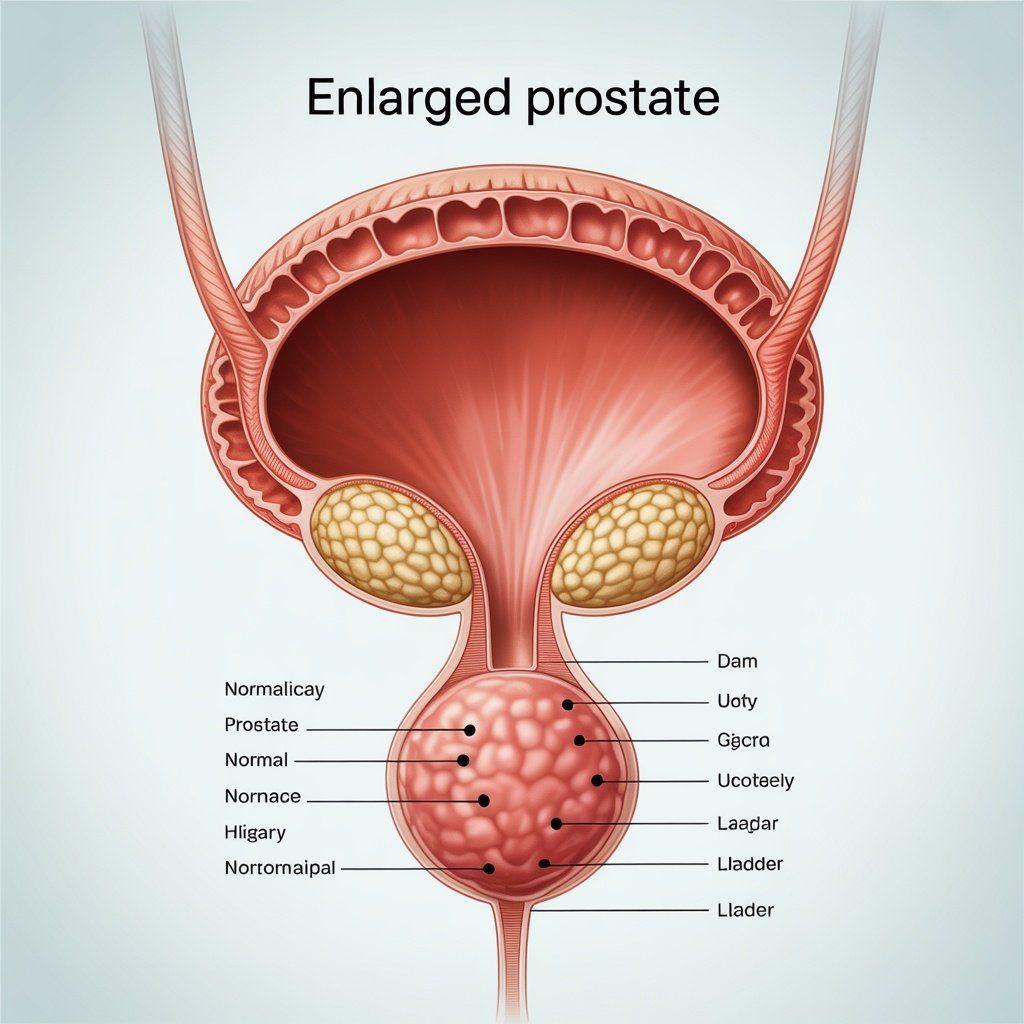
Enlarged prostate, also called Benign Prostatic Hyperplasia (BPH), is a common condition in men over 50. It happens when the prostate gland grows bigger and starts pressing against the urethra, causing difficulty in urination, frequent night visits to the bathroom, and a weak urine flow.
The good news? Medical technology has advanced, and today, men don’t have to rely only on traditional surgery. One of the latest, minimally invasive, andhighly effective treatments is Prostate Artery Embolization (PAE) – a procedure that offers quick recovery and long-term relief without major cuts or hospital stays.
What is Prostate Artery Embolization (PAE)?
Prostate Artery Embolization is a non-surgical procedure performed by an Interventional Radiologist. Instead of removing the prostate, PAE works by blocking the blood supply to the enlarged prostate, causing it to shrink naturally over time.
During the procedure:
- A tiny tube (catheter) is inserted through a small puncture in the wrist or groin.
- Using advanced imaging, the doctor finds the arteries supplying the prostate.
- Special microscopic particles are injected to block these arteries.
- Over the next weeks, the prostate shrinks, easing urinary symptoms.
No hospital stay – usually done as a day-care procedure
Faster recovery – back to normal life within a few days
The Latest and Most Advanced Treatments for Enlarged Prostate
1. Prostatic Artery Embolization (PAE)
One of the latest and most promising treatments for enlarged prostate is Prostatic Artery Embolization (PAE).
In PAE, a small catheter is inserted into the arteries that supply blood to the prostate. Tiny particles are then injected to block these arteries, reducing blood flow and causing the prostate to shrink naturally over time.
Why PAE is better than traditional surgery:
- No cuts or stitches (done through a tiny pinhole)
- Usually performed under local anesthesia
- Faster recovery (most patients go home the same day)
- Minimal risk of sexual side effects or incontinence
- Suitable for patients who cannot undergo major surgery due to other health issues
Dr. Pradeep Muley, one of India’s leading Interventional Radiologists at indian interventionalradiology, is highly experienced in performing PAE with advanced imaging guidance. His expertise ensures precise targeting of prostate arteries, leading to excellent results and improved patient comfort.
2. Rezūm Water Vapor Therapy
Rezūm is another minimally invasive procedure where steam (water vapor) is injected directly into the prostate tissue. The heat from the steam destroys excess cells, shrinking the prostate.
Benefits: Quick procedure, done in a doctor’s office, and preserves sexual function.
3. UroLift System
The UroLift system uses small implants to lift and hold the enlarged prostate tissue away from the urethra, so it no longer blocks urine flow.
Benefits: No cutting or tissue removal, quick recovery, and minimal side effects.
4. Laser Enucleation (HoLEP)
This advanced laser surgery removes the excess prostate tissue blocking urine flow. It is very effective for larger prostates and has less bleeding than open surgery.
Traditional vs. Latest Treatments for Enlarged Prostate
|
Traditional Treatments |
Latest Treatments |
|
Open surgery |
Minimally invasive, no major cuts |
|
Catheter-based procedures |
Day-care procedures |
|
Long recovery time |
Quick recovery, often same-day discharge |
|
Higher risk of side effects |
Fewer complications |
Why Choose Dr. Pradeep Muley & Indian Interventional Radiology
When it comes to latest prostate treatments in India, Dr. Pradeep Muley is a trusted name. With years of experience in Interventional Radiology, he has successfully performed hundreds of PAE procedures with excellent results.
Reasons to choose us:
- 20+ years of experience in Interventional Radiology
- State-of-the-art equipment & technology
- Personalized treatment plans
- High success rate with minimal side effects
- Compassionate and patient-friendly approach
FAQs About the Latest Treatment for Enlarged Prostate
Q1: Is Prostate Artery Embolization painful?
No, PAE is done under local anesthesia, and most patients feel little to no pain during the procedure.
Q2: How soon will I see results after PAE?
Many men notice improvements within 2–3 weeks, with continued progress over the next months.
Q3: Can PAE treat very large prostates?
Yes, PAE is effective even for very large prostates that are difficult to treat with traditional surgery.
Q4: Are there any risks of PAE?
Risks are minimal compared to surgery. Mild discomfort or temporary urinary frequency may occur but usually resolve quickly.
Final Thoughts
If you are suffering from symptoms of an enlarged prostate, don’t wait until it worsens. The latest treatments like Prostatic Artery Embolization offer safe, effective, and quick relief.